Genres
Make Music
Artists
Albums
Challenges
Sign in
Sign in
Albums
By Ensemble Tengir-Too
Albums
By Ensemble Tengir-Too
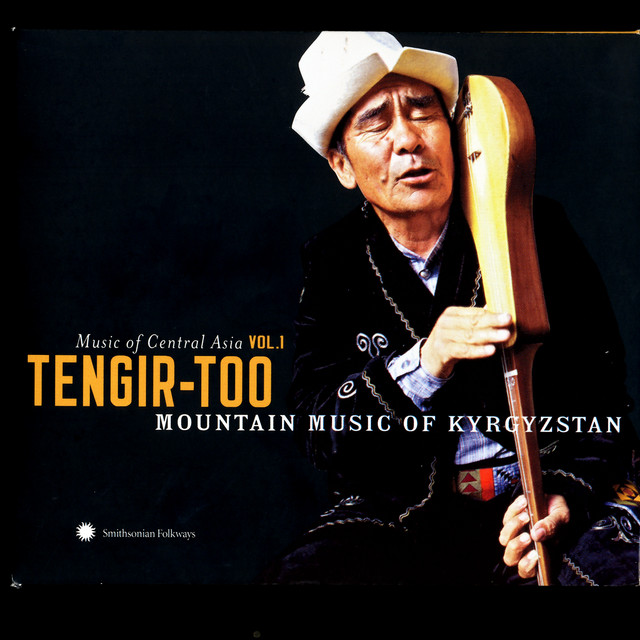
Music of Central Asia Vol. 1: Mountain Music of Kyrgyzstan
March 14, 2006
Listen
2
/5
Genres
Kyrgyz Traditional Music
Kyrgyz traditional music is the oral, largely monophonic musical culture of the nomadic Kyrgyz people of the Tien Shan. It centers on epic recitation (most famously the Manas cycle) and instrumental pieces called küy performed on the komuz, a fretless three‑string lute. Its sound world blends flexible, speech‑like vocal declamation with pentatonic and heptatonic modal melodies, drones, and heterophonic textures. Typical instruments include the komuz, temir komuz (jaw harp), kyl kyyak (two‑string spike fiddle), choor/sybyzgy (end‑blown flutes), and frame or hand percussion. Performances often feature dramatic timbral changes, ornaments, and rhythmic freedom, reflecting both pre‑Islamic shamanic strata and later Islamic poetic and musical aesthetics.
Discover
Listen
Central Asian Folk
Central Asian folk is a broad family of traditional musics from the steppes and oases of modern Uzbekistan, Kazakhstan, Kyrgyzstan, Tajikistan, Turkmenistan, and the Uyghur region. It blends nomadic bardic traditions with urban courtly repertoires that developed along Silk Road trade routes. Characteristic timbres come from long‑necked lutes (dutar, tanbur, dombra), bowed spike fiddles (ghijak/kamancha), jaw harps (temir komuz), frame drums (doira/dap) and end‑blown flutes (surnai/nay). Melodies are highly ornamented and often modal (maqam/muqam), while steppe styles favor pentatonic and heptatonic pitch collections and drone‑based textures. Rhythms can be fluid and rubato in epic recitation, or dance‑like with asymmetric meters (5/8, 7/8, 10/8) in festive music. Forms range from extended suites (Shashmaqam, Muqam) to instrumental tone‑poems (Kazakh kui), devotional songs (zikr‑related repertoires), and vast oral epics like the Kyrgyz Manas. Performance practice emphasizes heterophony, call‑and‑response, melisma, and storytelling.
Discover
Listen
Turkic-Mongolic Music
Turkic-Mongolic music is a broad family of Inner Asian musical traditions shaped by nomadic lifeways across the steppe, taiga, and desert zones from Mongolia and Siberia to Xinjiang and Central Asia. It emphasizes timbre, overtone color, and modal melody over dense harmony, often centering a drone or open fifths with anhemitonic pentatonic contour. Characteristic practices include overtone (throat) singing, epic chant, long-song with free rhythm, and dance songs with “galloping” rhythms that mimic horse movement. Common instruments include horse-head fiddles (morin khuur), two-string lutes (igil, topshuur, dombra, komuz), frame and shaman drums, and jaw harps (khomus/temir komuz). Texts frequently recount genealogies, heroic epics, pastoral imagery, and spiritual cosmologies linked to Tengrism, Buddhism, and Islam. Across Turkic- and Mongolic-speaking communities, local styles vary—Uyghur muqam cycles are long-form modal suites, Kazakh and Kyrgyz traditions foreground plucked lutes and instrumental toqs/kyuis, and Tuvan and Mongolian repertoires foreground throat singing and long-song aesthetics—yet all share a preference for modal melody, flexible rhythm, and timbre-focused expression.
Discover
Listen
Similar albums
2001
The Voice of Kyrgyzstan
Salamat Sadikova
2001
The Music of Kyrgyzstan
Kambarkan Folk Ensemble
1999
Divine Music From a Jail
Oidupaa Vladimir Oiun
2020
Jangar
Khusugtun
2023
Yeski Taspa (2 Season)
ARShAT, Various Artists, Mona Songz, Various Artists, Zengir, ACE, ALEM, Doseke…
2011
Алтын-Тайга (Altyn-Taiga)
AltaiKai АлтайКай
2000
Zazal
Egschiglen
2007
Alash
Alash
1995
Yenisei-Punk
Yat-Kha
2006
XXI чак / XXI век / XXI Century
AltaiKai АлтайКай
Download our mobile app
Get the Melodigging app and start digging for new genres on the go
Download on the App Store
Get it on Google Play
© 2026 Melodigging
Give feedback
Legal
Melodding was created as a tribute to
Every Noise at Once
, which inspired us to help curious minds keep digging into music's ever-evolving genres.