Genres
Make Music
Artists
Albums
Challenges
Sign in
Sign in
Albums
By Josquin des Prez
Albums
By Josquin des Prez
Missa de beata virgine; Motets à la vierge
January 1, 1995
Listen
1
/5
Genres
Franco-Flemish School
The Franco-Flemish School refers to a succession of Northern European composer-singers from the Low Countries and northern France who, during the 15th and 16th centuries, perfected a richly woven style of vocal polyphony. Centered on sacred forms such as the Mass and motet, and on courtly chansons, their music is characterized by careful control of dissonance, modal counterpoint, cantus-firmus and paraphrase techniques, and—by the later generations—pervasive imitation. Their chapel-trained composers staffed the great courts and cathedrals of Europe and spread a unified, technically rigorous polyphonic practice from Burgundy and the French royal chapels to Italy, Spain, the Empire, and beyond.
Discover
Listen
Renaissance
Renaissance music (c. 1400–1600) marks the shift from medieval sonorities to a clearer, triad-based polyphony in which multiple independent voices are treated with near-equal importance. It favors modal counterpoint, pervasive imitation, smooth voice-leading, and carefully prepared cadences. Text intelligibility and expressive text-setting become central concerns, especially in sacred motets and masses and in secular forms like the Italian madrigal and the French chanson. While much of the repertory is a cappella, instrumental consorts (viol, recorder, sackbut, cornett, organ) play a growing role. A steady tactus underpins rhythms, and tuning systems such as meantone temperament shape its characteristic color. Music printing (from 1501) accelerates stylistic diffusion across Europe.
Discover
Listen
Mass
Mass is a large-scale vocal genre that sets the Ordinary of the Roman Catholic liturgy—Kyrie, Gloria, Credo, Sanctus (and Benedictus), and Agnus Dei—most often in Latin. It began as monophonic chant but developed into sophisticated polyphony and later into concert works for choir, soloists, and instruments or full orchestra. Across history, composers have used techniques such as cantus firmus, imitation, paraphrase, and parody to unify movements. The genre spans from austere a cappella writing to monumental symphonic-choral statements, and today is performed both liturgically and in the concert hall. Common subtypes include Missa brevis (short Mass, often omitting the Credo or compact in scale) and Missa solemnis (festal, expansive forces and duration).
Discover
Listen
Motet
A motet is a polyphonic vocal composition, usually on a sacred Latin text, that emerged in the High Middle Ages and became a central genre of European art music during the Renaissance. Early motets layered different texts and rhythms above a chant-derived tenor, while later Renaissance motets favored smooth, imitative counterpoint shared among voice parts. Across its long history the motet served both liturgical and devotional functions, typically performed a cappella by small choirs. Stylistically it ranges from the rhythmically intricate, isorhythmic constructions of the 13th–14th centuries to the balanced, text-sensitive writing of the 16th century, and onward to concerted and chorale-based treatments in the Baroque and beyond.
Discover
Listen
Classical
Classical music is the notated art-music tradition of Europe and its global descendants, characterized by durable forms, carefully codified harmony and counterpoint, and a literate score-based practice. The term “classical” can refer broadly to the entire Western art-music lineage from the Medieval era to today, not just the Classical period (c. 1750s–1820s). It privileges long-form structures (such as symphonies, sonatas, concertos, masses, and operas), functional or modal harmony, thematic development, and timbral nuance across ensembles ranging from solo instruments to full orchestras and choirs. Across centuries, the style evolved from chant and modal polyphony to tonal harmony, and later to post-tonal idioms, while maintaining a shared emphasis on written notation, performance practice, and craft.
Discover
Listen
Polyphonic Chant
Polyphonic chant is a sacred vocal tradition in which two or more independent voices sing liturgical material at the same time, creating vertical harmony from originally monophonic chant. Emerging from the practice of adding a second voice to chant (organum), it favors perfect consonances (fourths, fifths, and octaves) and often places a sustained chant line (tenor) beneath more florid upper parts. In its classic medieval Western form, it is unaccompanied (a cappella), modal rather than tonal, and frequently governed by rhythmic modes. While the Notre Dame school in Paris codified much of its technique, related polyphonic chant practices also exist in other liturgical cultures (e.g., Georgian and Corsican traditions), each with distinctive sonorities and voice-leading norms.
Discover
Listen
Similar albums
1994
Miserere; Messe; Motets
Gregorio Allegri / A Sei Voci
1980
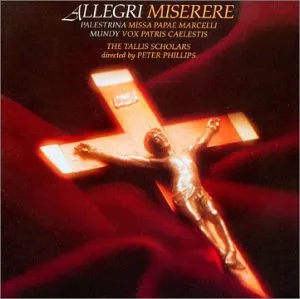
Miserere / Missa Papae Marcelli / Vox Patris caelestis
Gregorio Allegri / The Tallis Scholars / Peter Phillips
1985
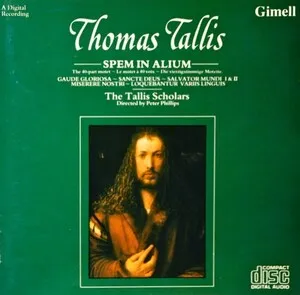
Spem in alium
Thomas Tallis / The Tallis Scholars / Peter Phillips
1995
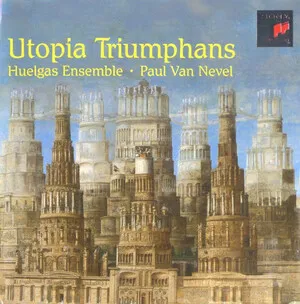
Utopia triumphans
Thomas Tallis / Huelgas Ensemble / Paul Van Nevel
1992
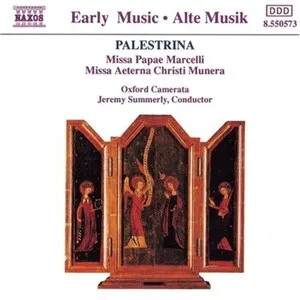
Missa Papae Marcelli; Missa Aeterna Christi munera
Giovanni Pierluigi da Palestrina / Oxford Camerata / Jeremy Summerly
1993
Complete Sacred Music for Five Voices
Carlo Gesualdo / Oxford Camerata / Jeremy Summerly
2016
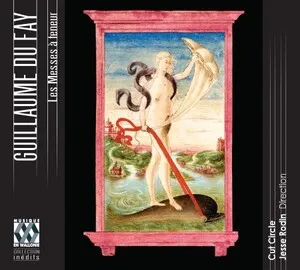
Les messes à teneur
Guillaume Dufay / Cut Circle / Jesse Rodin
1987
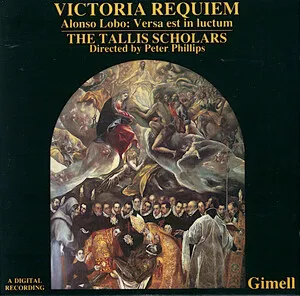
Requiem / Versa est in luctum
Tomás Luis de Victoria / Alonso Lobo
2011
O gemma lux
Guillaume Dufay / Huelgas Ensemble / Paul Van Nevel
2002
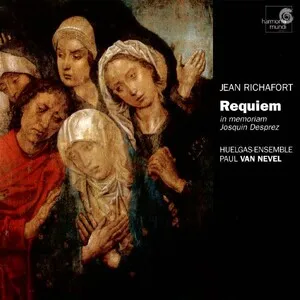
Requiem: In memoriam Josquin Desprez
Jean Richafort / Huelgas Ensemble / Paul Van Nevel
Download our mobile app
Get the Melodigging app and start digging for new genres on the go
Download on the App Store
Get it on Google Play
© 2026 Melodigging
Give feedback
Legal
Melodding was created as a tribute to
Every Noise at Once
, which inspired us to help curious minds keep digging into music's ever-evolving genres.