Genres
Make Music
Artists
Albums
Challenges
Sign in
Sign in
Albums
By Gevorg Dabaghyan
Albums
By Gevorg Dabaghyan
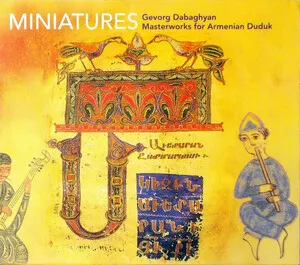
Miniatures: Masterworks for the Armenian Duduk
April 15, 2005
Listen
1
/5
Genres
Folk
Folk is a song-centered acoustic tradition rooted in community storytelling, everyday life, and social history. It emphasizes clear melodies, simple harmonies, and lyrics that foreground narrative, protest, and personal testimony. As a modern recorded genre, folk coalesced in the early-to-mid 20th century in the United States out of older ballad, work song, and rural dance traditions. It typically features acoustic instruments (guitar, banjo, fiddle, mandolin, harmonica), strophic song forms, and participatory singing (choruses, call-and-response).
Discover
Listen
Armenian Folk Music
Armenian folk music is the traditional music of the Armenian people, traceable to antiquity and preserved through rich regional styles. It is unified by shared modal systems, vocal ornaments, and poetic song forms that give it a distinctive Armenian character despite local dialects and variants. Typical instruments include the duduk (double‑reed apricot wood oboe), the kamancha/kemenche (spike fiddle), the oud (fretless lute), the zurna and dhol (outdoor shawm and drum pair), the shvi/blul (duct flutes), the kanun (plucked zither), and the tar. Vocal genres range from work songs (horovel) and laments to epic and love ballads associated with the ashugh (bardic) tradition, alongside lively line dances such as kochari, shalakho, and tamzara. In sound and structure it is closely related to other Caucasian and West Asian traditions, sharing melodic types, asymmetric rhythms (e.g., 5/8, 7/8, 9/8), and ornamentation with Georgia, Azerbaijan, and eastern Anatolia, yet retaining unmistakable Armenian melodic turns and cadences.
Discover
Listen
Medieval
Medieval music refers to the diverse sacred and secular musical practices of Europe between the fall of the Western Roman Empire and the dawn of the Renaissance. It spans more than eight centuries, from early monophonic chant to the first notated polyphony. Core features include the use of church modes rather than major/minor, extensive reliance on vocal music (Latin sacred chant as well as vernacular song), and the progressive development from unmeasured chant to rhythmic modal notation and, later, mensural notation. Texture evolves from monophony (plainchant, troubadour songs) to organum, conductus, and the motet, culminating in complex isorhythmic works by the late 13th–14th centuries. Secular traditions—troubadours and trouvères in France, Minnesänger in German lands, and the Iberian Cantigas—coexisted with and influenced sacred practice. Instruments such as the vielle, harp, psaltery, recorder, shawm, hurdy-gurdy, and portative organ often doubled or accompanied voices, though much music remained purely vocal.
Discover
Listen
Similar albums
2019
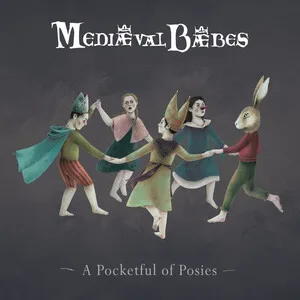
A Pocketful of Posies
Mediæval Bæbes
2006
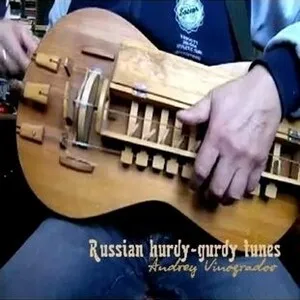
Russian Hurdy-Gurdy Tunes
Andrey Vinogradov Андрей Виноградов
2005
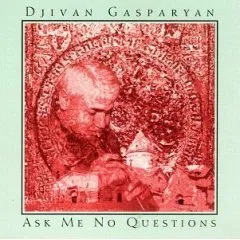
Ask Me No Questions
Djivan Gasparyan
2012
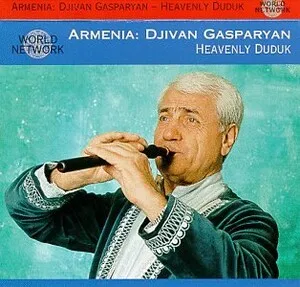
World Network Vol. 47: Armenia - Heavenly Duduk
Djivan Gasparyan
2005
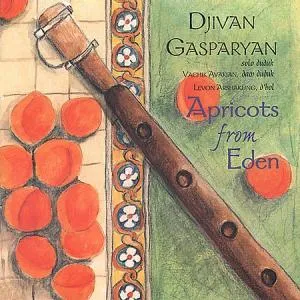
Apricots From Eden
Djivan Gasparyan
1992
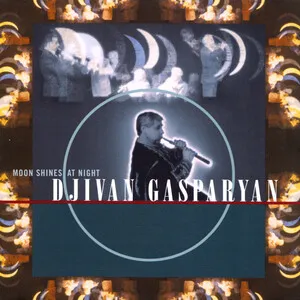
Moon Shines at Night
Djivan Gasparyan
2006
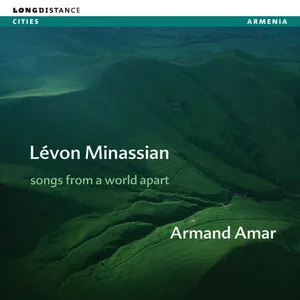
Songs From a World Apart
Lévon Minassian & Armand Amar
2017
÷ (Deluxe)
Ed Sheeran
2023
Zach Bryan
Zach Bryan
2020
Songs
Adrianne Lenker
Download our mobile app
Get the Melodigging app and start digging for new genres on the go
Download on the App Store
Get it on Google Play
© 2026 Melodigging
Give feedback
Legal
Melodding was created as a tribute to
Every Noise at Once
, which inspired us to help curious minds keep digging into music's ever-evolving genres.