Genres
Make Music
Artists
Albums
Challenges
Sign in
Sign in
Albums
By Björk
Albums
By Björk
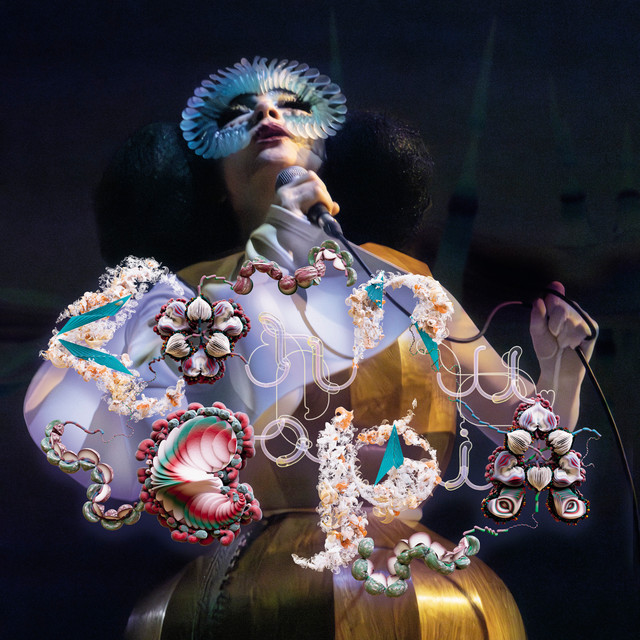
Cornucopia Live
October 24, 2025
Listen
1
/5
Genres
Icelandic Experimental
Icelandic experimental is a cross‑disciplinary strain of Iceland’s music that blends ambient atmospheres, post‑rock scale, modern classical writing, electroacoustic techniques, and noise/field recordings. It favors texture over virtuosity, long dynamic arcs over strict song forms, and a highly spatial, reverberant sound that evokes volcanic landscapes, oceanic weather, and deep winter light. Artists combine electronics (granular synthesis, tape manipulation, modulars) with acoustic timbres (strings, prepared piano, voice, chamber ensembles), often using extended techniques and found sound. Vocals may be choral stacks, wordless syllables, or the Icelandic language itself treated as sonic material. The result ranges from glacially slow drones to fragile glitch‑folk and neoclassical miniatures.
Discover
Listen
Pop
Pop is a broad, hook-driven style of popular music designed for wide appeal. It emphasizes memorable melodies, concise song structures, polished vocals, and production intended for radio, charts, and mass media. While pop continually absorbs elements from other styles, its core remains singable choruses, accessible harmonies, and rhythmic clarity. Typical forms include verse–pre-chorus–chorus, frequent use of bridges and middle-eights, and ear-catching intros and outros. Pop is not defined by a single instrumentation. It flexibly incorporates acoustic and electric instruments, drum machines, synthesizers, and increasingly digital production techniques, always in service of the song and the hook.
Discover
Listen
Electronic
Electronic is a broad umbrella genre defined by the primary use of electronically generated or electronically processed sound. It encompasses music made with synthesizers, drum machines, samplers, computers, and studio/tape techniques, as well as electroacoustic manipulation of recorded or synthetic sources. The genre ranges from academic and experimental traditions to popular and dance-oriented forms. While its sonic palette is rooted in electricity and circuitry, its aesthetics span minimal and textural explorations, structured song forms, and beat-driven club permutations. Electronic emphasizes sound design, timbre, and studio-as-instrument practices as much as melody and harmony.
Discover
Listen
Orchestral
Orchestral music refers to compositions written for an orchestra—a large ensemble typically built around a string section (violins, violas, cellos, double basses), complemented by woodwinds, brass, percussion, and often harp, keyboard, or other auxiliary instruments. A conductor coordinates the ensemble, shaping balance, phrasing, and expression. The style emphasizes coloristic timbre combinations, dynamic range from the softest pianissimo to explosive tuttis, and textures that can shift seamlessly between transparent chamber-like writing and monumental masses of sound. Orchestral writing underpins concert genres such as symphonies, overtures, and tone poems, as well as opera, ballet, and modern film and game scores. While orchestral writing evolved across centuries, its core craft centers on melody, counterpoint, harmony, register, and orchestration—the art of assigning musical ideas to instruments to achieve clarity, contrast, and narrative impact.
Discover
Listen
Similar albums
2011
Biophilia (Deluxe Edition)
Björk
1997
Bachelorette
Björk
1995
Isobel
Björk
1997
Homogenic
Björk
2015
Blurryface
Twenty One Pilots
2010
Loud (Japan Version)
Rihanna
2005
Demon Days
Gorillaz
2014
French Exit
TV Girl
2014
Globalization
Pitbull
2015
Honeymoon
Lana Del Rey
Download our mobile app
Get the Melodigging app and start digging for new genres on the go
Download on the App Store
Get it on Google Play
© 2026 Melodigging
Give feedback
Legal
Melodding was created as a tribute to
Every Noise at Once
, which inspired us to help curious minds keep digging into music's ever-evolving genres.