Genres
Make Music
Artists
Albums
Challenges
Sign in
Sign in
Albums
By Nova Schola Gregoriana
Albums
By Nova Schola Gregoriana
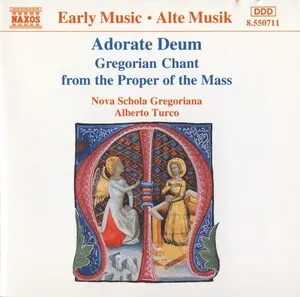
Adorate Deum: Gregorian Chant for the Proper of the Mass
June 28, 1993
Listen
1
/5
Genres
Early Music
Early music is a modern performance movement devoted to the repertoire of the Medieval, Renaissance, and early Baroque eras (roughly before c. 1750), approached with historically informed performance (HIP) practices. It emphasizes period instruments (or faithful replicas), historical tunings and temperaments, original notations and sources, and performance conventions documented in treatises of the time. The sound world ranges from monophonic chant and modal organum, to intricate Renaissance polyphony, to the emergence of basso continuo and dramatic affect in the early Baroque. Rather than being a single historical style, early music is a contemporary practice of reviving diverse pre‑Classical musics with scholarly rigor and artistic vitality.
Discover
Listen
Gregorian Chant
Gregorian chant is the central Western tradition of plainchant: a monophonic, unaccompanied sacred song in Latin (and occasionally Greek) used in the Roman Catholic liturgy. It employs free rhythm guided by the prosody of the text rather than by strict meter, and is sung in unison by clerics or scholas. Its melodies are organized by the system of eight church modes, with characteristic finalis (final), tenor/reciting tones, and melodic formulas. Repertoires include the Proper and Ordinary of the Mass (e.g., Introit, Gradual, Alleluia, Offertory, Communion, Kyrie, Gloria, Credo, Sanctus, Agnus Dei) and the Divine Office (e.g., Antiphons, Responsories, Hymns, Psalms). Although legend credits Pope Gregory I, modern scholarship sees Gregorian chant as a Carolingian synthesis of Old Roman and Gallican chants, standardized across Frankish realms and later the broader Latin West.
Discover
Listen
Plainchant
Plainchant (cantus planus) is the monophonic, unaccompanied chant of the Western Christian liturgy. Sung in Latin (with occasional Greek), it uses modal scales rather than major–minor tonality and unfolds in flexible, speech-like rhythms shaped by the sacred text. Melodically, plainchant ranges from simple syllabic formulas for reciting psalms to ornate melismatic lines for processional and festal moments. It is performed in unison by a schola or congregation, often organized antiphonally or responsorially across the liturgical actions of the Mass and the Divine Office. Its austere sonority, modal color, and text-centered phrasing give it a contemplative, timeless quality.
Discover
Listen
Similar albums
2001
Gregorian Chant
The Monks of Notre Dame
2014
Illumination: Peaceful Gregorian Chants
Dan Gibson & Daniel May
2006
Le chant des Templiers
Ensemble Organum / Marcel Pérès
1960
Salve Regina: Gregorianische Gesänge - Gregorian Chant
Benediktiner der Abtei St. Maurice & St. Maur, Clervaux
1994
Officium
Cristóbal de Morales, Jan Garbarek & The Hilliard Ensemble
1994
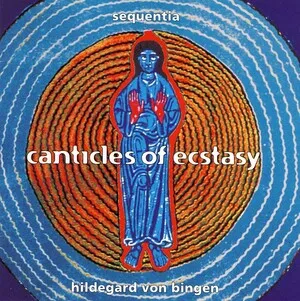
Canticles of Ecstasy
Hildegard von Bingen / Sequentia
2004
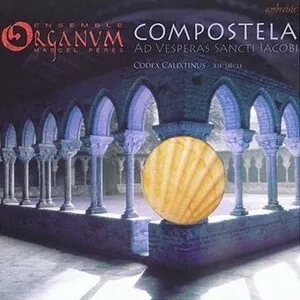
Compostela ad Vesperas Sancto Iacobi
Ensemble Organum
1985
A Feather on the Breath of God
Hildegard von Bingen
2003
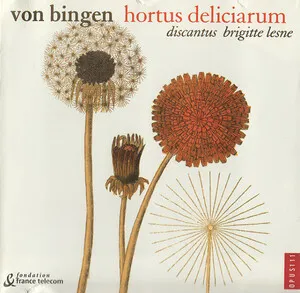
Hortus deliciarum
Hildegard von Bingen / [anonymous]
2001
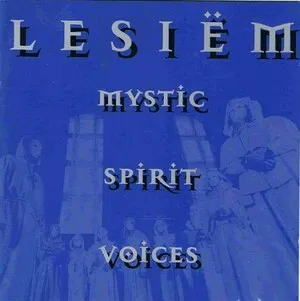
Mystic Spirit Voices
Lesiëm
Download our mobile app
Get the Melodigging app and start digging for new genres on the go
Download on the App Store
Get it on Google Play
© 2026 Melodigging
Give feedback
Legal
Melodding was created as a tribute to
Every Noise at Once
, which inspired us to help curious minds keep digging into music's ever-evolving genres.