Genres
Artists
Albums
Make Music
Sign in
Sign in
Record label
Decca Classics
London
Related genres
Blues
Blues is an African American musical tradition defined by expressive "blue notes," call-and-response phrasing, and a characteristic use of dominant-seventh harmony in cyclical song forms (most famously the 12‑bar blues). It is as much a feeling as a form, conveying sorrow, resilience, humor, and hard-won joy. Musically, blues commonly employs the I–IV–V progression, swung or shuffled rhythms, and the AAB lyric stanza. Melodies lean on the minor/major third ambiguity and the flattened fifth and seventh degrees. Core instruments include voice, guitar (acoustic or electric), harmonica, piano, bass, and drums, with slide guitar, bends, and vocal melismas as signature techniques. Over time the blues has diversified into regional and stylistic currents—Delta and Piedmont country blues, urban Chicago and Texas blues, West Coast jump and boogie-woogie—while profoundly shaping jazz, rhythm & blues, rock and roll, soul, funk, and much of modern popular music.
Discover
Listen
Classic Rock
Classic rock is a radio-defined umbrella for mainstream, guitar-centered rock music from the mid-1960s through the 1980s. It emphasizes blues-based riffs, memorable choruses, sturdy backbeats, and prominent guitar solos, often framed by warm, analog production. Rather than being a single stylistic branch, classic rock curates a canon that spans hard rock, blues rock, folk rock, psychedelic and progressive strains, and heartland- and country-tinged rock. Albums and album-oriented rock (AOR) values—extended tracks, conceptual cohesion, and musicianship—are central to its identity. The sound evokes tube-amp crunch, Hammond organs, stacked vocal harmonies, and anthemic songwriting designed for both FM radio and the concert arena.
Discover
Listen
Classical
Classical music is the notated art-music tradition of Europe and its global descendants, characterized by durable forms, carefully codified harmony and counterpoint, and a literate score-based practice. The term “classical” can refer broadly to the entire Western art-music lineage from the Medieval era to today, not just the Classical period (c. 1750s–1820s). It privileges long-form structures (such as symphonies, sonatas, concertos, masses, and operas), functional or modal harmony, thematic development, and timbral nuance across ensembles ranging from solo instruments to full orchestras and choirs. Across centuries, the style evolved from chant and modal polyphony to tonal harmony, and later to post-tonal idioms, while maintaining a shared emphasis on written notation, performance practice, and craft.
Discover
Listen
Concerto
A concerto is a large-scale composition that sets one or more solo instruments in dynamic dialogue with an orchestra. Its core idea is contrast—between soloist and tutti—and the dramatic negotiation of power, color, and thematic responsibility. While Baroque concertos often relied on ritornello form, the Classical era standardized a three-movement plan (fast–slow–fast) with sonata principles in the opening movement. The Romantic period emphasized virtuosity and expressive foregrounding of the soloist, and the 20th–21st centuries broadened the palette with new instruments, harmonies, and formats. Across eras, the concerto remains a showcase for instrumental character, technical brilliance, and the art of orchestral conversation.
Discover
Listen
Pop
Pop is a broad, hook-driven style of popular music designed for wide appeal. It emphasizes memorable melodies, concise song structures, polished vocals, and production intended for radio, charts, and mass media. While pop continually absorbs elements from other styles, its core remains singable choruses, accessible harmonies, and rhythmic clarity. Typical forms include verse–pre-chorus–chorus, frequent use of bridges and middle-eights, and ear-catching intros and outros. Pop is not defined by a single instrumentation. It flexibly incorporates acoustic and electric instruments, drum machines, synthesizers, and increasingly digital production techniques, always in service of the song and the hook.
Discover
Listen
Progressive Rock
Progressive rock is a rock subgenre that expands the genre’s formal, harmonic, and conceptual boundaries. It favors long-form compositions, intricate arrangements, and virtuosic musicianship, often drawing on Western classical, jazz, folk, and psychedelic idioms. Typical hallmarks include multi-part suites, shifting time signatures, extended instrumental passages, recurring motifs, and concept albums that present unified themes or narratives. The sound palette commonly features electric guitar, bass, and drums alongside an array of keyboards (Hammond organ, Mellotron, Moog/ARP synthesizers, piano), woodwinds or brass, and occasional orchestral additions. Lyrics often explore science fiction, mythology, philosophy, social commentary, and introspective themes.
Discover
Listen
R&b
R&B (Rhythm and Blues) is a vocal- and groove-centered popular music tradition that blends blues tonality, jazz harmony, and gospel-inflected singing with a steady backbeat. It emphasizes expressive lead vocals, call-and-response, lush harmonies, and danceable rhythms. From its 1940s roots in African American communities to its later evolutions, R&B has continually absorbed and reshaped surrounding sounds—from jump blues and swing in the early days to soul, funk, hip hop, and electronic production in the contemporary era. Today, R&B ranges from intimate, slow-burning ballads to club-ready tracks, all tied together by a focus on feel, melody, and vocal performance.
Discover
Listen
Rock
Rock is a broad family of popular music centered on amplified instruments, a strong backbeat, and song forms that foreground riffs, choruses, and anthemic hooks. Emerging from mid‑20th‑century American styles like rhythm & blues, country, and gospel-inflected rock and roll, rock quickly expanded in scope—absorbing folk, blues, and psychedelic ideas—while shaping global youth culture. Core sonic markers include electric guitar (often overdriven), electric bass, drum kit emphasizing beats 2 and 4, and emotive lead vocals. Rock songs commonly use verse–chorus structures, blues-derived harmony, and memorable melodic motifs, ranging from intimate ballads to high‑energy, stadium‑sized performances.
Discover
Listen
Romantic Classical
Romantic classical (Romantic-era) music is the 19th‑century phase of Western art music in which expression, individuality, and imagination came to the fore. Composers expanded the orchestra, embraced chromatic harmony and bold modulations, and favored long‑breathed, emotive melodies. Aligned with the wider Romantic movement in literature and the arts, it prized the subjective—love, nature, the supernatural, nationalism, and the sublime—often through programmatic narratives. New and transformed genres (the symphonic poem, grand opera, the art song/Lied, concert overtures) coexisted with reimagined Classical forms (symphony, sonata, concerto) that grew in scale and harmonic daring. From ca. 1800 through the early 20th century, Romantic music stretched from Beethoven’s heroic style and Schubert’s lyricism to Wagner’s leitmotivic dramas and Tchaikovsky’s symphonic ballet-infused language, culminating in late-Romantic gigantism and post-Romantic continuations.
Discover
Listen
Singer-Songwriter
Singer-songwriter is a song-focused style in which the same person writes, composes, and performs their own material, often accompanying themselves on acoustic guitar or piano. It emphasizes personal voice, lyrical intimacy, and storytelling over elaborate production. Arrangements are typically sparse, allowing the melody, words, and performance nuance to carry the song’s emotional weight. While rooted in folk and blues traditions, singer-songwriter embraces pop and rock songcraft, producing works that can range from quiet confessional ballads to subtly orchestrated, radio-ready pieces.
Discover
Listen
Symphony
A symphony is a large-scale composition for orchestra, typically cast in multiple movements that contrast in tempo, key, and character. In the Classical era, the most common layout was four movements: a fast opening movement (often in sonata form), a slow movement, a dance-like movement (minuet or later scherzo), and a fast finale. Over time, the symphony evolved from compact works of the mid-18th century into expansive, architecturally ambitious statements in the 19th and 20th centuries. Composers increasingly treated the symphony as a vehicle for thematic development, cyclical unity, and dramatic narrative—sometimes programmatic, sometimes abstract—using the full coloristic range of the modern orchestra. While rooted in Classical balance and clarity, symphonies incorporate a wide spectrum of harmonic languages and orchestral techniques. From Haydn’s wit and structural innovation to Beethoven’s heroic scope, Mahler’s cosmic breadth, and Shostakovich’s modern intensity, the symphony has remained a central pillar of Western concert music.
Discover
Listen
Albums
Ultimate Baroque
Various Artists
Music of the Crusades
Early Music Consort of London, David Munrow
Schubert: The Piano Sonatas
Franz Schubert; Ingrid Haebler
50 x Bach
Johann Sebastian Bach
Best of Christmas Carols from the Choir of King's College
Choir of King’s College, Cambridge
Concerto in Brazilian Forms for Piano and Orchestra, op. 105 no. 2 / Fantasie Polonaise for Piano and Orchestra, op. 19
Tavares, Paderewski; Felicja Blumental, Anatole Fistoulari, The London Symphony…
Sinfonía Fantástica
Berlioz; Orquesta Filarmónica de Nueva York, Zubin Mehta
'Rinaldo' / 'Schicksalslied' (Song Of Destiny)
Johannes Brahms, James King, Ambrosian Singers, New Philharmonia Orchestra & Cl…
Third Piano Concerto
Sergei Rachmaninoff; Dame Moura Lympany, Philharmonia Orchestra, Anthony Collins
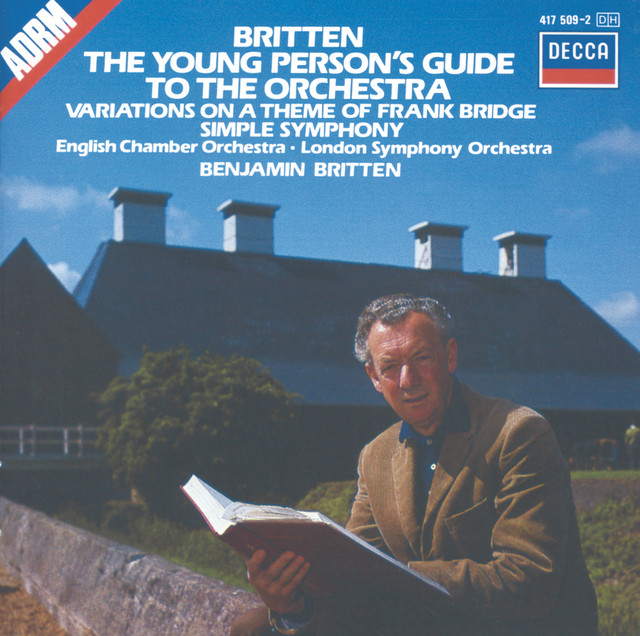
Britten: The Young Person's Guide to the Orchestra; Simple Symphony, etc.
Britten; London Symphony Orchestra, English Chamber Orchestra
Show more
Artists
Herbert von Karajan
Ludwig van Beethoven
Wolfgang Amadeus Mozart
Them
Martha Argerich
David Bowie
Benjamin Britten
Claude Debussy
Michel Legrand
The Rolling Stones
The Animals
Eric Clapton
John Mayall
Ten Years After
Orchestre Symphonique de Montréal
Orchestre De La Société Des Concerts Du Conservatoire
Johann Sebastian Bach
Tom Jones
Nikolai Rimsky-Korsakov
Kyung Wha Chung
Georges Bizet
Wiener Philharmoniker
André Previn
London Philharmonic Orchestra
Kiri Te Kanawa
Choir of King's College, Cambridge
The Zombies
Erik Satie
London Symphony Orchestra
Chicago Symphony Orchestra
Pascal Rogé
Maurice Ravel
Gabriel Fauré
Giovanni Battista Pergolesi
Gioachino Rossini
Giovanni Pierluigi da Palestrina
Jacques Offenbach
George Frideric Handel
National Philharmonic Orchestra
Van Morrison
New York Philharmonic
Zubin Mehta
Arnold Schoenberg
Franz Schubert
András Schiff
Vladimir Ashkenazy
Aaron Copland
Isaac Albéniz
Gustav Holst
Alfred Brendel
Ottorino Respighi
Giuseppe Verdi
Charles Gounod
Joseph Haydn
Charles Dutoit
Sir Georg Solti
Iannis Xenakis
Franz Liszt
Edvard Grieg
Domenico Scarlatti
Lorin Maazel
Heitor Villa-Lobos
Orchestra of the Royal Opera House, Covent Garden
David Munrow
Steven Mercurio
Pyotr Ilyich Tchaikovsky
Camille Saint-Saëns
Sir Neville Marriner
Lynn Harrell
Frédéric Chopin
Georg Philipp Telemann
Thomas Allen
Samuel Ramey
Academy of Ancient Music
Royal Philharmonic Orchestra
Academy of St. Martin in the Fields
Choir of St. John's College, Cambridge
Radu Lupu
Joaquín Rodrigo
Manuel de Falla
Orchestre de la Suisse Romande
Dmitri Shostakovich
David Oistrakh
Alexander Borodin
Kirill Kondrashin
Mischa Maisky
Johannes Brahms
John Dowland
Jeffrey Tate
Jean Sibelius
Leoš Janáček
Camel
Ignacy Jan Paderewski
Chicago Symphony Chorus
Henry Lewis
Aram Khachaturian
Claudio Abbado
Dame Joan Sutherland
Sir Colin Davis
Royal Concertgebouw Orchestra
Luciano Pavarotti
Antonio Vivaldi
Antonín Dvořák
Felix Mendelssohn
Riccardo Chailly
The Cleveland Orchestra
Hector Berlioz
Robert Schumann
Sergei Rachmaninoff
Gustav Mahler
Igor Stravinsky
Sergei Prokofiev
Richard Strauss
Johann Strauss II
Igor Markevitch
Modest Mussorgsky
Christopher Hogwood
César Franck
Béla Bartók
Wiener Symphoniker
Kurt Moll
Savoy Brown
Orchestra Of The 18th Century
Seiji Ozawa
Richard Bonynge
Teresa Berganza
Carl Orff
Francisco Araiza
Frans Brüggen
Caravan
Andrea Bocelli
Agnes Baltsa
London Festival Orchestra
Philharmonia Orchestra
Barry Tuckwell
Joaquín Turina
Bruno Walter
English Chamber Orchestra
Édouard Lalo
Richard Wagner
Alban Berg
Johann Strauss I
Josef Strauss
Richard Clayderman
Paul Hindemith
Ambrosian Singers
James Bowman
Chorus of the Royal Opera House, Covent Garden
Orchestra dell'Accademia Nazionale di Santa Cecilia
Gus Viseur
Antonio Soler
Gennady Rozhdestvensky
Giuseppe Patanè
Giorgio Tozzi
Arthur Grumiaux
Klaus Mäkelä
Deutsches Symphonie-Orchester Berlin
Small Faces
Ernest Ansermet
Antal Doráti
Henryk Szeryng
Detroit Symphony Orchestra
Anatole Fistoulari
George Szell
Ingrid Haebler
Ana Maria Martinez
Charles Ives
Rundfunkchor Berlin
Peter Hurford
Rafael Frühbeck de Burgos
George Guest
Elisabeth Söderström
Jorge Bolet
Sir David Willcocks
Ruggero Leoncavallo
Lucia Popp
Frederica von Stade
Bernard Haitink
Eberhard Wächter
Robert Lloyd
Klaus Wunderlich
I Musici
Consort Of Musicke
Alexander Gretchaninov
Isidore Godfrey
Willi Boskovsky
Alicia de Larrocha
Alan Hacker
Cleveland Quartet
Kathleen Ferrier
Christoph von Dohnányi
Vera Lynn
Vienna Chamber Orchestra
Martti Talvela
István Kertész
Various Artists
Paco Bandeira
Felix Ayo
The Tremeloes
Pierre Monteux
George Duning
Cat Stevens
Bert Kaempfert & His Orchestra
Bloch
Woody Herman and His Orchestra
Marilyn Horne
Early Music Consort of London
Alex North
New York City Opera Orchestra
James King
Glazunov, Alexander Konstantinovich
Anthony Rooley
James VanDemark
Otis Spann
Liadov
Joseph Canteloube
The D’Oyly Carte Opera Company
Stephen Roberts
Elgar Howarth
Sir Clifford Curzon
Balakirev, Mily Alexeyevich
Oslo‐Filharmonien
Philip Jones Brass Ensemble
The Mantovani Orchestra
Régine Crespin
Pilar Lorengar
Saito Kinen Orchestra
Ralf Gothóni
Tavares
Felicja Blumental
Dame Moura Lympany
Anthony Collins
Will Tura
Dickie Valentine
Jerry Wallace
Candlewick Green
Segal, Uri
Fred Lowery
Jonathan King
Peter Jay and the Jaywalkers
Gus Deloof
De Zingende Zwervers
Jean Narcy
Brian Poole
Kapelle Hans Aregger
Bebe Daniels
Ben Lyon
The Three Ginx
Quintetto Chigiano
Ronnie Aldrich and His Orchestra
The Ladybirds
Lieutenant Pigeon
Yusuf
Ronny Temmer
Ramblers International
Stanley Black & His Orchestra
Davy Kaye
David Whitfield
The Stargazers
Bracha Eden
Tamir, Alexander
Nieuw Amsterdam Trio
Ronnie Aldrich and His Two Pianos
Joan Taylor
The Nottingham Oriana Choir
The Boyd Neel Orchestra
Roy Henderson
George London
Leonie Rysanek
Rita Deneve
Le Trio Monique Rollin
David Clayton‐Thomas
The Chorals
The Wilburn Brothers
Ada de Castro
Postnikova, Viktoria
György Fischer
The Tornados
Carlos Bonell
Sylvia Greenberg
Manuguerra
Fitzwilliam String Quartet
Nikita Magaloff
Orchestra
Coro del Teatro Massimo Bellini
Stefano Antonucci
Francesco Piccoli
Roberto Accurso
Franz von Suppé
Lulu
Oborin, Lev
Klausjürgen Wussow
John Miles
Tommy Steele
Download our mobile app
Get the Melodigging app and start digging for new genres on the go
Download on the App Store
Get it on Google Play
© 2026 Melodigging
Give feedback
Legal
Melodding was created as a tribute to
Every Noise at Once
, which inspired us to help curious minds keep digging into music's ever-evolving genres.