Your digging level
Description
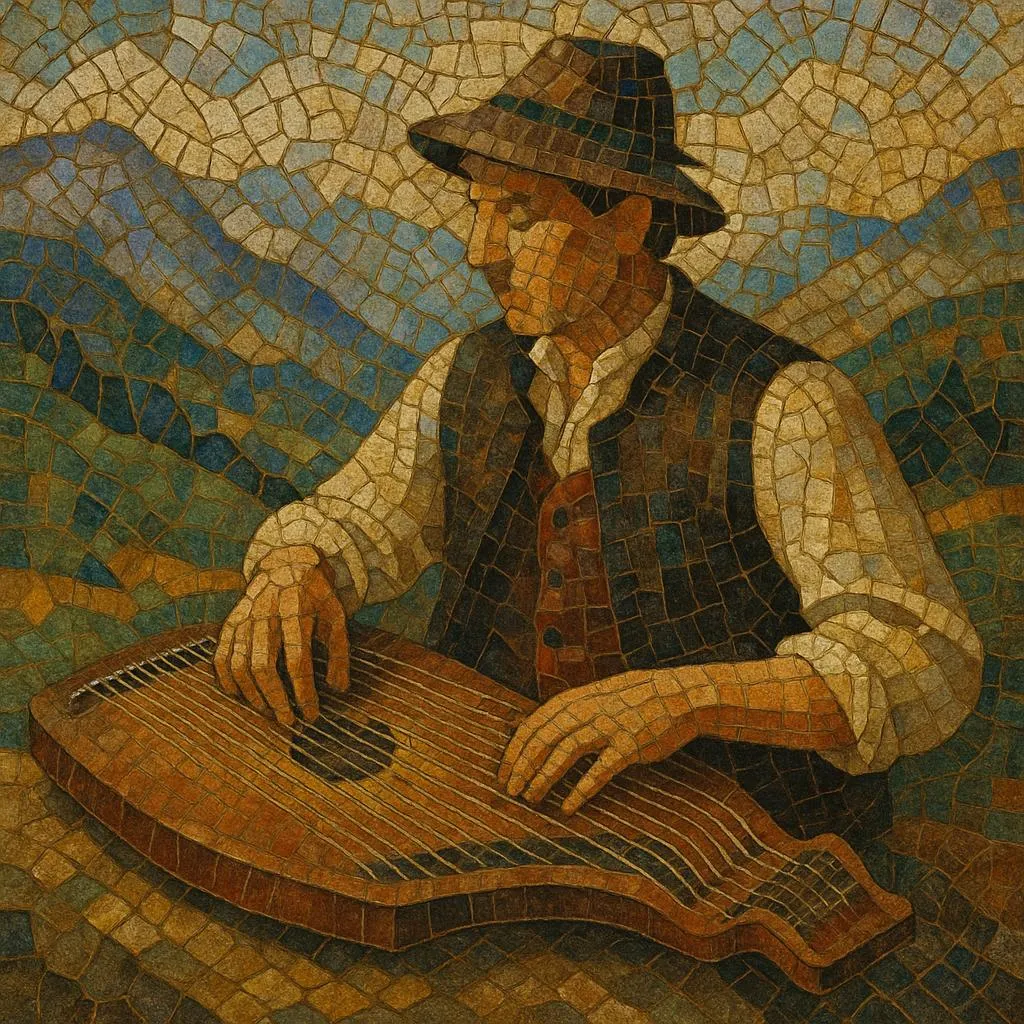
Zither (as a genre) refers to the traditional Central European practice of composing and performing music centered on the concert and Alpine zither family, especially in Austria and southern Germany. The sound is defined by a fretted melody section picked with a thumb-ring plectrum and a bed of open accompaniment strings plucked by the fingers, yielding a bright, bell-like melody over resonant drones and arpeggios.
Stylistically, zither repertoire spans rustic dance forms (Ländler, Boarischer, Polka, Waltz), lyrical salon pieces, and reflective folk songs. It is performed solo or in small ensembles with guitar, harp, clarinet, accordion, and hammered dulcimer, and it often features regional tunings and idioms that evoke Alpine landscapes and village life.
History
The fretted concert zither took shape in the first half of the 19th century in the Alpine region (Vienna, Salzburg, Bavaria, Tyrol). Emerging from older board zithers and regional folk practices, makers standardized instruments with a fretted melody section and multiple open accompaniment strings. Traveling virtuosi and court performers popularized the instrument among both rural and urban audiences.
By the late 1800s, the zither bridged tavern, parlor, and concert hall. It flourished in informal music-making, in café culture, and in salon music that adapted local dances—Waltz, Ländler, and Polka—into refined pieces. Urban song traditions (notably Viennese song) embraced the zither’s shimmering timbre, and amateur clubs, method books, and competitions helped codify technique and repertoire.
Emigration carried zither building and playing to North America, where makers and performers sustained teaching studios and ensembles. Early recording technology captured solo and small-ensemble zither music, fixing many regional dance types and tunings for posterity and expanding the instrument’s reach.
A mid-century revival renewed interest through radio, television, and gramophone releases. Folklore movements and regional festivals encouraged traditional styles while composers experimented with concert works, pedagogical pieces, and crossovers with light music and "volkstümliche" programming.
Today, the zither thrives in Alpine folk scenes, conservatories, and festival circuits. Artists explore historically informed practice, contemporary composition, and genre-fusions. Builders continue to refine instruments (concert, Alpine, and regional variants), and teaching networks preserve regional tunings and dance forms while commissioning new repertoire.