Your digging level
Description
Yunnan traditional music is a diverse and vibrant musical tapestry hailing from Yunnan Province in southwest China, characterized by the distinct cultural heritage of its 25 ethnic minorities, including the Yi, Dai, Naxi, Hani, and Bai people.
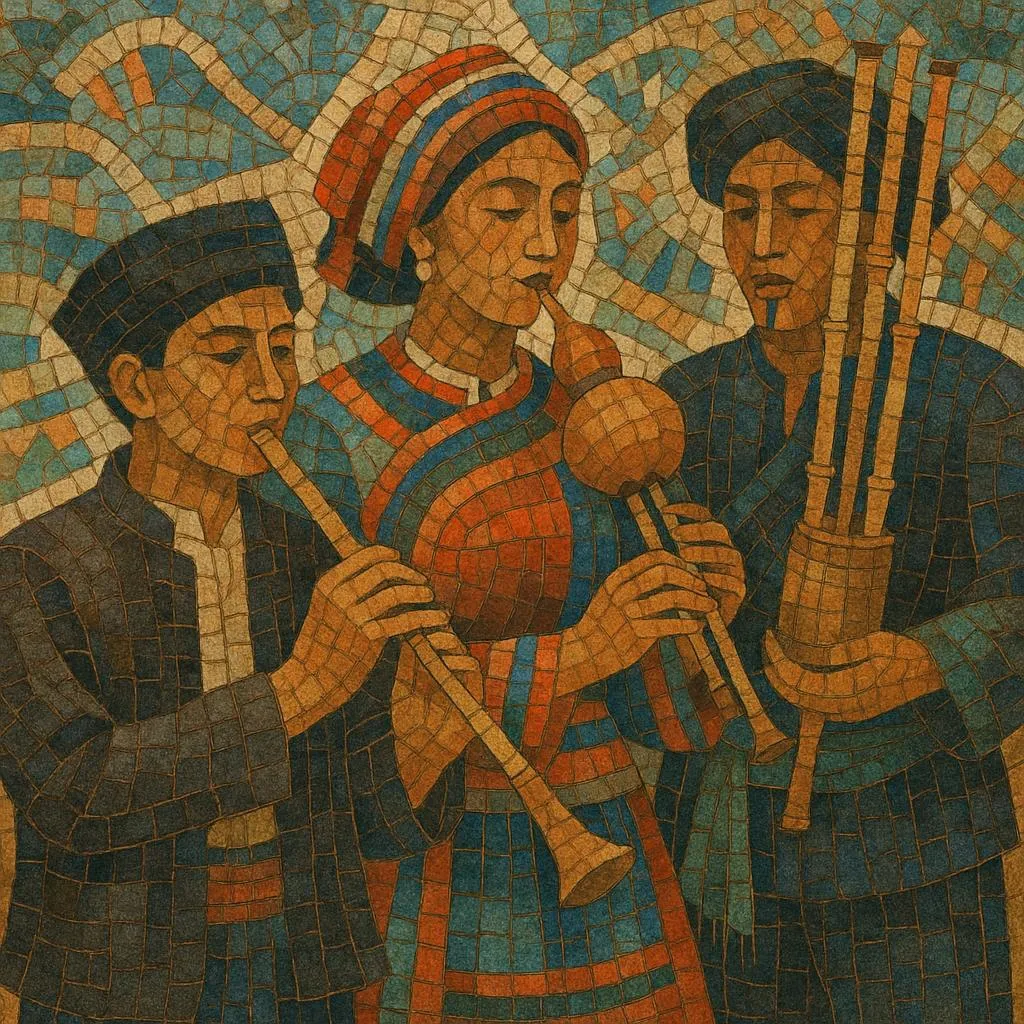
The genre is renowned for its unique instrumentation, utilizing the hulusi (gourd flute), bawu (free-reed pipe), and lusheng (mouth organ), which produce distinctively mellow, shaking, and earthy tones.
Musically, it often features pentatonic scales, antiphonal singing (call-and-response), and intricate rhythms derived from traditional dances like the Peacock Dance or the Left Foot Dance.
Styles range from the ancient, ritualistic Dongjing music of the Naxi people—often called a 'living fossil' of Chinese music—to the lively, nature-inspired courtship songs of the Yi and Dai communities.
History
The history of Yunnan traditional music is as layered as the province's geography, stretching back over two millennia.
Archaeological findings, such as the Wanjiaba bronze drums dating back to the Spring and Autumn Period (770–476 BC), indicate a sophisticated musical culture existed in the region thousands of years ago. These drums were used in rituals and communication, establishing early rhythmic foundations.
During the Tang (618–907) and Song (960–1279) dynasties, Han Chinese court and religious music migrated south via the Tea Horse Road and the Silk Road. The Naxi people of Lijiang absorbed these influences, preserving Taoist and Confucian ritual music (Dongjing) that largely vanished from central China, creating what is now known as Naxi Ancient Music.
Over centuries, distinct ethnic styles flourished in isolation. The Dai people in the tropical south developed music closely linked to Southeast Asian traditions, utilizing the elephant-foot drum and hulusi. The Yi people in the mountains cultivated the 'Seaweed Tune' (Haicai Qiang), a high-pitched, soaring vocal style used for communication across valleys.
In the late 20th century, particularly the 1980s, there was a concerted effort to revive and document these traditions. Figures like Xuan Ke helped bring Naxi Ancient Music to the global stage. Simultaneously, instruments like the hulusi became standardized and popular across China, bridging the gap between folk tradition and modern performance.
Composing in the style of Yunnan traditional music requires a deep engagement with specific ethnic modes and instruments.
Instrumentation: Center your melody around wind instruments like the Hulusi (for soft, mellow themes) or Bawu. Use the Sanxian (three-stringed lute) or Yueqin (moon lute) for rhythmic and harmonic support. Percussion should feature the Elephant-foot drum or bronze gongs for ceremonial beats.
Scales and Melody: Utilize Pentatonic scales (Do, Re, Mi, Sol, La). For Yi-style music, incorporate wide vocal leaps and high-pitched grace notes to mimic the 'Seaweed Tune'. For Dai-style music, focus on smooth, legato melodies with glissando (sliding) notes that imitate the movements of a peacock or flowing water.
Rhythm: Employ irregular meters (such as 5/4 or mixed beats) characteristic of Yi dance music, or steady, syncopated 2/4 or 4/4 rhythms for Dai dance pieces. Antiphonal structures, where two voices or instruments trade musical phrases, are essential for creating an authentic folk feel.
Themes: Lyrically and atmospherically, draw inspiration from nature (mountains, rivers, forests), courtship, agricultural life, and local legends.