Your digging level
Description
Yorkshire folk is the regional strand of English folk rooted in the landscapes, dialects, industries, and community singing traditions of Yorkshire in northern England. It blends older ballads and work songs—about mining, fishing, farming, and the textile trade—with dance tunes and seasonal ritual songs, and is instantly marked by place‑names, local characters, and the county’s distinctive speech and humor.
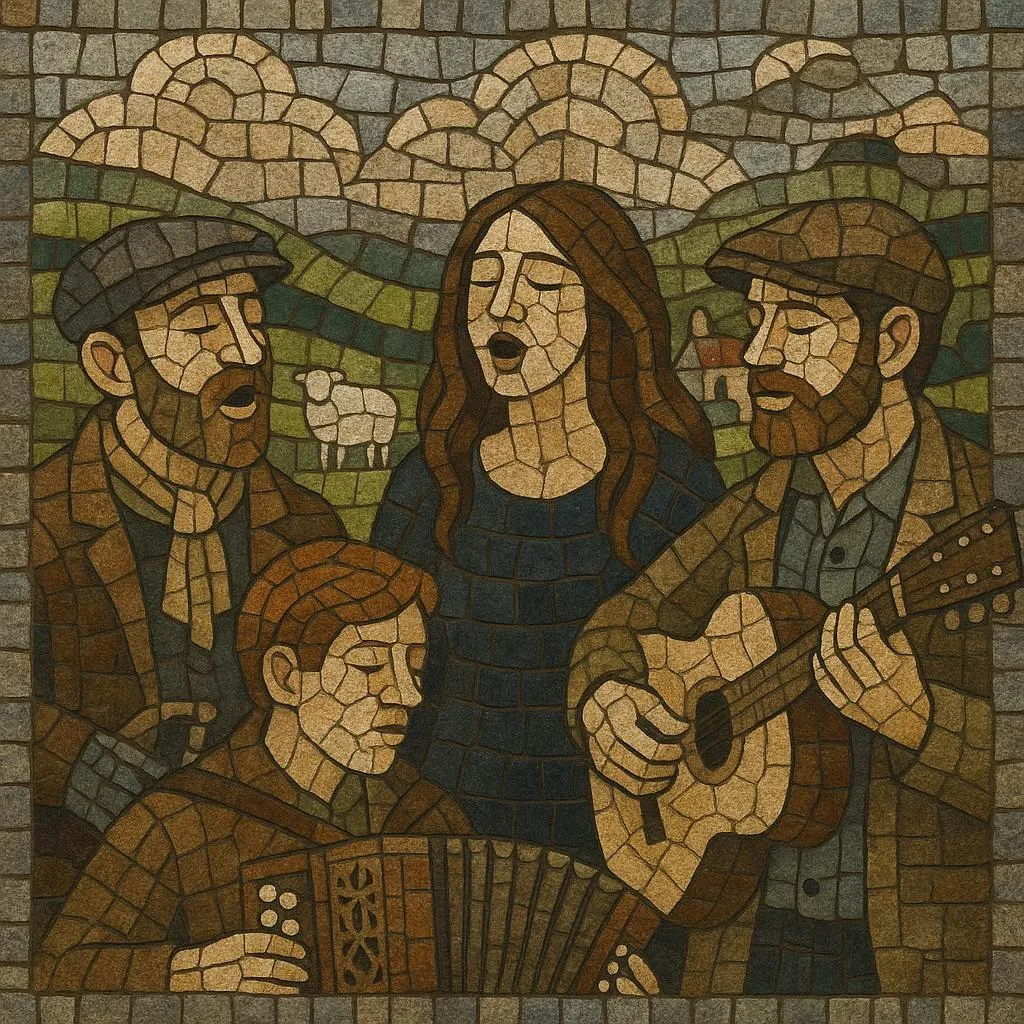
Musically, it spans unaccompanied close‑harmony singing (often with powerful, communal choruses) and intimate song‑carrier accompaniment on fiddle, guitar, melodeon, concertina, and whistle. Modal melodies (Dorian and Mixolydian are common), strophic ballad forms, refrain structures for group participation, and dance rhythms (jigs, hornpipes, polkas, and waltzes) are typical. The modern scene draws on pub‑carol traditions, session culture, and folk‑club lineages that flourished during the post‑war folk revival, while continuing to write new songs that sound at home on the moors or in a South Yorkshire taproom.
History
Yorkshire’s folk repertoire formed across centuries through oral tradition, broadsides, and community music‑making. Maritime songs from the Humber and Holderness coasts, moorland ballads from the Dales and North York Moors, and industrial songs from pits, mills, and workshops gave the region a distinct narrative stamp. Local carol and wassail customs, mummers’ plays, and village dance music fed a living vernacular that prized strong choruses and communal performance.
In the late 19th and early 20th centuries, collectors such as Frank Kidson (Leeds) documented Yorkshire tunes and texts, bridging oral tradition and print. Their work preserved dialect pieces, dance sets, and occupational songs that later revival musicians would reanimate on stage and record.
During the Second British Folk Revival, Yorkshire contributed a particularly robust club culture and an appetite for chorus‑driven, unaccompanied harmony as well as guitar‑ and fiddle‑led arrangements. Folk clubs, pub sessions, and university societies in cities such as Hull, Leeds, Sheffield, and York became hubs where archival songs, dialect humor, and new writing coexisted. Festival circuits and independent labels tied the regional scene to the broader English folk resurgence.
From the 1990s onward, a new generation based in South and North Yorkshire universities and folk clubs forged links between scholarship and performance, spawning projects that mined local archives and reconnected pub‑carol traditions with contemporary audiences. Today the style ranges from raw, participatory session singing to chamber‑folk textures and folk‑rock staging, yet it remains grounded in storytelling, dialect, and social singing—the hallmarks of Yorkshire identity in music.