

Your digging level
Description
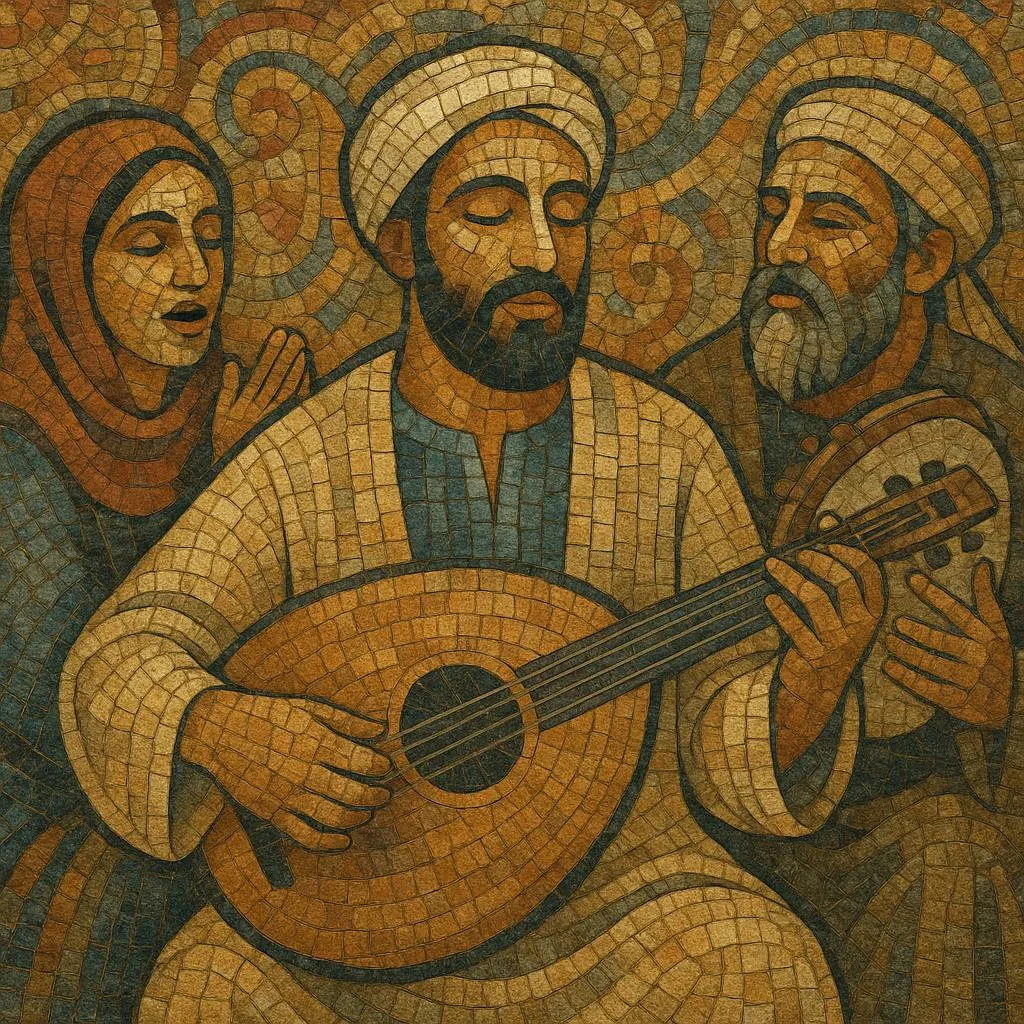
Yemenite Jewish music is the vocal and instrumental tradition of the Jewish communities that lived in Yemen for centuries and later in Israel after mass migration in the mid-20th century. It spans sacred chant (synagogue nusaḥ/cantillation and piyyutim) and rich para‑liturgical and domestic repertoires (wedding and henna songs, women’s dance songs, lullabies).
Musically, it is primarily monophonic and modal, drawing on Arabic maqam practice while preserving distinctive Yemenite Hebrew pronunciation and archaic melodic contours. Performances emphasize intricate melismas, microtonal inflection, robust rhythmic hand‑clapping, and minimal accompaniment (often a metal tray/plate percussion and frame drum), though modern fusions add oud, qanun, and contemporary production.
Across the 20th century, the tradition strongly shaped Israeli popular music; iconic artists such as Shoshana Damari and Ofra Haza brought Yemenite texts and melodies into national song and global pop, while newer acts fuse the repertory with funk, blues, electronica, and hip‑hop.
History
Yemenite Jews maintained a continuous presence in Yemen for well over a millennium, cultivating synagogue chant (nusaḥ), Hebrew cantillation, and piyyut singing intertwined with Yemeni Arabic poetic and musical norms. A key milestone is the 17th‑century flowering of Yemenite Hebrew poetry, especially the Diwan of Rabbi Shalom Shabazi, whose texts and meters undergird much of the sung repertoire.
Music framed daily and yearly cycles—Sabbath and festivals in the synagogue; weddings, henna, and communal gatherings in homes and courtyards. Women’s a cappella and percussion‑led singing (often with a metal tray and complex clapping patterns) form a distinctive sub‑tradition, while men’s chanting preserves nuanced modal and textual performance rules.
Early Yemenite immigrants arrived in Ottoman/mandatory Palestine, but the pivotal demographic shift came with 1949–50’s Operation Magic Carpet, relocating most Yemenite Jews to Israel. Their repertories entered schools, radio, and national stages, shaping the young state’s musical identity.
Bracha Zefira and Shoshana Damari helped canonize Yemenite songs within Israeli music. In the 1980s, Ofra Haza’s adaptations of Shabazi poems (e.g., “Im Nin’alu”) fused traditional melodies with electronic production, achieving worldwide success and introducing Yemenite timbres to global pop.
Artists and ensembles (e.g., Yemen Blues, A‑WA, and many singer‑songwriters) mix Yemenite vocal techniques, maqam modes, and rhythms with funk, blues, rock, electronica, and hip‑hop. Meanwhile, traditional liturgical practice remains vital in synagogues and community settings in Israel and the diaspora.

