

Your digging level
Description
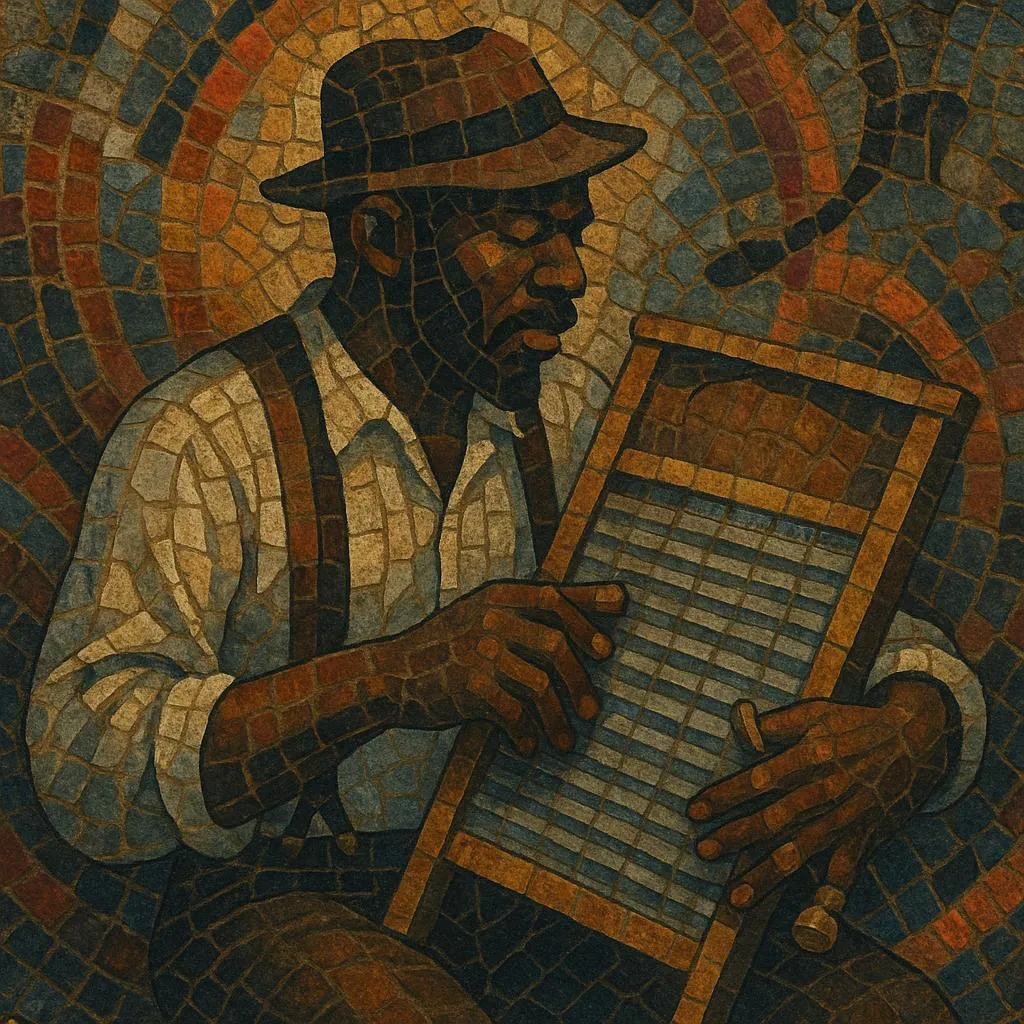
Washboard is an early 20th‑century, instrument-defined microgenre of American vernacular music that centers the scrubbed, rhythm-keeping washboard (often played with thimbles, spoons, or brushes) as a featured percussion voice.
Emerging from the crossroads of jug-band music, country blues, ragtime, and hot jazz, washboard ensembles typically performed upbeat, stomping tunes, blues numbers, and novelty songs in dance halls, rent parties, and on street corners. The sound is raw and percussive: chattering triplets, scraped backbeats, woodblock and cowbell accents, and improvised breaks punctuate small combos with guitar/banjo, piano, clarinet or cornet, kazoo or jug, and call‑and‑response vocals.
Although tied to specific bands and scenes of the late 1920s and 1930s, the washboard aesthetic persisted through folk and skiffle revivals and fed directly into zydeco’s rubboard tradition, leaving a lasting imprint on roots and revivalist music.
History
Washboard performance grew organically wherever inexpensive, portable rhythm was needed. African American communities in the U.S. South adapted household washboards into percussion, drawing on ragtime syncopation, country blues grooves, and the emerging hot jazz feel. Street-corner and rent‑party ensembles used washboard for timekeeping and showy percussive effects, often alongside jug, kazoo, banjo/guitar, and piano.
During the pre‑war recording boom, numerous washboard groups cut sides for independent labels. Their repertoire mixed 12‑bar blues, ragtime‑derived stomps, hokum double‑entendre songs, and quickstep dance tunes. The washboard player—outfitted with thimbles, sometimes woodblocks, cowbells, and tin attachments—provided a clattering, swinging engine for small‑combo arrangements. This "hot and homemade" sound flourished in Southern and Midwestern cities and on the New Orleans–Chicago axis.
As big-band swing and electric blues rose, the core washboard scene became more niche, but the instrument’s ethos survived in vernacular and revival settings. Crucially, Anglo‑American skiffle adopted washboard as a signature percussion, translating U.S. jug‑band idioms into a youth movement. In Louisiana, Creole and Cajun musicians adapted the idea into the metal rubboard (frottoir), cementing a lasting connection to zydeco.
Folk revivals reanimated jug‑band and washboard practices, with archivists and enthusiasts rescuing early recordings and techniques. Contemporary trad‑jazz, old‑time, and street‑band scenes still feature washboard for its theatricality and kinetic rhythm, while zydeco bands keep its rubboard descendant at the genre’s heart. Today, washboard remains a living link between early jazz/blues vernacular and modern roots performance.




