Your digging level
Description
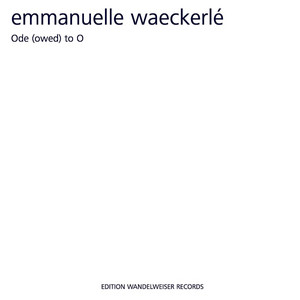
Wandelweiser refers both to a composer collective (Edition Wandelweiser, founded in 1992) and a recognizable aesthetic that emphasizes silence, extreme quietness, long duration, and a heightened attention to sonic detail. Its music often unfolds at the threshold of audibility, inviting listeners to attend to room tone, the decay of sounds, and environmental ambience as part of the work.
Scores frequently use open or flexible forms, proportional or time‑based notation, and spare materials. Rather than dramatic development, Wandelweiser pieces privilege presence, patience, and the poetics of space—where silences are treated as active, structural components rather than mere rests.
While rooted in contemporary classical practice, the aesthetic intersects with experimental, electroacoustic, and ambient sensibilities, and has influenced quiet improvisation, microsound, and other reductionist currents across scenes in Europe, North America, and Japan.
History
Edition Wandelweiser was founded in 1992 by Antoine Beuger and Burkhard Schlothauer in Germany, coalescing a circle of composers across Germany, Switzerland, Austria, the Netherlands, and later the United States. Early on, the group articulated a shared fascination with very quiet sound, durational openness, and the structural use of silence—clearly indebted to John Cage’s post‑1950s ideas and the late works of Morton Feldman.
Through the 1990s, core figures—including Jürg Frey, Manfred Werder, Eva‑Maria Houben, and later Michael Pisaro‑Liu—developed scores that often employ time‑brackets, sparse materials, and performer autonomy. Silence became a positive, sounding material; environmental noise and the fragile ends of tones entered musical foregrounds. This was documented via Edition Wandelweiser’s publications and recordings, which circulated a consistent, quietly radical vocabulary.
By the 2000s, the aesthetic resonated internationally. In the US, Pisaro‑Liu’s teaching and recordings helped bridge experimental and academic circles. Parallel movements in Japan (e.g., onkyō) and the European reductionist improv scene found common ground in near‑silent textures and micro‑events, resulting in cross‑pollination between composed and improvised practices.
Wandelweiser’s music has been both celebrated for its contemplative intensity and critiqued as ascetic or austere. Yet its impact is clear: it reframed listening as the primary drama, expanded the role of space and time in composition, and influenced strands of lowercase, microsound, experimental ambient, and modern chamber practices. Today, the term “Wandelweiser” is used both for the publisher/collective and for an identifiable way of making music rooted in quietude and attention.