Your digging level
Description
Vlaamse cabaret is the Flemish (Dutch-language Belgian) strand of cabaret that blends witty, text-driven songs with monologue, satire, and intimate stagecraft.
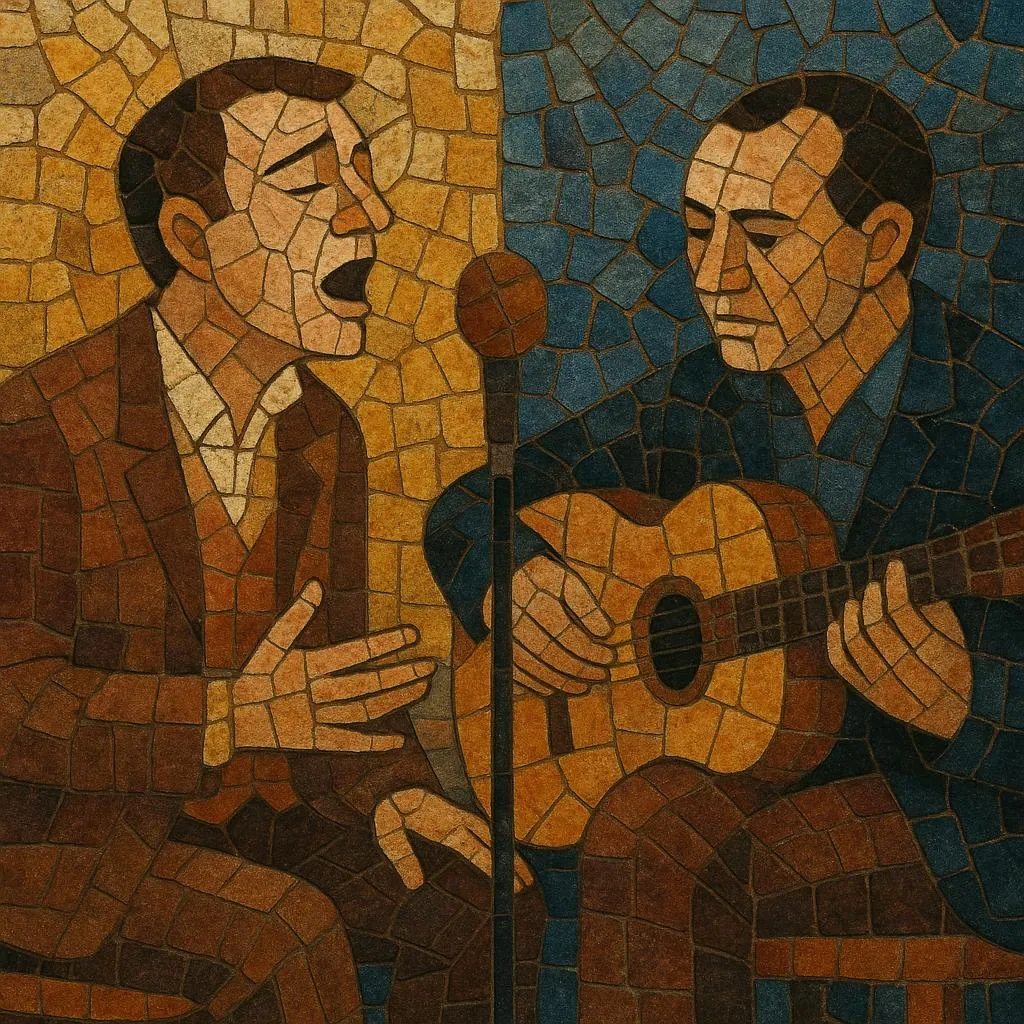
Rooted in the Low Countries’ kleinkunst tradition, it favors small ensembles—often voice with guitar or piano—where lyrics, storytelling, and character work take center stage. Performers switch fluidly between spoken word and song, using dialects and regional humor to address everyday life, politics, and social mores.
Musically, it borrows from chanson, folk, tango, waltz, and light jazz harmonies, but the focal point remains the text: deft rhyme, narrative arcs, punchlines, and bittersweet sentiment delivered with theatrical timing.
History
Flemish cabaret grows out of pan‑European cabaret and the Low Countries’ kleinkunst. After World War II, Belgium’s Dutch‑speaking stages nurtured intimate song‑theatre that merged literary song with comic sketches and topical commentary. French chanson and older music‑hall practices provided a model for elevated, poetically dense lyrics delivered in cozy venues.
By the 1960s, a distinct Flemish voice emerged: performer‑authors wrote sharp texts in standard Dutch and in local dialects. Acoustic guitar and piano accompanied urbane, folk‑tinged melodies, while performers moved between monologue and song to shape a single, story‑driven set. This period cemented the expectation that a “cabaret” evening balances humor with reflection, regional color with universal themes, and satire with lyric intimacy.
From the 1990s onward, Vlaamse cabaret intersected with stand‑up comedy, contemporary singer‑songwriting, and theatre, expanding its palette with fuller bands, subtle electronics, and multimedia staging. The core remained text‑first performance and audience rapport, but topics broadened to include globalization, identity, and media saturation, often retaining the genre’s trademark bittersweet, ironic tone.
Common threads include everyday vignettes, social satire, affectionate regionalism, and a pendulum swing between humor and melancholy. Musically, simple song forms (verse–refrain, strophic, or through‑composed ballads) support precise diction and narrative clarity; harmonies are tonal and song‑friendly, with occasional detours into tango, waltz, or jazz‑colored progressions to match lyrical nuance.