Your digging level
Description
Vintage radio show refers to the early-to-mid 20th‑century tradition of scripted and live broadcast programs that blended drama, comedy, music, variety, news, and advertising into a unified audio experience. Often called the "Golden Age of Radio," it thrived before television became dominant.
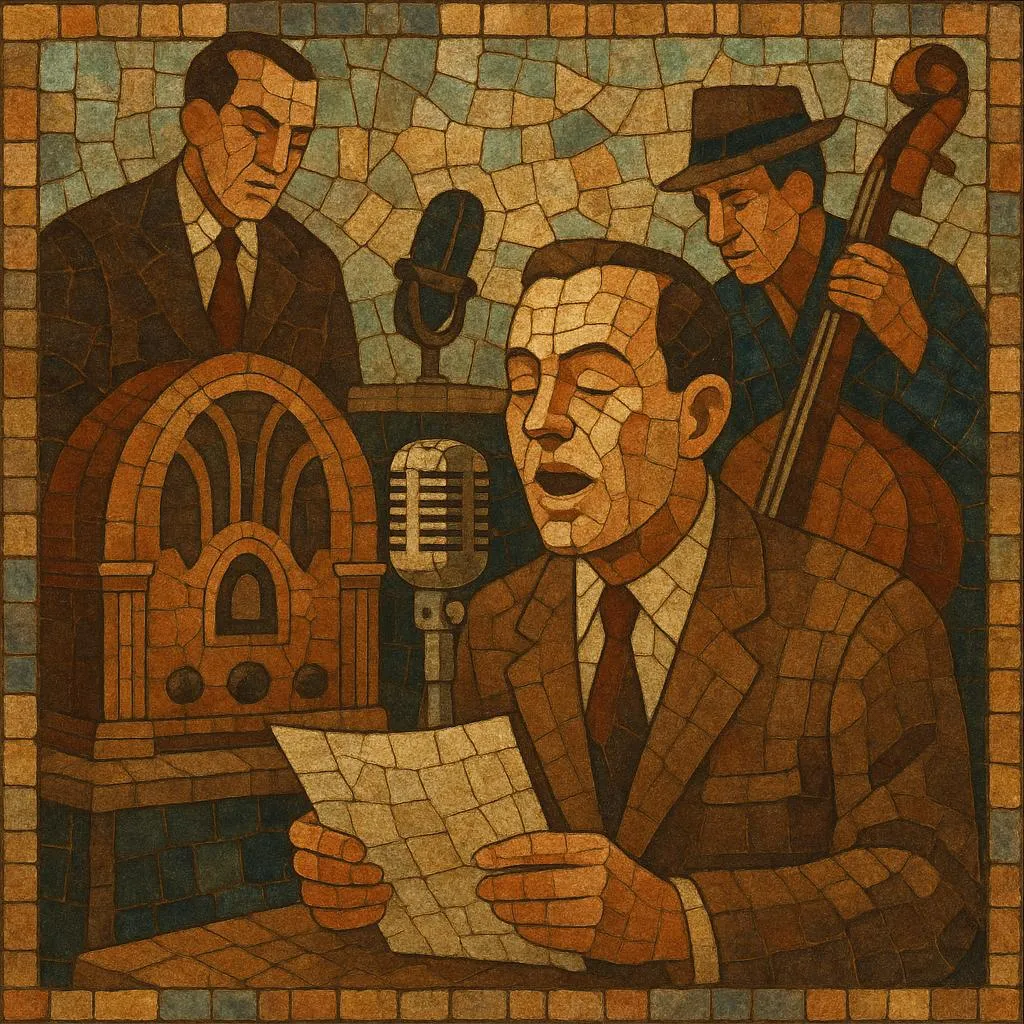
These shows were characterized by monophonic sound, prominent announcers, live or tightly scripted voice acting, in‑studio orchestras or organists, on‑the‑spot foley effects, recurring musical stingers, sponsor taglines, and episodic storytelling. Formats ranged from thrillers and detective serials to sitcom‑style comedies, westerns, and anthology dramas, with pacing optimized for broadcast clocks and commercial breaks.
Artistically, the style synthesized vaudeville humor and cabaret patter with orchestral/jazz cues and theater-derived staging, building an immersive "theater of the mind" through narration, dialogue, and sound design.
History
Vintage radio shows emerged as a dominant mass medium during the early days of broadcasting, creating a shared cultural soundtrack for millions. Networks commissioned writers, actors, musicians, and engineers to craft vividly imagined worlds using only sound.
Commercial radio consolidated in the 1920s in the United States, as national networks formed and sponsored programming became widespread. Early schedules mixed live music, variety sketches, news bulletins, and short dramatic pieces. Vaudeville performers and stage actors adapted their timing and patter to microphone technique, while announcers defined the polished, authoritative tone of the medium.
The 1930s and wartime 1940s marked the apex: full-cast dramas, anthology thrillers, screwball comedies, western serials, and prestige adaptations became appointment listening. In-house orchestras or organists delivered overtures, leitmotifs, and cue stingers; foley artists executed door slams, footsteps, and weather; and producers perfected pacing across 15, 30, and 60‑minute blocks. Sponsor integration (jingles, host reads, and brand vignettes) shaped show identities.
Television drew away talent and audiences in the 1950s. Some radio properties migrated to TV; others evolved into news, talk, and music‑driven formats. Though prime-time scripted radio declined, the craft persisted in educational, public-service, and niche programming, and in international markets where radio remained central.
Archival recordings (airchecks and transcription discs) later fueled reissues and restorations, inspiring modern audio drama, sketch comedy, and the narrative grammar of podcasts. Contemporary creators emulate vintage techniques—mono imaging, band-limited EQ, live foley, and sponsor-style reads—to evoke the era’s "theater of the mind."