Your digging level

For this genre
0/8
🏆
Sign in, then listen to this genre to level up

Description

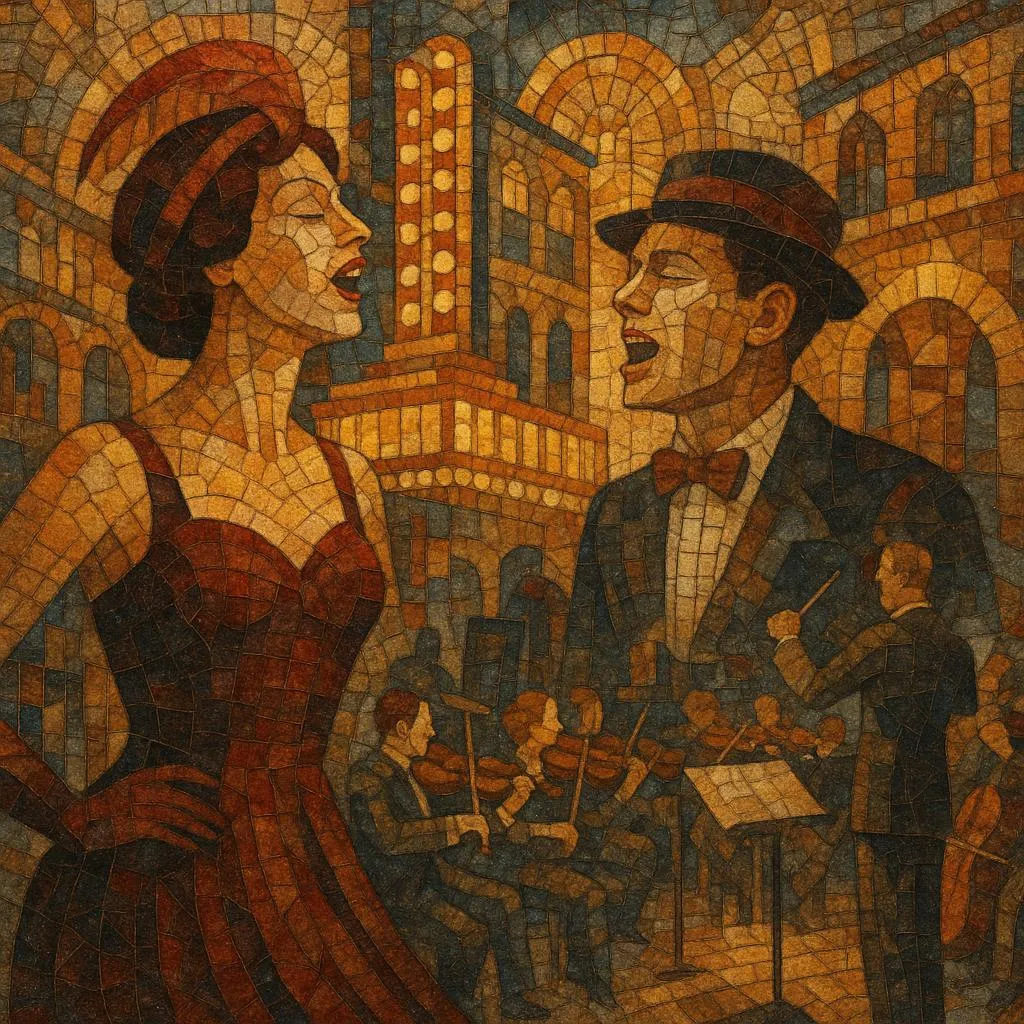
Vintage Broadway refers to the early-to-mid 20th‑century sound and songwriting craft of New York’s commercial musical theatre—before rock, pop, and megamusical aesthetics reshaped the stage. It centers on witty, tightly structured songs written for book musicals, operetta-influenced shows, and revues, typically scored for pit orchestras and sung in a clear, speech‑driven “legit” or belt style.

Musically, it blends Tin Pan Alley songcraft (memorable hooks, AABA forms), ragtime and jazz rhythmic vitality, operetta lyricism, and vaudeville showmanship. Orchestrations spotlight woodwinds, brass, and strings with rhythm section underpinning; patter songs, charm songs, ballads, and uptempo dance numbers advance character and plot.

The style gave rise to the American Songbook and a canon of show tunes that remain standards—defined by clever rhyme, character‑specific lyrics, pliant prosody, and melodies that sit well for stage voices.


Sources: Spotify, Wikipedia, Discogs, RYM, MB, user feedback and other online sources

History

Origins (1900s–1920s)

Broadway’s vintage idiom emerged as New York theatre absorbed Tin Pan Alley songcraft, European operetta, ragtime syncopations, and vaudeville variety formats. Early book musicals and revues standardized the practice of integrating songs with character and situation, while pit orchestras codified a bright, brassy theatre sound.

Consolidation and the Songbook Era (1930s–1940s)

As the Great American Songbook coalesced, Broadway composers refined AABA and verse‑chorus forms, witty internal rhyme, and speech‑inflected melodies. Orchestrators developed colorful woodwind doublings, brass fanfares, and string pads, creating a house sound for commercial theatres and cast recordings.

Golden Age Peak (1940s–1960s)

The so‑called Golden Age perfected the vintage Broadway style: songs propelled plot and character, dance sequences expanded, and “11‑o’clock numbers” delivered climactic vocal showcases. Harmony drew from jazz (extended chords, secondary dominants) yet remained tuneful and actor‑forward, supporting clear diction and narrative clarity.

Transition and Legacy (late 1960s onward)

From the late 1960s, rock and later pop idioms entered the theatre, but the vintage Broadway vocabulary endured in revivals, pastiche scores, and cabaret. Its techniques—tight lyric prosody, character songs, classic forms, and bright orchestration—remain foundational to musical theatre writing and vocal pedagogy.

How to make a track in this genre

Instrumentation and Orchestration
•   Write for a traditional pit orchestra: woodwinds (often doubling—flute/clarinet/sax), brass (trumpets/trombones), strings (violins/viola/cello/bass), percussion, piano/celesta, and guitar/banjo as color when appropriate. •   Use bright brass fanfares, reed pads, and pizzicato or lush string textures. Let percussion (trap set, mallets) punctuate dance breaks.
Form, Harmony, and Melody
•   Favor classic song forms: verse → AABA (32‑bar), or verse → refrain; insert dance breaks or tags for staging. •   Harmony: diatonic centers with secondary dominants, circle‑of‑fifths motion, occasional modal mixture; tasteful jazz extensions (6ths, 9ths, 13ths) without obscuring melody. •   Melodies should be singable, prosody‑aware, and speech‑rhythmic. Craft memorable refrains and clear cadences that cue applause or scene shifts.
Rhythm and Groove
•   Employ buoyant two‑step/foxtrot feels, mild swing, or ragtime‑tinged syncopations for uptempos; steady rubato or gently pulsed accompaniment for ballads. •   Build dance numbers around clear counts (8s/16s), with breaks and modulations that support choreography.
Lyrics and Dramaturgy
•   Write from character and situation: each song should reveal want, obstacle, or transformation. •   Use clever rhyme (perfect or rich), internal rhyme, and clear setups/payoffs. Keep diction forward and vowel shapes singer‑friendly. •   Incorporate song types: “I want” song, charm song, patter song, conditional love duet, 11‑o’clock showstopper.
Arranging and Staging
•   Spot intros (2–8 bars) to establish tone; consider key lifts for emotional peaks. •   Orchestrate around the voice: thin textures under patter; fuller brass/strings for climaxes; underscore dialogue with light reeds/strings. •   End numbers cleanly (button endings) or with vamp-to-cue for dialogue pick‑ups.
Rehearsal and Performance Practice
•   Prepare piano‑vocal with clear cuts and dance breaks; create rehearsal vamps for staging. •   Prioritize clarity of text and acting beats; dynamic shaping should trace the character’s arc.

Top tracks

Locked
Share your favorite track to unlock other users’ top tracks

Upcoming concerts

in this genre
Influenced by
Has influenced

Download our mobile app

Get the Melodigging app and start digging for new genres on the go
© 2026 Melodigging
Melodding was created as a tribute to Every Noise at Once, which inspired us to help curious minds keep digging into music's ever-evolving genres.
Buy me a coffee for Melodigging