Your digging level
Description
Vietnamese folk music encompasses the traditional singing, instrumental practices, and communal performance genres of the Kinh majority and Vietnam’s many ethnic minorities. It spans love duets, ceremonial singing, work songs, narrative ballads, trance rituals, and folk theatre.
Its foundations reflect centuries of cultural exchange: a strong melodic, modal, and poetic legacy from Chinese music and theatre; and Austronesian colorings—especially in rhythm, call‑and‑response, and some instrumental/vocal idioms—transmitted through the Cham (and, more broadly, the Malay world). These layers were indigenized into distinct regional styles across the Red River Delta (North), the central coast and highlands, and the Mekong Delta (South).
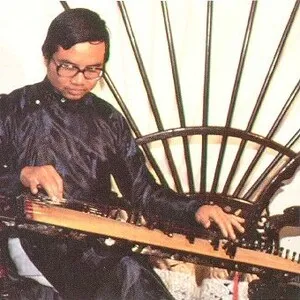
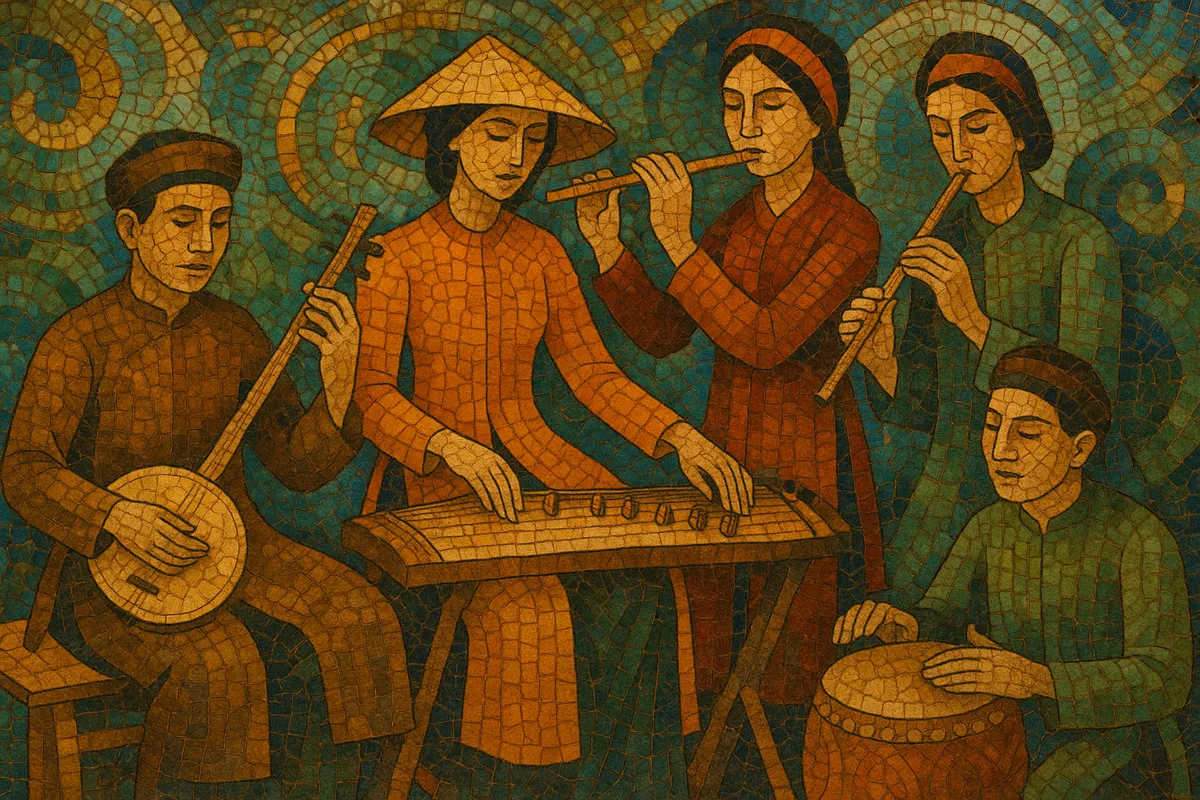
Representative forms include quan họ (antiphonal love duets), ca trù (ceremonial/art song with phách time‑keeper), xẩm (street busker ballads), chèo (folk opera), chầu văn/hát văn (spirit‑medium trance music), bài chòi and hò/lý (central coastal song traditions), đờn ca tài tử (southern chamber music), and many minority traditions such as Tày Then singing or Hmong khèn performance. Core instruments include đàn bầu (monochord), đàn nguyệt (moon lute), đàn tranh (zither), đàn nhị (fiddle), đàn đáy (long‑neck lute), sáo trúc (bamboo flute), and a family of frame and barrel drums.
History
After independence from Chinese rule (10th century), village ritual singing, harvest/work songs (hò), and narrative performance flourished around the Red River Delta. Chinese court/theatre models informed emerging Vietnamese forms, but melodies, prosody (especially lục bát verse), and performance practice were localized.
Distinct northern genres matured: quan họ love duets in Bắc Ninh, ca trù art song with phách time‑keeping, xẩm busker song, chèo folk opera, and chầu văn trance music. In the central regions, bài chòi (song‑game theatre) and various hò/lý styles developed alongside Cham and Khmer contact zones, reflecting Austronesian rhythmic profiles. In the South, đờn ca tài tử formed the chamber basis that would later seed cải lương theatre.
French colonial modernity brought recording, publishing, and urban stages; folk repertories entered salons, schools, and early broadcasting. Mid‑20th‑century cultural policy invested in collecting, standardizing, and presenting folk genres on state stages and radio, while village performance continued in ritual and festival life.
UNESCO inscriptions accelerated safeguarding and revitalization: Quan họ (2009), Ca trù (2009, then removed from urgent list after recovery), Xoan Phú Thọ (2011 → 2017), Bài chòi (2017), and Đờn ca tài tử (2013). Today, community guilds, master‑apprentice networks, and city clubs collaborate with universities and media, while pop, rock, and hip‑hop artists increasingly reference folk scales, instruments, and verse forms.

Top albums