

Your digging level

For this genre
0/8
🏆
Sign in, then listen to this genre to level up

Description

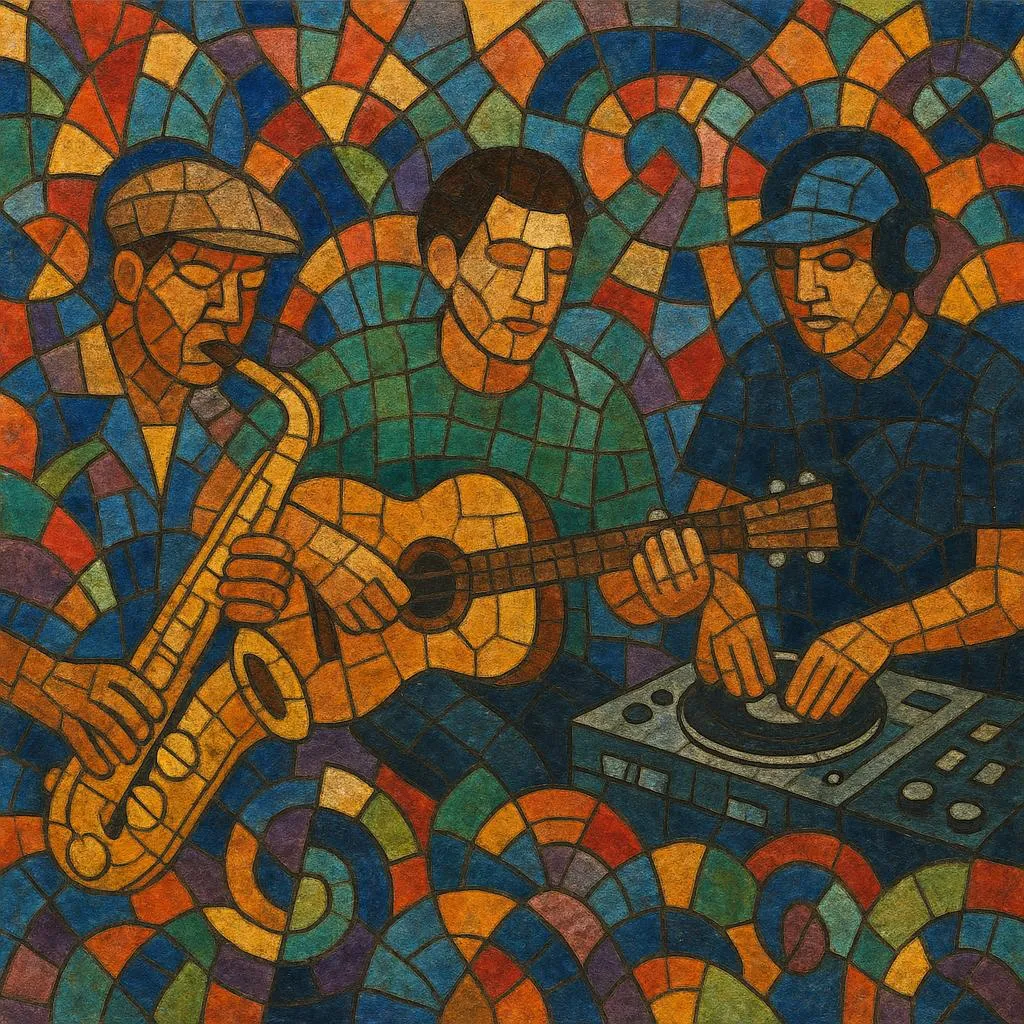
Variety is a radio format rather than a single musical genre. It is built on playing a broad, eclectic mix of music across styles and eras, often interwoven with talk, community announcements, sports, news, and specialty programming.

In practice, variety (especially in its free‑form expression) minimizes rigid playlists and tight rotations, grants wide autonomy to on‑air hosts, and emphasizes local culture, discovery, and serendipity. It is most commonly associated with smaller, non‑commercial broadcasters—college radio, community radio, and some high‑school or public stations—where a program director exercises minimal influence beyond regulatory compliance. The result is a platform where punk can sit next to jazz, folk, hip hop, experimental, classic rock, and global music—sometimes all within the same block.

Because variety is a programming philosophy, it does not have signature rhythms or harmonies of its own; instead, it curates many genres to create a diverse listening experience.



Sources: Spotify, Wikipedia, Discogs, RYM, MB, user feedback and other online sources

History

Early roots (1920s–1950s)
•   The term “variety” has origins in early radio and vaudeville-era “variety shows,” where stations mixed music, comedy, drama, news, and live performance. As U.S. AM radio professionalized in the 1930s–50s, formats gradually narrowed (e.g., network dramas, then postwar Top 40 music), but the idea of broad, mixed programming persisted on some public and educational stations.
Free‑form FM and the rise of non‑commercial variety (1960s–1970s)
•   The late 1960s FM “free‑form” movement—DJs programming long, eclectic sets with minimal corporate oversight—cemented the modern ethos of variety. Educational licenses at universities and community groups proliferated, giving space for local voices and adventurous playlists outside commercial Top 40 constraints.
College/community radio consolidation (1980s–1990s)
•   By the 1980s, “college radio” had become synonymous with a variety approach: block programming, DJ autonomy, and support for alternative/independent scenes. Countless artists in punk, indie, underground hip hop, noise, experimental, and global styles reached audiences first via variety-formatted non‑commercial stations.
Digital transition and multi‑platform era (2000s–present)
•   The internet, streaming, and podcasting extended variety’s reach. Even as commercial radio leaned further into narrowcasting, student-run and community outlets continued the free‑form tradition online, often archiving shows and specializing by time block. Today, variety remains a crucial discovery engine and cultural commons for local scenes and under‑served genres.

How to make a track in this genre

Programming philosophy (since this is a format)
•   Embrace eclecticism: plan sets that juxtapose eras and styles (e.g., alt‑rock → soul reissue → modern jazz → local DIY hip hop), while maintaining a logical flow via tempo, key, energy, or theme. •   Prioritize discovery and localism: include new releases, independent and regional artists, under‑represented genres, and community announcements or event calendars.
Show structure and flow
•   Use block programming: schedule distinct themed hours (e.g., Latin, experimental, folk, global club) or specialty shows by volunteer hosts. •   Keep segues intentional: sequence tracks by BPM, timbre, or lyrical topic to make diverse selections feel cohesive; avoid excessive repetition or tight rotations. •   Back‑announce and credit: clearly identify tracks/artists/labels, and give context or stories to help listeners connect across genres.
Voice and compliance
•   Maintain a conversational, community‑minded on‑air tone; incorporate interviews, call‑ins, local PSAs, and campus/community news as appropriate. •   Follow licensing and station policies (e.g., language/content rules, EAS tests, public file requirements) and log plays for reporting.
Technical practices
•   Normalize loudness to avoid jarring jumps when moving between eras/mastering styles. •   Use basic EQ/compression on voice mics; keep transitions clean (talk‑ups, cold starts, crossfades) to support the music-first ethos.

Main artists

Top tracks

Locked
Share your favorite track to unlock other users’ top tracks

Upcoming concerts

in this genre
Influenced by
No genres found
Has influenced

Download our mobile app

Get the Melodigging app and start digging for new genres on the go
© 2026 Melodigging
Melodding was created as a tribute to Every Noise at Once, which inspired us to help curious minds keep digging into music's ever-evolving genres.
Buy me a coffee for Melodigging
