Your digging level
Description
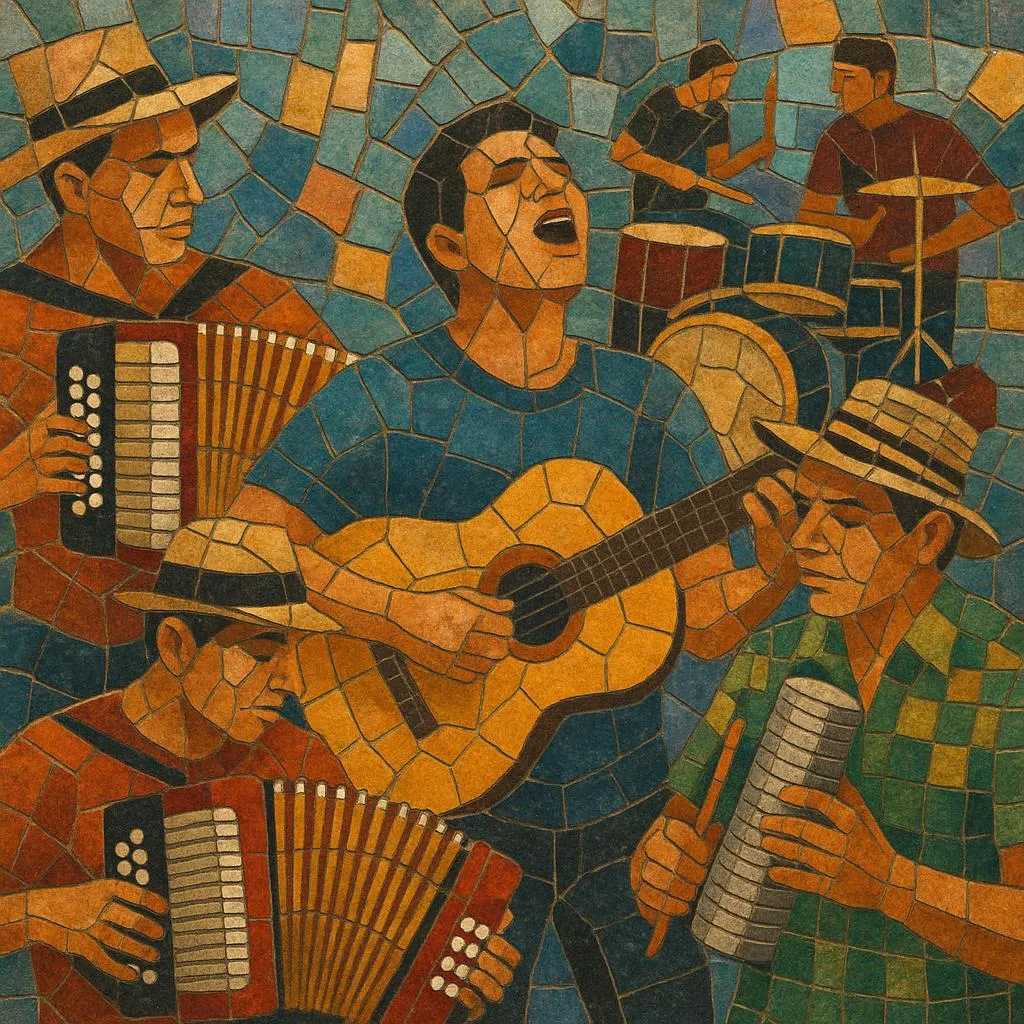
Vallenato moderno is the contemporary, pop-forward evolution of Colombia’s traditional vallenato. It keeps the genre’s core—diatonic button accordion, caja vallenata, and guacharaca—while expanding the palette with drum set, electric bass, keyboards/synths, and studio production techniques.
Compared with classic vallenato, the modern style favors hook-driven choruses, glossy arrangements, and crossover collaborations with Latin pop and urbano artists. Tempos tend to sit in radio-friendly ranges, harmonies are more pop-oriented, and production incorporates elements like side‑chained pads, layered percussion, and occasional dembow or EDM touches. Lyrically, it centers on romance, longing, celebration, and everyday stories from Colombia’s Caribbean coast—now packaged for streaming and international audiences.
History
Classic vallenato, formalized across the mid‑20th century and popularized nationwide by ensembles and festivals (notably in Valledupar), established the foundational rhythms (paseo, merengue, son, puya) and storytelling ethos. In the 1990s, crossover experiments—most famously pop/rock treatments of vallenato and Caribbean folklorics—helped prepare audiences for a sleeker, radio‑minded sound.
In the 2000s, a generation of singers and accordionists professionalized a pop‑leaning approach: full drum kits, electric bass, synth pads, tighter song forms, and hookier choruses. The scene embraced major‑label production values, high‑gloss videos, and nationwide touring, cementing “vallenato moderno” as a distinct lane alongside classic and festival‑style vallenato.
As streaming platforms rose, modern vallenato adopted contemporary topline writing and collaborative strategies—duets with Latin pop and urbano acts, remixes, and digital‑first rollouts. Production increasingly integrated subtle dembow patterns, clap stacks, and sub‑bass while preserving accordion leads as the timbral signature.
Today, vallenato moderno spans polished ballads, dance‑floor anthems, and hybrid singles that travel beyond Colombia. Female voices, younger composers, and producer‑led projects have broadened the genre’s perspectives, while live shows mix traditional instrumentation with pop staging and in‑ear monitoring, reflecting a mature, internationally conversant style.