Your digging level

For this genre
0/8
🏆
Sign in, then listen to this genre to level up

Description

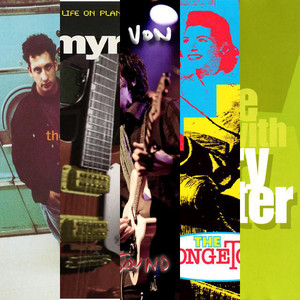
Underground power pop is the DIY, non-mainstream strain of power pop that thrives on short, hook-stuffed songs, chiming guitars, and stacked harmonies—delivered with indie/college‑radio grit instead of major‑label gloss.

It keeps the British Invasion and bubblegum DNA that defined classic power pop, but tightens arrangements, leans on crunchy rhythm guitars and ringing 12‑strings, and injects punk/new wave urgency. The result is melodic earworms with brisk tempos, big middle‑eights, and bittersweet lyrics about love, longing, and everyday lives—crafted by bands operating on small labels, in local scenes, and via fanzine cultures rather than mainstream charts.


Sources: Spotify, Wikipedia, Discogs, RYM, MB, user feedback and other online sources

History

Roots (late 1960s–1970s)

Power pop’s core language—British Invasion craft, bubblegum directness, and concise rock-and-roll forms—coalesced in the late 1960s and early 1970s. As the mainstream pivoted toward arena-rock excess and singer‑songwriter introspection, a parallel current of bands started applying those classic pop virtues outside the limelight, recording cheaply and releasing through small labels and regional distributors.

Punk, New Wave, and the DIY Turn (late 1970s–early 1980s)

The punk/new wave explosion gave underground power pop its infrastructure: indie labels, 7-inch singles culture, zines, and college radio. Groups emphasized tight, three‑minute songs, jangling or overdriven Rickenbackers, and harmonized choruses, pairing punk’s speed and economy with meticulously crafted hooks. U.S. and U.K. micro‑scenes traded singles via mail order, and compilations helped bands circulate beyond their hometowns.

College-Radio Cult and Regional Scenes (1980s)

Throughout the 1980s, the music became a college‑radio staple. Regional ecosystems (Midwest, Northeast U.S., West Coast, and pockets in the U.K./Europe) fostered bands whose singles and small‑press LPs prized songcraft over studio sheen. Aesthetically, this era codified the genre’s hallmarks: brisk tempos, chiming guitars plus crunch, melodic bass lines, tambourine/handclap accents, and bittersweet, literate lyrics.

1990s–2000s Revivals and Cross‑Pollination

The alternative boom briefly widened the audience for hook‑forward guitar pop, and several acts with power‑pop DNA reached broader listeners while remaining scene‑rooted. International cross‑pollination (notably from Scotland and Australia) refreshed the sound, keeping the classic formula but embracing more layered production and occasional shoegaze/jangle textures.

Legacy and Ongoing Influence

Underground power pop remains a songwriter’s genre: a living tradition passed through boutique labels, Bandcamp-era communities, festivals, and specialty radio. Its DNA—concise forms, high‑impact choruses, chiming guitars—continues to color indie rock, pop‑punk, and newer hybrids that value melody as much as muscle.

How to make a track in this genre

Core Songcraft
•   Aim for compact forms (2:30–3:30). Use strong verse–pre‑chorus–chorus structures with a memorable bridge/middle‑eight in bar 17–24. •   Prioritize a single, undeniable hook (title line) that lands at the top of the chorus and repeats. •   Write in bright keys (E, A, D, G, C) with major tonal centers and quick cadences.
Harmony and Progressions
•   Start with classic I–IV–V and I–vi–IV–V frameworks; enrich with IVmaj7, ii–V, and secondary dominants (V/V) for lift into choruses. •   Use bVII and borrowed iv (minor) for a bittersweet touch; consider a brief half‑step or whole‑step key bump for the final chorus. •   Stack 2–3 part vocal harmonies on choruses; double‑track leads for density.
Rhythm and Groove
•   Tempos typically 118–160 BPM. Drums: tight 2– and 4‑backbeat with open‑hat lift into choruses, handclaps or tambourine on 2 & 4. •   Bass should be melodic (McCartney-esque) yet driving, often playing passing tones into downbeats.
Guitars and Texture
•   Blend “jangle + crunch”: a bright 12‑string or Rickenbacker‑style clean on one side and a lightly overdriven rhythm on the other. •   Use concise, melodic solos (8 bars) that paraphrase the vocal hook; avoid extended shredding. •   Pedals: light overdrive, compressor for sustain and chime, subtle chorus/delay for width.
Lyrics and Themes
•   Focus on romance, longing, missed connections, and quotidian scenes. Keep imagery concrete and conversational; rhyme tightly. •   Maintain an upbeat or wistful tone—melancholy is fine, but keep momentum and optimism in the chorus.
Production Approach
•   Keep arrangements uncluttered: 2–3 guitars max, bass, drums, lead + 2 BGVs, occasional keys (organ/Farfisa) or handclaps. •   Mix for clarity: punchy drums, forward vocals, crisp guitars, bass glued to kick. Avoid heavy saturation; emphasize transients and consonants. •   Consider DIY aesthetics: live basics, modest overdubs, and dynamic choruses that feel bigger via arrangement (extra tambourine, doubled vocals) rather than brickwall limiting.

Top tracks

Locked
Share your favorite track to unlock other users’ top tracks

Upcoming concerts

in this genre
Influenced by
Has influenced

Download our mobile app

Get the Melodigging app and start digging for new genres on the go
© 2026 Melodigging
Melodding was created as a tribute to Every Noise at Once, which inspired us to help curious minds keep digging into music's ever-evolving genres.
Buy me a coffee for Melodigging