Your digging level

For this genre
0/8
🏆
Sign in, then listen to this genre to level up

Description

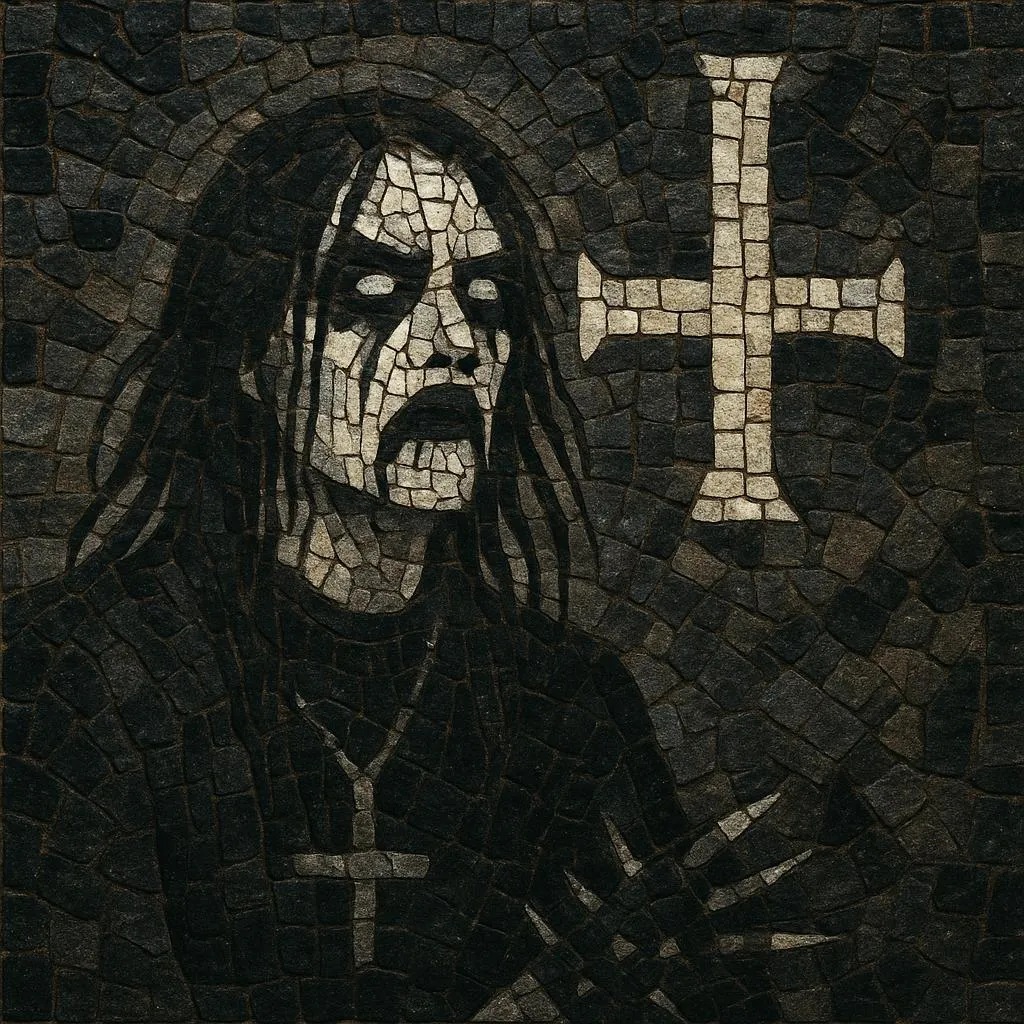
Unblack metal (often called Christian black metal) is a subgenre of black metal that retains the style’s sonic hallmarks—tremolo‑picked guitars, blast‑beat drumming, shrieked or rasped vocals, icy atmospheres, and raw-to-epic production—while replacing the genre’s traditionally anti‑Christian or Satanic themes with explicitly Christian, biblical, or theologically reflective lyrics and imagery.

Musically, it spans raw, second‑wave orthodoxy to symphonic and melodic variants, sometimes incorporating folk, doom, or death‑metal elements. Culturally, it is both a musical form and a counter‑position within extreme metal, asserting that the aesthetics of darkness, struggle, and catharsis can be redirected toward Christian spirituality, spiritual warfare, and hope.


Sources: Spotify, Wikipedia, Discogs, Rate Your Music, MusicBrainz, and other online sources

History

Origins (early–mid 1990s)

Unblack metal arose as an answer from Christian musicians to the second‑wave black metal movement centered in Norway. While the sound world—fast tremolo riffs, blast beats, shrieked vocals, and cold atmospheres—was inherited from black metal, the lyrical stance explicitly rejected the scene’s prevailing Satanism and anti‑Christian polemics. Early Norwegian groups formed in the very early 1990s, and a landmark Australian release in 1994 helped signal that the sound could be redirected without abandoning core aesthetics.

Consolidation and controversy (late 1990s)

As the style became more visible, it also became controversial. Within the broader black metal subculture, many argued that Christian beliefs were incompatible with black metal’s anti‑religious roots and its individualistic, misanthropic ethos. Despite backlash, unblack artists persisted, building a small but growing international network of labels, zines, and underground shows.

Diversification (2000s)

Through the 2000s, the style diversified. Bands explored symphonic orchestrations, polished production, and hybridizations with melodic black metal, death metal, and doom. International scenes—particularly in Scandinavia, continental Europe, and North America—contributed to a steadily expanding catalog and improved visibility at festivals and on specialized labels.

Globalization and modern era (2010s–present)

In recent years, unblack metal has continued as a niche yet globalized current within extreme metal. While still polarizing to some, it has established a self‑sustaining ecosystem of bands and audiences. Contemporary groups range from raw, lo‑fi traditionalists to expansive, symphonic or atmospheric acts, all maintaining the core inversion of black metal’s traditional lyrical stance while preserving its musical DNA.


How to make a track in this genre

Core instrumentation and sound
•   Guitars: Use high‑gain, cutting distortion with prominent mids; double‑track rhythm guitars. Riff primarily with tremolo‑picking and cold intervallic motion (minor seconds, tritones, perfect fourths/fifths). Add occasional open‑string drones for a frozen texture. •   Drums: Alternate between blast beats (traditional, hammer, and bomb blasts), fast two‑beat skank, and half‑time doom passages. Typical tempos span 160–220 BPM, with slower interludes for contrast. •   Bass: Often doubles guitars to reinforce a wall of sound; can carve countermelodies in slower sections. •   Vocals: Rasped/shrieked delivery predominates; low growls or clean choirs may be added in symphonic passages. •   Keys/Orchestration (optional): Pads, choirs, strings, or pipe‑organ timbres for symphonic or liturgical atmospheres.
Harmony, melody, and form
•   Modal palette: Natural minor (Aeolian), harmonic minor, and Phrygian/Phrygian dominant for ominous color; occasional modal mixture for ‘icy’ shifts. •   Riff writing: Build songs from 3–5 motif‑driven riffs, repeating with developmental variations (register changes, rhythmic displacement, layered counter‑riffs). •   Cadence and flow: Favor through‑composed or episodic forms rather than strict verse‑chorus; create tension via long tremolo passages, then release with slower, epic codas.
Lyrics and aesthetics
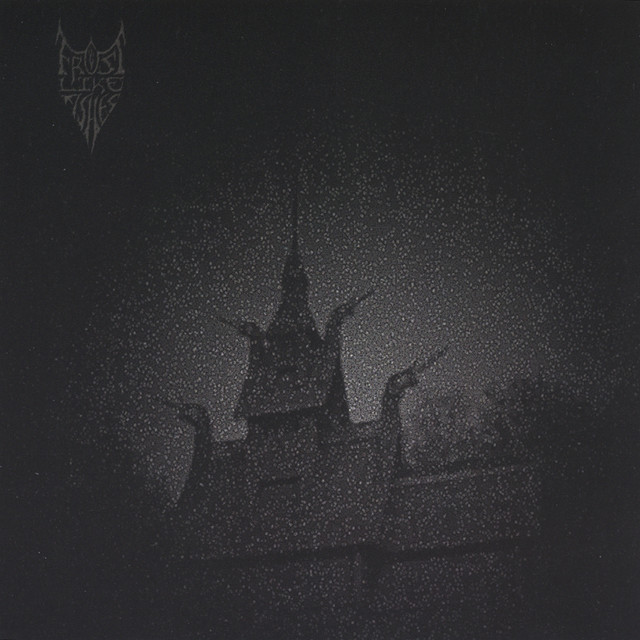
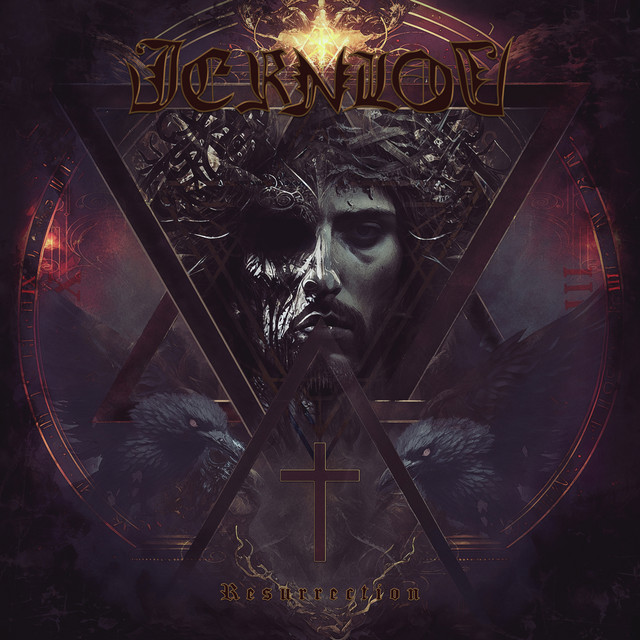
•   Themes: Biblical texts (Psalms, apocalyptic imagery), spiritual warfare, lament, redemption, and hope. Maintain the seriousness and starkness associated with black metal while redirecting the narrative toward Christian theology. •   Imagery: Minimalist or symbolic artwork (crosses, wilderness, ruins, monochrome palettes). Avoid triumphalist tones; embrace chiaroscuro—darkness as a backdrop to light.
Production tips
•   Raw to polished: A deliberately raw mix (limited compression, roomy drums, audible pick noise) preserves authenticity; modern productions can widen the stereo field and deepen low‑end without losing edge. •   Space and effects: Use plate/room reverbs for depth; keep vocals slightly back in the mix for the genre‑typical ‘distant’ presence. •   Mastering: Preserve dynamics; excessive brickwall limiting dulls tremolo detail and cymbal air.

Top tracks

Locked
Share your favorite track to unlock other users’ top tracks
Influenced by
Has influenced
No genres found
Challenges
Digger Battle
Let's see who can find the best track in this genre

Download our mobile app

Get the Melodigging app and start digging for new genres on the go
© 2026 Melodigging
Melodding was created as a tribute to Every Noise at Once, which inspired us to help curious minds keep digging into music's ever-evolving genres.
Buy me a coffee for Melodigging