Your digging level
Description
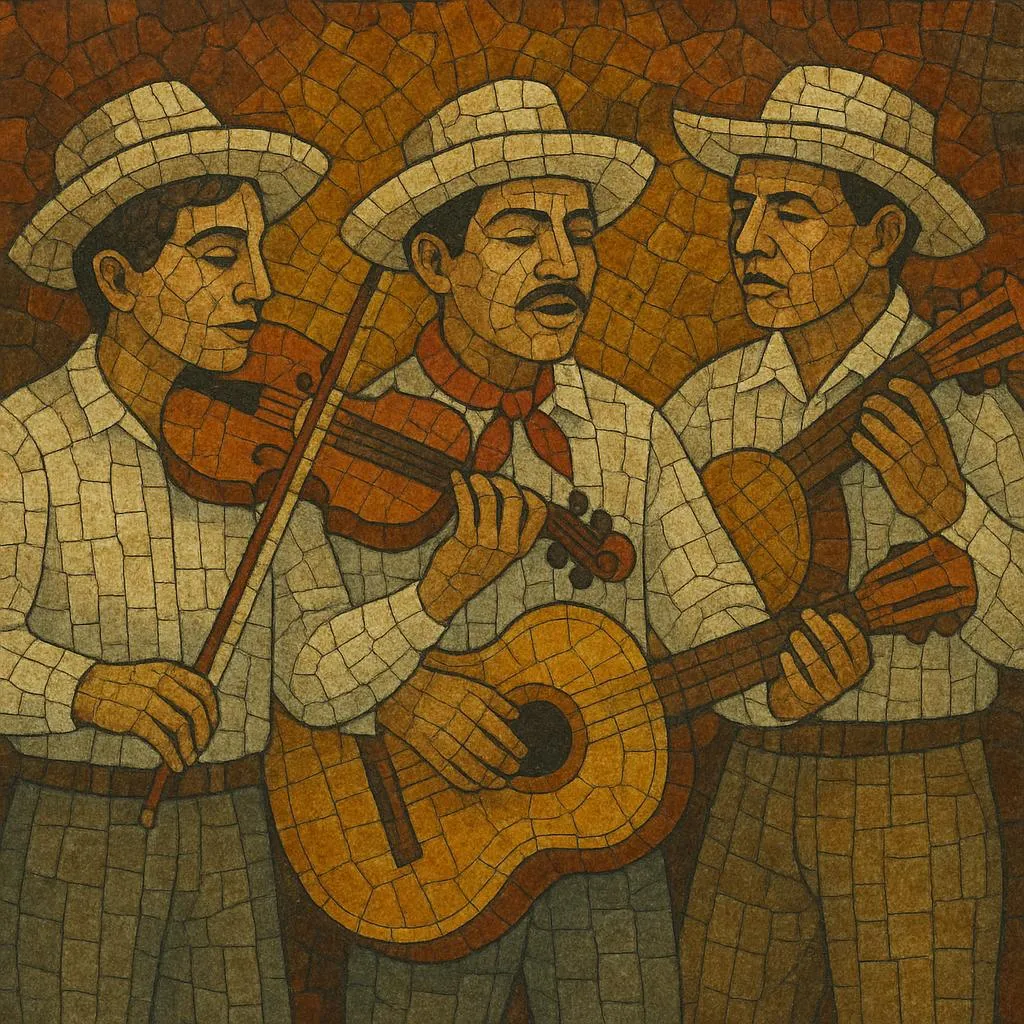
Trio huasteco is the classic three‑piece ensemble that performs the son huasteco (also called huapango huasteco) from Mexico’s Huasteca region. The lineup is fixed: a lead violin (melodic soloist and co‑vocalist), a jarana huasteca (small five‑string rhythm guitar), and a guitarra quinta huapanguera (large, deep‑voiced rhythm/bass guitar).
Its sound is defined by dazzling, highly ornamented violin lines; bright, interlocking rasgueado strums; and ringing bass runs in a characteristic sesquiáltera groove that constantly shifts the listener’s feel between 6/8 and 3/4. Vocals are often in parallel or antiphonal duet, with frequent use of soaring falsetto cries (gritos huastecos) and improvised coplas, décimas, and other octosyllabic poetic stanzas.
Although strongly dance‑driven through zapateado footwork on a wooden tarima, trio huasteco also sustains a deep lyrical tradition—alternating festive sones with contemplative, romantic pieces—using simple I–IV–V harmonic frameworks colored by modal inflections (major, minor, and mixolydian).
History
Son huasteco emerged in colonial northeastern Mexico as a regional branch of the broader Mexican “son” family. It blended Spanish verse forms and string‑band practice with Indigenous Mesoamerican rhythms and ritual dance, and Afro‑diasporic sensibilities carried through colonial fandango culture. By the late 19th century, violin‑led small string groups were common across the Huasteca (Hidalgo, Veracruz, San Luis Potosí, Tamaulipas, Querétaro, Puebla).
Around the early 1900s the now‑canonical trio instrumentation coalesced: lead violin, jarana huasteca, and guitarra quinta huapanguera. This compact format maximized portability for community fiestas and fandangos while providing a full spectrum—melody, harmony, and rhythmic bass—for outdoor dancing. Early radio, regional labels, and folkloric festivals helped project the trio’s sound beyond the Huasteca.
The trio developed a virtuosic idiom: the violin carries florid introductions, interludes, and call‑and‑response over dense strumming patterns. The hallmark is sesquiáltera—the constant interplay between 6/8 and 3/4—energized further by zapateado foot percussion on a tarima. Vocals typically feature parallel lines, improvised coplas, and dramatic falsetto gritos, reinforcing both the festive and poetic dimensions of the repertoire.
Core sones (traditional tunes with regional variants) circulate across the Huasteca, alongside romances and locally adapted boleros and waltz‑time pieces. Texts range from playful teasing to nature imagery, regional pride, and courtship, often delivered in octosyllabic lines or décimas espinelas.
Trio huasteco remains central to regional identity and is widely taught in community workshops and music schools. New generations record, tour, and collaborate in crossover settings while maintaining the ensemble’s essential performance grammar—its instrumentation, falsetto singing, sesquiáltera rhythm, and dialogic violin work.