Your digging level
Description
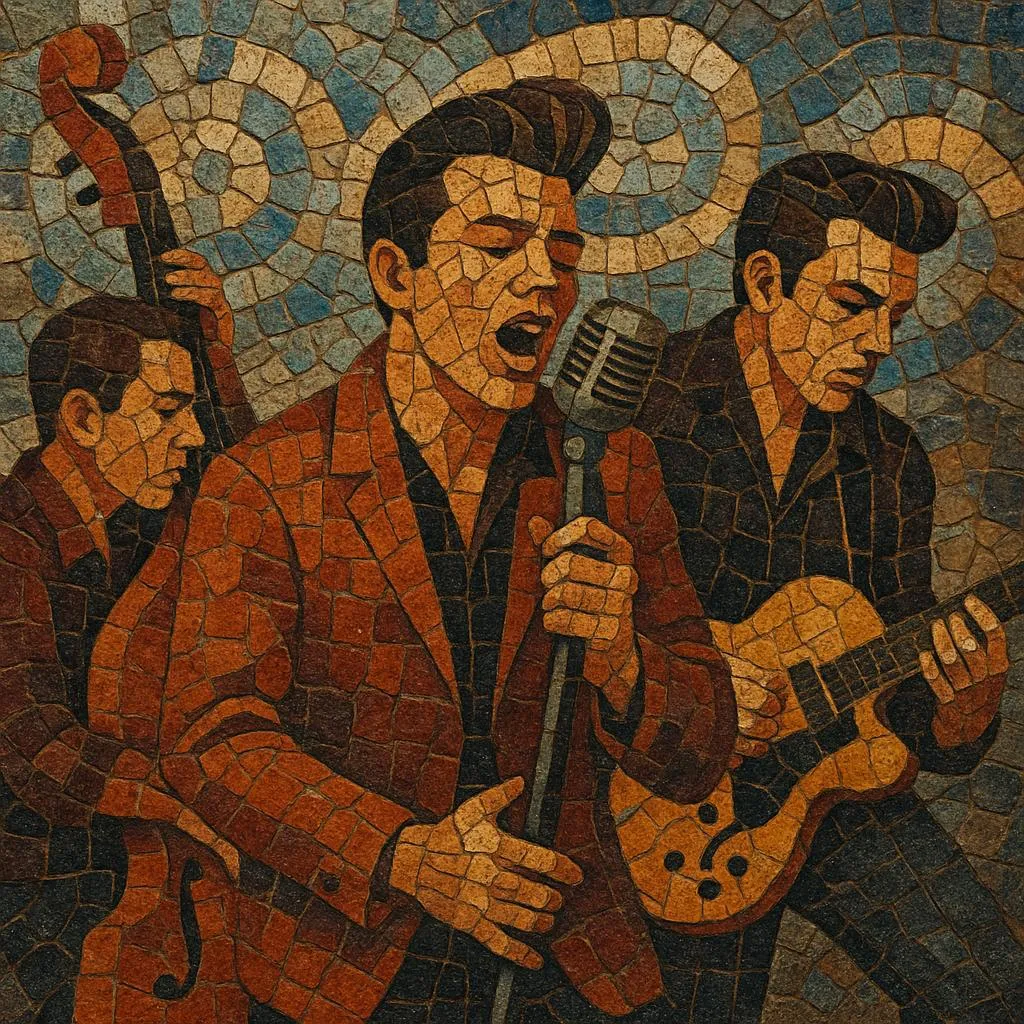
Traditional rockabilly is one of the earliest and rawest forms of rock and roll, fusing hillbilly country with rhythm and blues. It is defined by slap‑back echo, twangy electric or hollow‑body guitars, and a percussive "slap" upright bass driving a two‑beat or boogie shuffle.
Vocals are energetic, often featuring hiccupy phrasing, blue notes, and call‑and‑response guitar fills. Songs typically use simple I–IV–V progressions drawn from 12‑bar blues and country, with brisk tempos, handclaps or snare accents on the backbeat, and concise, hooky choruses. Lyrical themes center on teenage love, cruising, dancing, hot rods, and Saturday‑night rebellion.
Production in the classic era favored mono recording, minimal drum kits (or none), room bleed, and short slap‑back delay, yielding a lively, dance‑ready sound that feels immediate and unpolished.
History
Rockabilly emerged in the American South as young country ("hillbilly") musicians absorbed rhythm & blues grooves and attitude. Independent studios and labels nurtured the sound with lean studio setups, upright bass, and slap‑back echo, crystallizing a danceable, rebellious hybrid distinct from both country and urban R&B.
By the mid‑1950s the style’s essentials—twangy lead guitar, percussive slap bass, backbeat handclaps/snare, and hiccup vocals—were fully in place. The music spread rapidly through radio barn dances, jukeboxes, and television, shaping the first wave of rock and roll culture with sharp clothing, hot‑rod imagery, and teen‑centric themes.
Mainstream tastes shifted toward smoother pop and orchestrated rock and roll, but rockabilly’s core language persisted regionally and on indie singles. Its guitar vocabulary, rhythmic drive, and raw production values were carried forward by garage bands and roots‑minded performers.
Ted revival scenes and later waves of roots‑rock bands re‑centered the vintage sound (upright bass, slap‑back echo, period guitars), while international scenes in Europe, Japan, and Latin America sustained traditional technique and dance culture. Today, traditionalists continue to record with period‑correct gear and arrangements, preserving the original feel while introducing new songs to the canon.