Your digging level

For this genre
0/8
🏆
Sign in, then listen to this genre to level up

Description

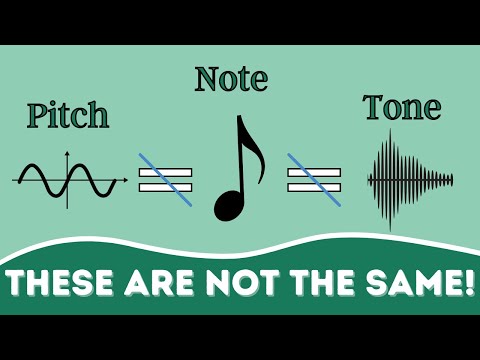
Tone is a streaming-era microgenre centered on pure timbre, negative space, and slowly evolving textures rather than conventional song form. Artists emphasize sine tones, delicate drones, ultra-clean synthesis, and near-silent passages to draw attention to the physical qualities of sound itself.

It emerged at the intersection of minimalism, microsound, and ambient electronics, often favoring laboratory‑like precision, high dynamic range, and surgically sculpted frequency spectra. Rhythm, if present, is sparse and quietly pulsing; harmony is static or moves glacially. The result is music that feels weightless, contemplative, and tactile—more about hearing sound as material than about melody or verse/chorus structure.


Sources: Spotify, Wikipedia, Discogs, RYM, MB, user feedback and other online sources

History

Origins (late 1990s–2000s)

Tone coalesced in the early 2000s as a shared aesthetic among experimental ambient and microsound producers. It drew on late‑20th‑century minimalism and electroacoustic practice, while also absorbing the ultra‑quiet, detail‑oriented ethos of Japan’s onkyō scene. Labels and compilations devoted to clicks, cuts, and sine‑tone studies helped normalize listening for texture and room interaction rather than melody.

Diffusion in the 2010s

As streaming platforms and algorithmic tagging matured, "tone" circulated as a metadata label for works prioritizing pure timbre and restraint. Bedroom producers embraced high‑resolution digital tools, linear‑phase processing, and carefully gain‑staged chains to render near‑imperceptible motion and microscopic sound events. The style found a home alongside ambient, lowercase, and experimental playlists aimed at focused listening.

Present Day Aesthetics

Contemporary tone continues to blur art sound design and music composition. Releases often present long-form movements, gently sweeping EQ gestures, and sine‑based harmonics that read as both meditative and hyper‑controlled. The emphasis remains on spectral balance, air, and the materiality of audio rather than on overt hooks or rhythmic complexity.
How to make a track in this genre

Sound palette and instrumentation
•   Start with very pure sources: sine and triangle waves, gently modulated noise, and lightly processed field recordings. Avoid richly detuned or harmonically dense oscillators unless used sparingly as contrast. •   Use long envelopes, slow LFOs, and subtle automation; the motion should feel continuous, not gestural.
Spectral and dynamic design
•   Mix quietly with high headroom; let silence and low‑level detail carry musical weight. •   Sculpt with gentle, broad EQ curves and linear‑phase processing to place tones into complementary bands. Aim for a stable, balanced spectrum rather than dramatic EQ sweeps. •   Employ minimal compression (or transparent upward compression) so micro‑dynamics remain audible.
Harmony and form
•   Favor static or slowly shifting drones built from stacked pure intervals (5ths, octaves, gentle added partials). If modulations occur, make them incremental and perceptual rather than theoretical. •   Structure pieces as evolving environments: gradual entrances/exits, spectral crossfades, and textural morphs instead of verses and choruses.
Rhythm and space
•   If rhythm is used, keep it extremely sparse (soft pulses, distant ticks). Prioritize temporal spaciousness over groove. •   Treat reverb and room tone as instruments—long, low‑density algorithms or real spaces that reveal the tails of your sounds without clouding the midrange.
Workflow tips
•   Monitor at low volumes to judge spectral balance and audibility of micro‑events. •   Print stems and commit to minimalism: remove any element that draws attention away from tone, texture, and air. •   Master conservatively (high crest factor, no brickwall loudness) to preserve depth and hush.

Top tracks

Locked
Share your favorite track to unlock other users’ top tracks

Upcoming concerts

in this genre
Influenced by
Has influenced

Download our mobile app

Get the Melodigging app and start digging for new genres on the go
© 2026 Melodigging
Melodding was created as a tribute to Every Noise at Once, which inspired us to help curious minds keep digging into music's ever-evolving genres.
Buy me a coffee for Melodigging