Your digging level
Description
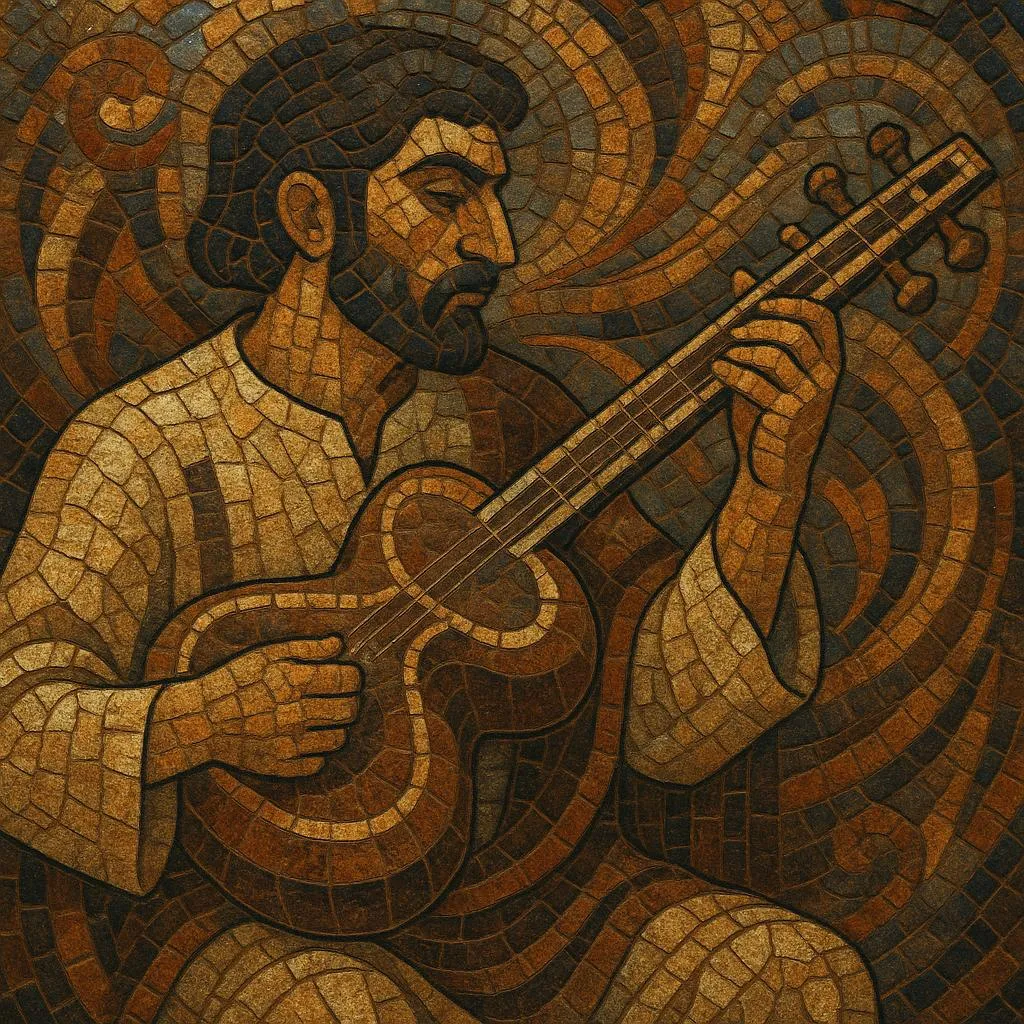
The Tar is a long-necked, waisted lute that serves as the primary instrument of Persian classical music. It is distinguished by its double-bowl body carved from mulberry wood and covered with a thin membrane of lambskin, which gives it a unique, resonant, and slightly nasal timbre. It typically has six strings (arranged in three courses) and movable gut frets that allow for the microtonal intervals essential to the Dastgah system. The instrument is held against the upper chest and plucked with a small brass plectrum held in a ball of wax, allowing for intricate ornamentation and rapid tremolos.
History
While lutes have existed in Persia for millennia, the specific form of the Tar (meaning "string" in Persian) emerged prominently in the mid-18th century, evolving from instruments like the rubab or tanbur. It was initially associated with urban entertainment before being elevated to a court instrument.
This period marked the golden age of the Tar. Masters like Mirza Abdollah and Aqa Hossein Qoli selected the Tar as the reference instrument to codify the Radif (the repertoire of melodic figures that forms the basis of Persian classical music). It became the central vessel for preserving and transmitting the oral tradition of the Dastgah system.
In the early 20th century, innovators like Colonel Alinaghi Vaziri introduced Western musical theory and notation to Tar performance, creating a new style that coexisted with the traditional oral method. The establishment of the radio in the 1940s led to the "Radio Style," characterized by virtuosos like Jalil Shahnaz and Farhang Sharif who emphasized lyrical improvisation.
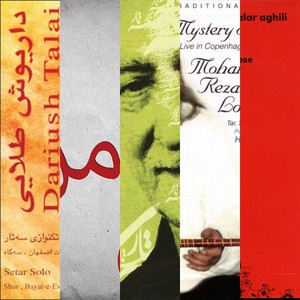
Following the 1979 revolution, there was a resurgence of interest in strict traditional roots, led by masters like Mohammad Reza Lotfi and Hossein Alizadeh. These artists also experimented with the instrument's form and ensemble roles, ensuring the Tar remained vital in modern Persian music.
The Tar is traditionally a solo instrument or the leader of an ensemble (Goruh). It is played with a small brass plectrum (mezrab) embedded in wax. Key techniques include Riz (a rapid tremolo to sustain notes), Tak (single strokes), and Dorrab (complex picking patterns). The instrument is often accompanied by the Tombak (goblet drum) or Daf (frame drum).
Compositions must adhere to the Dastgah system, which consists of twelve modal systems. You must utilize microtones (quarter tones), specifically the Sori (half-sharp) and Koron (half-flat), which are achieved by adjusting the movable gut frets. The melody typically develops from the lower register (Daramad) to higher peaks (Owdj) before returning.
Standard performances often follow a specific suite form:
•Pishdaramad: A slow, metric, solemn overture.
•Chaharmezrab: A fast, virtuosic instrumental piece with repetitive rhythmic patterns.
•Avaz: The heart of the performance; a non-metric, vocal-style improvisation that explores the mode's emotional depth.
•Tasnif: A composed song with lyrics and a fixed meter.
•Reng: A fast, dance-like finale.