Your digging level
Description
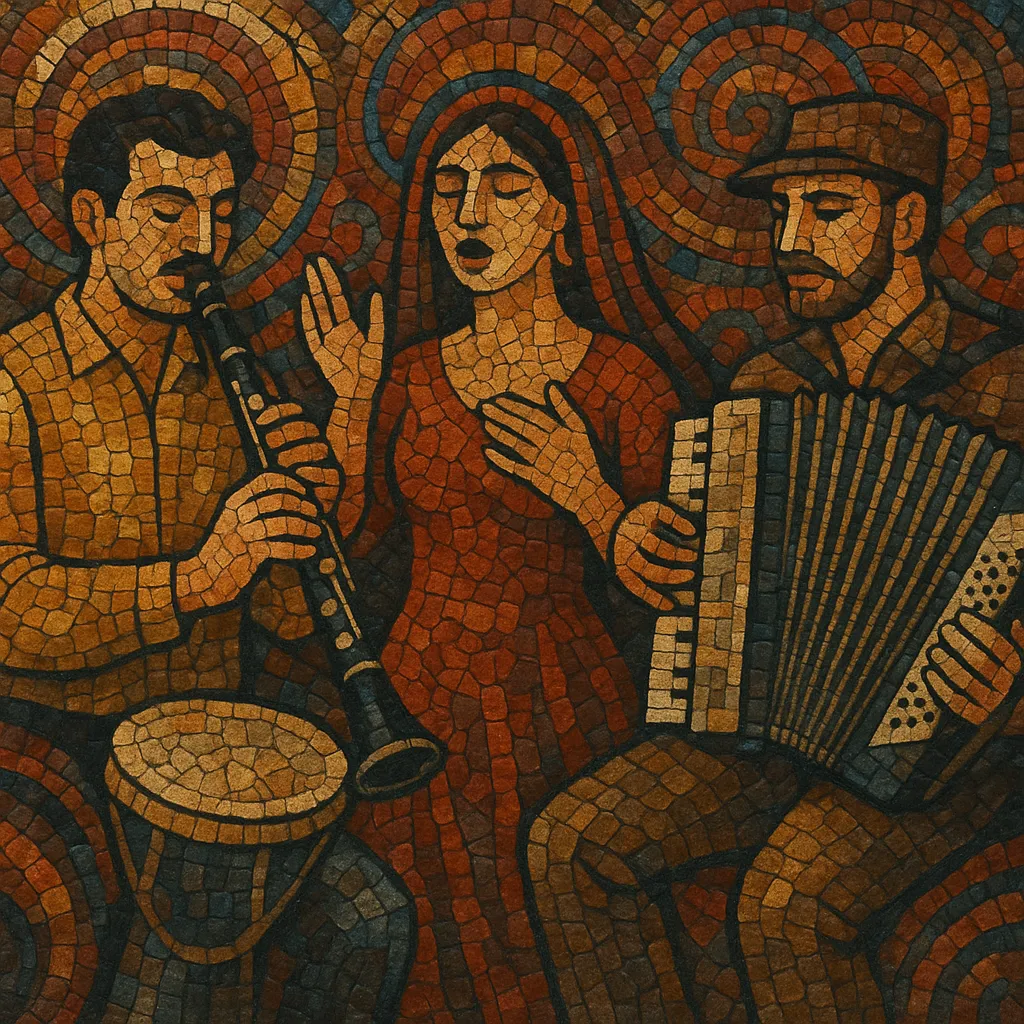
Tallava is a lively pop‑folk style that emerged among Albanian‑speaking Roma/Ashkali communities in Kosovo and nearby North Macedonia. It is primarily wedding and party music, built around extended, dance‑driving grooves, improvisatory keyboard/clarinet/accordion lines, and highly ornamented vocals.
Its melodic language draws heavily on "oriental" (Ottoman/Turkish and broader West Asian) modes and embellishments, often using Hijaz/Nahawand‑like colors, slides, and rapid melismas. Rhythmically it favors a propulsive 2/4 or 4/4 with syncopated darbuka or drum‑machine patterns, while occasionally borrowing Balkan asymmetries.
Performances are social and participatory: singers exhort the crowd, instrumentalists take turns improvising, and the groove stretches or intensifies on demand. In recordings, tallava commonly blends live instruments with synths, arranger‑keyboards, drum machines, and modern pop production.


History
Tallava took shape in the 1990s within Kosovo’s Albanian‑speaking Roma/Ashkali communities and across the Albanian diaspora in North Macedonia (notably around Skopje). Wedding bands and café ensembles adapted local folk repertoires to arranger‑keyboards and drum machines, emphasizing long, improvisatory sections for dancing.
By the early 2000s, tallava had spread throughout Albanian‑speaking regions and diaspora communities in Western Europe. It intertwined with the broader Balkan pop‑folk wave (alongside Serbian turbo‑folk, Bulgarian chalga, Greek laïko, and Romanian manele), sharing orientalized scales, melismatic vocals, and dance‑first arrangements. Studio productions added fuller synth textures, tighter drum programming, and call‑and‑response hooks suited to clubs and family celebrations.
Tallava’s ubiquity at weddings made it a grassroots staple, yet it also drew criticism from cultural elites who labeled it "low" or overly commercial. Despite periodic controversies about taste and class, the style remained central to festive life, with musicians prized for their ability to improvise, read the room, and keep the dancefloor active for hours.
Recent tallava blends traditional reeds (clarinet), accordion, and violin with modern pop and trap‑inflected beats, autotune, and glossy mixdowns. Social media and streaming have amplified cross‑border collaborations, while live shows still hinge on flexible forms, spontaneous modulations, and crowd‑driven pacing—core traits that define the genre’s identity.