Your digging level

For this genre
0/8
🏆
Sign in, then listen to this genre to level up

Description

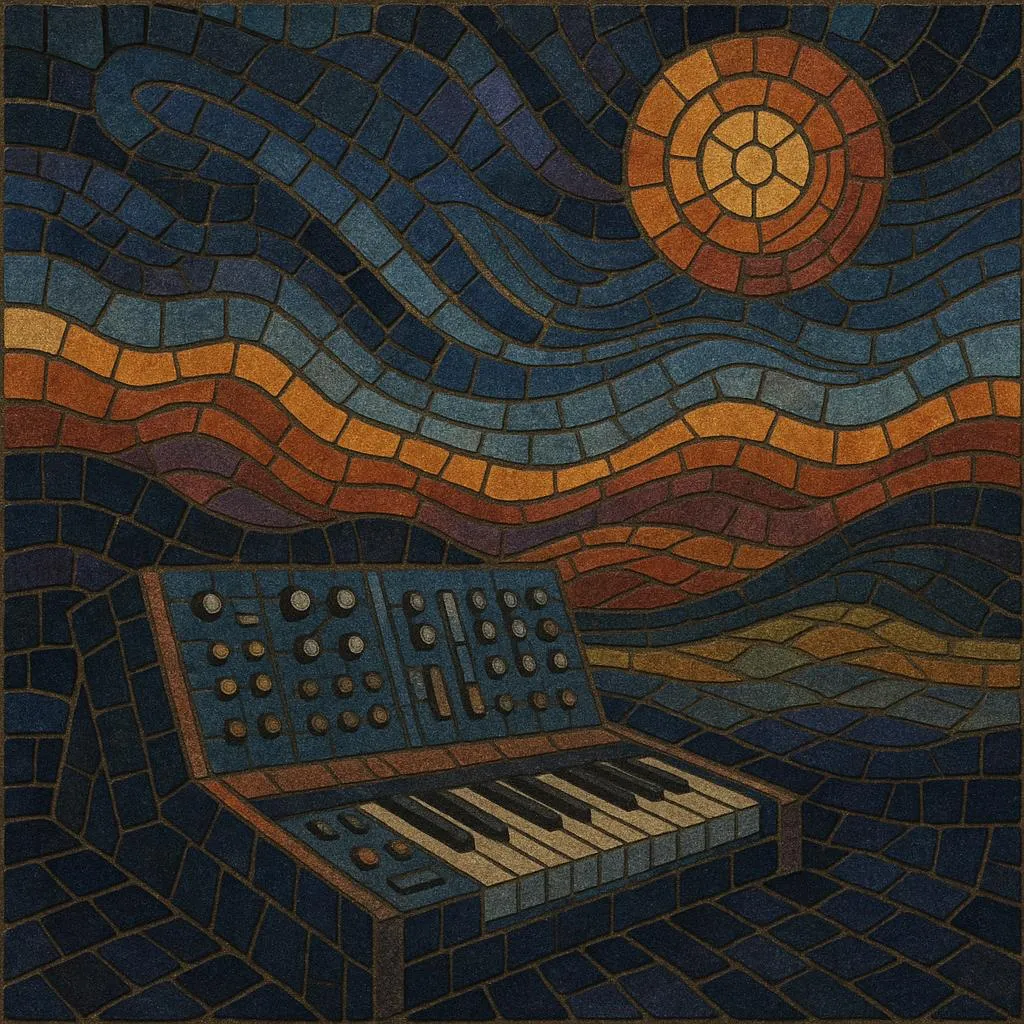
Synth prog is a branch of progressive rock that centers the synthesizer as its primary compositional voice. It combines the long-form structures, odd meters, and thematic development of prog with the timbral palette of analog and early digital synths—pads, sequenced ostinati, modular textures, and soaring mono leads.

Unlike synth-pop (which prioritizes song-form hooks) or purely electronic kosmische/progressive electronic music (which may abandon rock rhythm sections), synth prog keeps the rock ensemble—drums, bass, and often guitar—while letting keyboards, sequencers, and sound design drive the harmony, counterpoint, and narrative arc. The result spans from symphonic grandeur to spacey minimalism, often moving through multiple moods in a single piece.


Sources: Spotify, Wikipedia, Discogs, RYM, MB, user feedback and other online sources

History

Origins (1970s)
•   The roots of synth prog lie in British progressive rock’s rapid adoption of new keyboard technologies. Rick Wakeman (Yes), Tony Banks (Genesis), and Keith Emerson (ELP) pushed the Moog, ARP, Mellotron, and early sequencers into center stage, extending symphonic-prog writing with electronic colors. •   In parallel, German krautrock/kosmische currents (e.g., Tangerine Dream) normalized long-form, sequenced synth textures, providing a template for rock groups to integrate motorik pulses, drones, and evolving soundscapes.
Consolidation and Expansion (late 1970s–1980s)
•   Polyphonic synths (Prophet‑5, Oberheim) and digital innovations (PPG, Fairlight) widened the harmonic and textural range. Neo‑prog bands in the UK (e.g., Marillion, IQ) folded lush pads and arpeggiators into song-suites, while Rush’s early‑’80s era emphasized synth counterlines over guitar. •   Film/TV scores by Tangerine Dream and Goblin popularized dramatic, sequenced prog-synth language, blurring lines between rock, electronics, and soundtrack aesthetics.
Transition, Niche, and Revival (1990s–2000s)
•   Grunge/alt-rock eclipsed prog’s mainstream visibility, but synth-forward prog persisted in niche scenes and among soundtrack composers. The analog revival in the 2000s reignited interest in modular rigs, vintage timbres, and live sequencing, refreshing the style’s sonic identity.
Contemporary Landscape (2010s–present)
•   A new wave of artists bridges synthwave aesthetics with prog composition—retro sound design meets odd meters and multi-part forms. Acts like Zombi channel Goblin/TD atmospherics through rock rhythm sections, while modern prog outfits rely on sophisticated soft-synths, modulars, and hybrid live-electronic setups. •   Today, synth prog functions as a connective tissue between classic prog, kosmische, soundtrack minimalism, and post‑retro electronic movements, retaining the narrative ambition of prog with an explicitly electronic voice.

How to make a track in this genre

Sound Palette and Instruments
•   Prioritize synthesizers: a mono lead (e.g., Minimoog/Model D style), a poly pad (Prophet‑style), and an arpeggiator/sequencer voice. Add Mellotron or sampled strings/choir for symphonic weight. •   Use a rock rhythm section: tight, articulate drums (often with tom-heavy fills) and a bass capable of locking with sequencer ostinati. Guitars provide texture, countermelody, and climactic drive rather than constant riffing.
Harmony and Melody
•   Leverage modal harmony (Dorian/Lydian) and extended chords (add9, maj7#11) to evoke spacious, “cosmic” colors. •   Craft lead themes that can be reharmonized; use call-and-response between lead synth and guitar/second keyboard. Develop motivic cells across movements rather than relying on verse/chorus repetition.
Rhythm and Form
•   Employ odd and shifting meters (7/8, 5/4, 13/8) but maintain forward motion with sequenced ostinati or motorik undercurrents. •   Structure multi-part suites: Intro (sound design), Exposition (themes), Development (modulation/metric play), Climax (full ensemble), and Coda (textural dissolution).
Arrangement and Sound Design
•   Layer pads for width, use filter sweeps and LFOs to mark formal transitions, and automate envelopes for dynamic phrasing. •   Alternate “breathing” sections (ambient beds, sparse percussion) with dense counterpoint (simultaneous arpeggios, interlocking lines). Keep frequency ranges clear—dedicate the sub to bass/synth-bass and avoid masking the kick.
Production and Performance
•   Hybridize analog warmth with modern precision: subtle tape or transformer saturation on busses, crisp transient shaping on drums. •   Live, treat the keyboard rig as the band’s narrative engine: perform filter rides, step-sequencer transpositions, and timbre morphs in real time to animate long forms.

Top tracks

Locked
Share your favorite track to unlock other users’ top tracks

Upcoming concerts

in this genre
Influenced by
Has influenced

Download our mobile app

Get the Melodigging app and start digging for new genres on the go
© 2026 Melodigging
Melodding was created as a tribute to Every Noise at Once, which inspired us to help curious minds keep digging into music's ever-evolving genres.
Buy me a coffee for Melodigging