Your digging level
Description
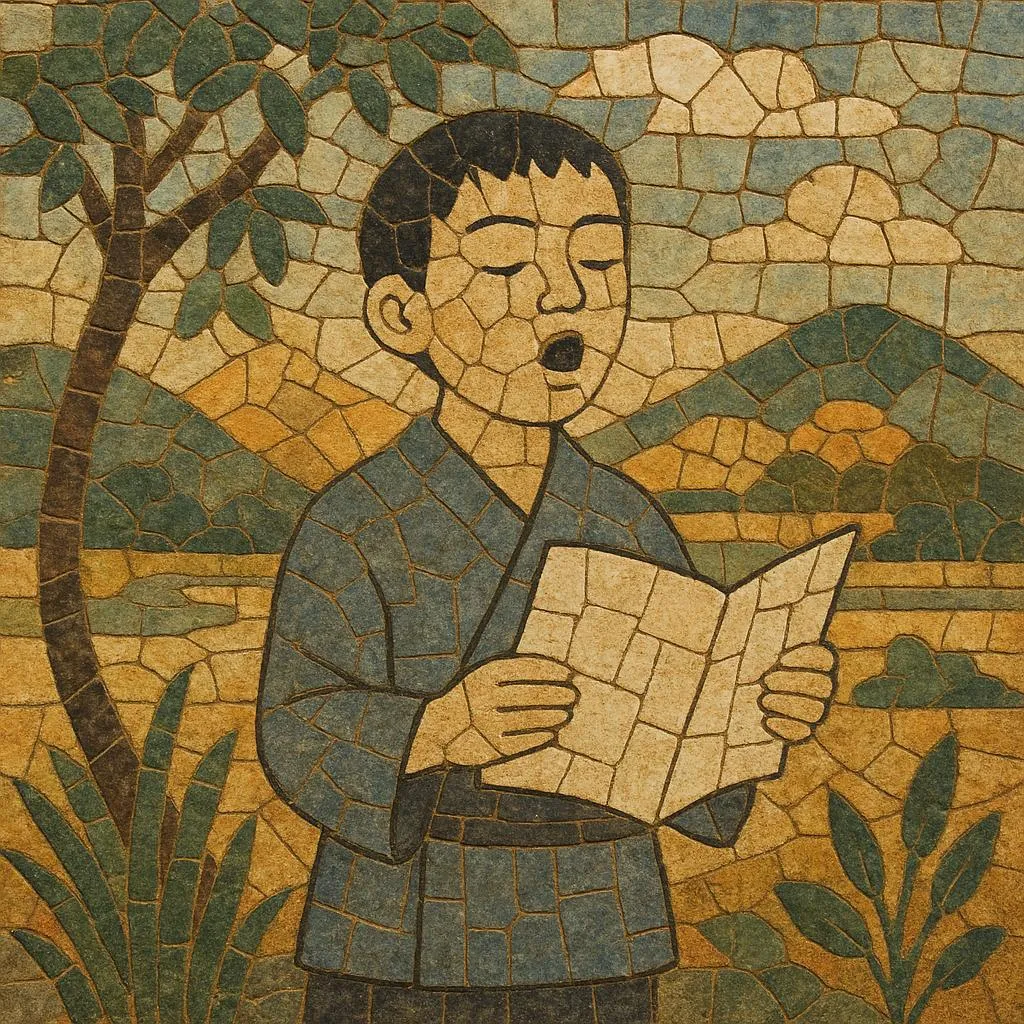
Shōka (Monbushō shōka) are purpose-written songs created for Japan’s modern public-school system in the pre–World War II era.
They were compiled for official school music textbooks and sung in classrooms nationwide as part of the elementary curriculum.
Stylistically, shōka merge Western diatonic melodies, simple harmonies, and strophic song forms with Japanese-language texts and, at times, melodic turns familiar from Japanese folk song. Topics emphasize nature, seasons, community, ethics, and everyday life, making the repertoire memorable and easily singable for children.
This school-song tradition standardized music education across Japan, familiarizing generations of pupils with Western tonal practice while nurturing a shared national songbook.
History
After the Meiji Restoration, Japan rapidly modernized its education system. In the late 1870s–1880s, educator Izawa Shūji invited American music pedagogue Luther Whiting Mason to help design a Western-style school music curriculum. The Ministry of Education (Monbushō) issued the Shōgaku Shōkashū (elementary school songbooks, beginning 1881), inaugurating shōka as a core subject and repertoire.
Early shōka often adapted Western hymn tunes, marches, and simple art songs with newly written Japanese lyrics. Over time, Japanese composers contributed original melodies that remained diatonic and strophic, suited to children’s voices and group singing. Refrains about seasons, landscapes, and civic virtues encouraged moral and musical education simultaneously.
Shōka spread to virtually all public schools, and trained teachers used solfège and piano/harmonium accompaniment. Composers such as Rentarō Taki, Teiichi Okano, and (a bit later) Kōsaku Yamada supplied memorable school songs; lyricists like Tatsuyuki Takano and Rofū Miki enriched the poetic quality. The line between shōka and emerging children’s song (dōyō) circles became porous, and the repertoire became part of daily life.
With rising nationalism, some shōka were repurposed to support state ideology. Nevertheless, their basic musical language—unison, stepwise melodies, diatonic harmony—remained intact, sustaining classroom sing-alongs and school ceremonies.
After 1945, the term shōka persisted historically, while new children’s songs (dōyō) and school anthems (kōka) flourished. Many classic shōka remained in textbooks, radio programs, and community choirs, and the tradition decisively shaped kayōkyoku, enka, and later J‑Pop’s preference for clear, singable melodies and strong seasonal imagery.