Your digging level
Description
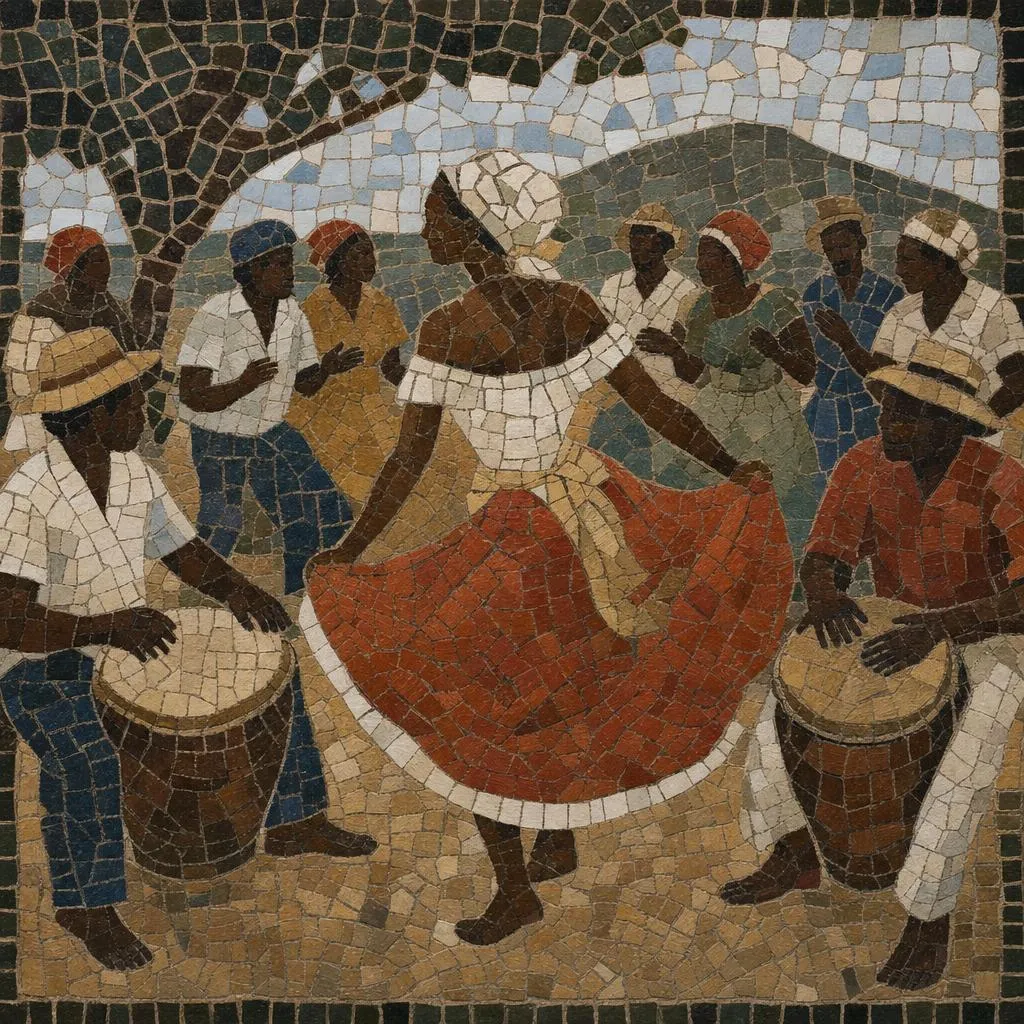
Séga tambour is a traditional percussion-driven form of séga from the Mascarene region, especially associated with Rodrigues Island in Mauritius.
It is centered on hand drumming, call-and-response singing, group participation, and dance, with a strong emphasis on rhythm, circular groove, and communal expression.
Compared with later urban or electrified forms of séga, séga tambour is more rooted in oral tradition and acoustic performance practice. Its sound is typically rawer, more ceremonial, and more directly tied to Creole social life, memory, and identity.
The genre emerged from the cultural blending of African rhythmic traditions, island Creole performance practices, and local community dance customs formed under conditions of enslavement, displacement, and colonial society.
History
Séga tambour developed in the Mascarene Islands' Creole cultural world and is especially linked to Rodrigues, an island that is politically part of Mauritius. Its deep roots go back to the colonial era, when enslaved and later marginalized populations preserved and transformed African-derived rhythmic, vocal, and dance practices.
The word séga refers broadly to a family of island Creole musics and dances found in Mauritius, Rodrigues, Réunion, and neighboring territories. Séga tambour represents one of the older, percussion-centered expressions within that family.
Historically, the music functioned as community expression rather than elite entertainment. It accompanied dancing, social gatherings, storytelling, satire, emotional release, and collective memory.
Like many Afro-diasporic traditions, it carried meanings beyond sound alone: rhythm, bodily movement, and participatory singing all formed part of a shared cultural language. In Rodrigues in particular, tambour-centered séga remained strongly tied to village life and local identity.
Earlier forms relied primarily on drum patterns, voice, clapping, and improvised interaction. Over time, wider Mauritian séga developed additional instrumentation and commercial variants, but séga tambour retained a comparatively traditional format.
Its persistence reflects both continuity and adaptation. Performers have maintained core rhythmic and dance features while presenting the style on festivals, recordings, and cultural heritage stages.
Today, séga tambour is recognized as an important traditional genre within Mauritian and Rodriguan heritage. It stands both as living dance music and as a historical archive of Creole resilience.
In contemporary contexts, the genre may be performed in relatively traditional acoustic settings or incorporated into broader heritage presentations. Even when staged for audiences, its defining energy remains communal, percussive, and body-centered.
Start with the drum. Séga tambour is built around a cyclical, danceable pulse led by hand percussion.
Use repeating patterns that feel circular rather than heavily sectional. The groove should invite continuous bodily motion, especially hip and foot movement.
Syncopation is important, but the rhythm should remain grounded and communal rather than mechanically complex.
Prioritize hand drums and percussion first.
Typical texture may include:
• a lead hand drum or frame-style drum approach • supporting percussion • handclaps • voiceIf you add melodic instruments, use them sparingly so the percussion remains central. Traditional performance often works best with minimal harmonic clutter.
Use strong, direct singing with a communal feel.
Call-and-response is highly appropriate. A lead singer may deliver a phrase, with a chorus answering or reinforcing key lines.
The vocal tone should feel natural, conversational, and socially grounded rather than overly polished.
Harmony is usually simple. Build around short melodic phrases and tonal centers that support rhythm and text.
Do not overcomplicate the chord movement. Repetition, chant-like memorability, and responsiveness to dance are more important than harmonic sophistication.
Write lyrics that feel local, social, and human.
Common lyrical approaches include:
• daily life • love and relationships • humor and teasing • hardship and resilience • community identity • memory and placeLanguage should feel idiomatic and singable. Short refrains work especially well.
Think in loops rather than verse-chorus pop architecture.
A practical structure could be:
• drum introduction • lead vocal entry • response chorus • repeated groove cycles • improvised or semi-improvised vocal exchanges • energetic dance continuationPerform it as participatory music, not just as a studio arrangement.
Leave room for dancers, group responses, and rhythmic elasticity. The style gains authenticity from interaction between drummers, singers, and movement.
If composing for stage or recording, preserve a sense of live communal momentum instead of quantizing everything into rigid perfection.