Your digging level
Description
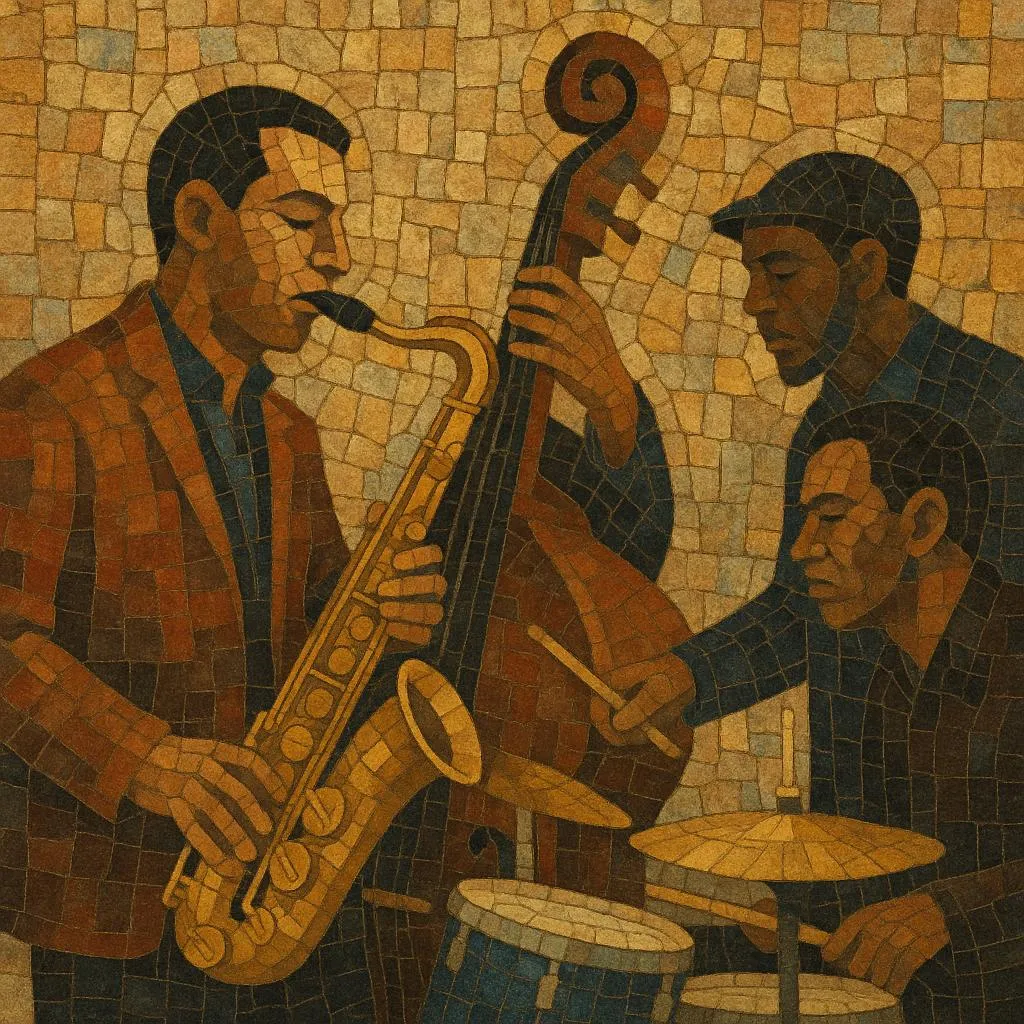
Saxophone trio refers primarily to a chordless jazz ensemble built around saxophone, double bass, and drums. Without a chordal instrument, the texture is harmonically open and conversational, giving the saxophonist—and the rhythm section—greater freedom to imply or reshape harmony in real time.
The format was popularized in the late 1950s by Sonny Rollins, whose 1957 recordings demonstrated how space, counterpoint, and motivic development could replace continuous chordal accompaniment. Since then, saxophone trios have become a proving ground for improvisers across post‑bop, free, and contemporary jazz.
In classical and contemporary chamber music, “saxophone trio” can also denote ensembles of three saxophones (e.g., soprano–alto–tenor) performing composed repertoire; however, the term most commonly signals the jazz chordless trio described above.
History
The saxophone‑bass‑drums concept crystallized in the United States during the 1950s, when Sonny Rollins began working without a pianist or guitarist to open up harmonic possibilities. His album Way Out West (1957)—recorded with Ray Brown and Shelly Manne—became a landmark for the format, with critics noting that Rollins designed the trio to enable a more liberated approach to improvisation.
Rollins returned to the trio intermittently (including live sets from 1957 at the Village Vanguard), inspiring subsequent generations to explore the same texture. Writers and reference entries routinely credit him with pioneering the pianoless sax trio and list disciples who adopted it.
The idea quickly spread: Lee Konitz’s Motion (1961) advanced a cool‑school take; Ornette Coleman’s Golden Circle trios pushed into freer territory; later, Joe Henderson’s The State of the Tenor (1985) brought chordless austerity to standards; and Branford Marsalis’ Trio Jeepy (1989) reasserted the format’s swing authority. By the 1990s, the sax trio was a recognized setting for both mainstream and avant‑garde players, from David S. Ware to Joe Lovano. (For Rollins’ enduring influence on the approach, see contemporary retrospectives.)
Modern trios have kept the language alive and hybridized—e.g., Joshua Redman’s trios, JD Allen’s tightly coiled originals, Melissa Aldana’s Crash Trio, and the cooperative Fly (with Mark Turner). The format remains a laboratory for time, harmony, and motivic improvisation precisely because its “open” instrumentation forces all three musicians to share harmonic responsibility.
Separately, classical and contemporary art‑music circles use “saxophone trio” for three‑sax ensembles, which maintain a growing repertoire; nonetheless, in common usage the term most often points to the chordless jazz trio popularized in 1957.