Your digging level
Description
Rasiya is a North Indian folk genre from the Braj region (centered on Mathura–Vrindavan in present‑day Uttar Pradesh, with spillover into Bharatpur/Alwar in Rajasthan).
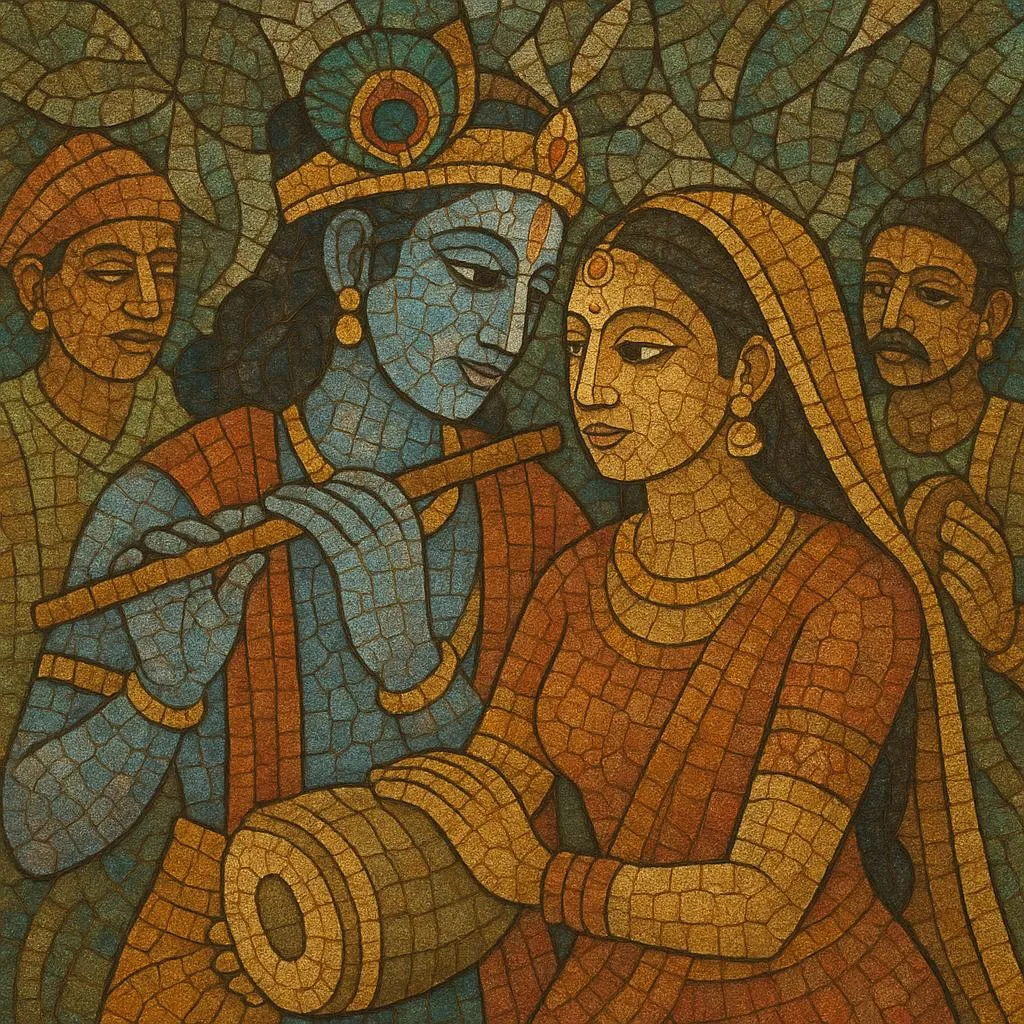
Sung largely in Braj Bhasha and allied Hindi dialects, rasiya songs revolve around shringār (romance), with playful, teasing depictions of the divine love of Krishna and Radha. The term “rasiya” (lit. “epicure,” connoisseur of rasa) can denote the male suitor in the lyrics—or Krishna himself.
Musically, rasiyas use stock tune types and call‑and‑response refrains, carried by harmonium or sarangi melodies over dholak patterns (often in kehervā/8 and dādrā/6, and in Holi contexts sometimes dhamār/14). Hand cymbals (manjīrā/jhānjh) and occasional bansuri or shehnai add color. The style ranges from devotional temple singing (samāj‑gāyan) to village fêtes, weddings, traveling troupe performances, and especially Holi festivities, where the genre is at its most exuberant.
History
Rasiya took shape within the Bhakti flowering of Braj, where poets and singers celebrated Krishna’s līlā in the local Braj Bhasha. As temple and community singing traditions spread, durable tune‑families and refrain formulas emerged. Thematically, the songs mixed devotional intimacy with playful, even flirtatious, folk humor—an aesthetics that suited seasonal spring rites and temple calendars.
By the early modern period, rasiyas were integral to samāj‑gāyan in Vrindavan temples and to village gatherings across the Mathura–Bharatpur belt. The genre diversified into sub‑types (e.g., Holi rasiyas with dhamār accents; wedding and teasing rasiyas with kehervā grooves). Antiphonal performance—lead vocalist vs. chorus—encouraged group participation and improvisation of topical verses.
With harmonium standardization and dholak portability, rasiya thrived in melās, akhāṛās, and public squares. From the cassette era onward, studio‑recorded rasiyas circulated widely across western Uttar Pradesh, Rajasthan’s Braj‑adjacent districts, and the Haryanvi belt, feeding regional video industries and YouTube channels. The Holi season remains the yearly high point, when temple ensembles, village mandalīs, and professional troupes stage marathon sessions.
Rasiya sits at the intersection of folk festivity and temple devotion. Its blend of shringār rasa and bhakti idiom has influenced how North Indian audiences picture Radha–Krishna’s relationship—joyful, teasing, and communal—while providing a living repertoire for local identity, seasonal celebration, and vernacular poetics.
Core grooves: kehervā (8) and dādrā (6). For Holi‑styled rasiyas, experiment with dhamār (14) accents.
•Kehervā (8): Dha Ge Na Ti | Na Ka Dhi Na
•Dādrā (6): Dha Dhi Na | Na Tu Na
•Dhamār (14): Ka Dhi Ta Dhi | Ta Ki Ta Ta | Ga Di Gi Na
•Keep the tempo medium to brisk, with an infectious swing suitable for dancing and call‑and‑response.