Your digging level
Description
Mewati pop is a contemporary regional pop style rooted in the Mewat/Nuh belt of northern India, where the Meo community speaks the Mewati variety of the Rajasthani language continuum. It blends local folk vocal delivery and storytelling with modern, beat-driven production aimed at short-form video platforms, local FM, and YouTube.
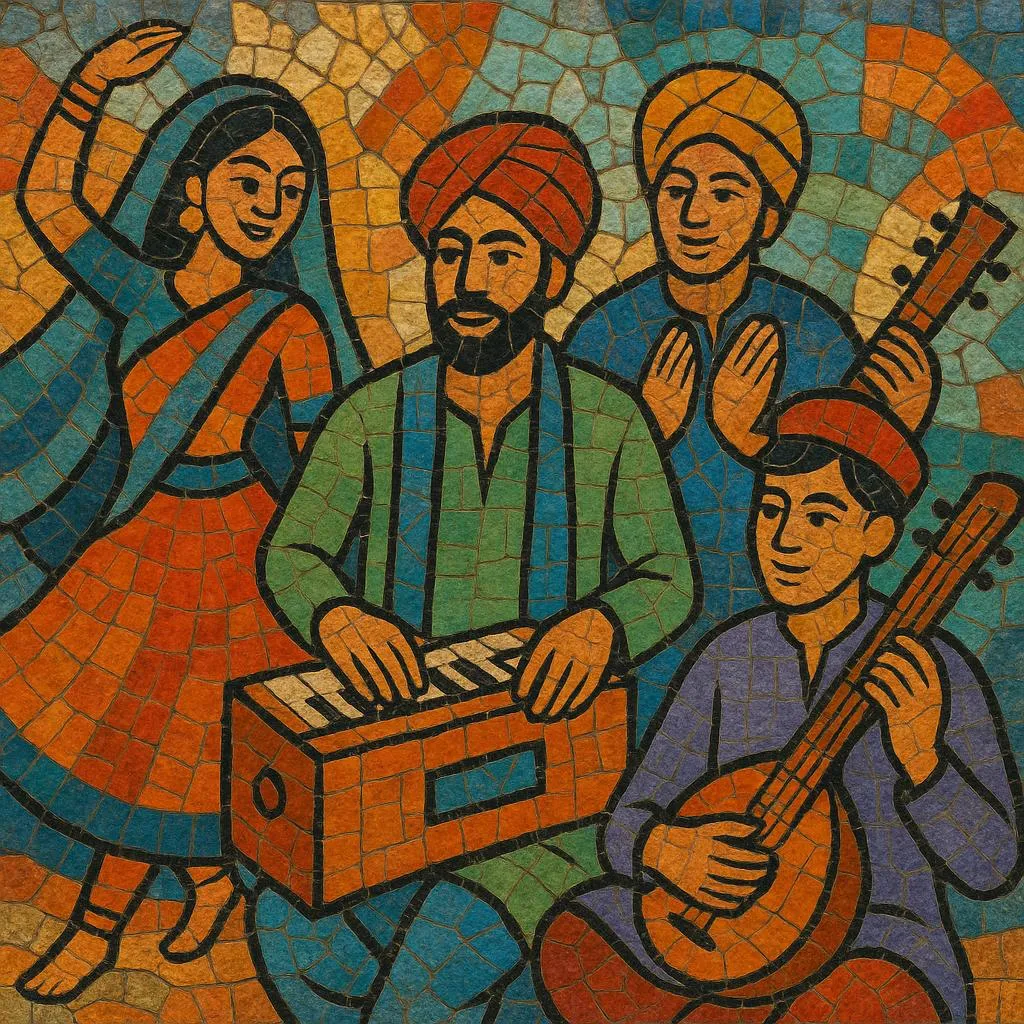
Musically, the style favors bright, major-mode hooks, call-and-response refrains, and mid-to-fast dance tempos. Traditional timbres (harmonium, dholak, tasha, handclaps) are layered with synth leads, programmed drums, and Auto-Tune–assisted vocals. Lyrically, songs often focus on love, weddings, friendship, pride in local identity, and everyday social situations, expressed in Mewati/Rajasthani-Haryanvi vernacular.
History
Mewati popular music grows out of the region’s folk repertory and wedding performance traditions, sharing affinities with neighboring Rajasthani and Haryanvi styles. Local storytelling song forms, call-and-response refrains, and percussion-led dance grooves provided the aesthetic foundation long before a recorded “pop” market existed.
The 2010s saw the rapid spread of smartphones, inexpensive DAWs, and localized YouTube channels across northern India. Mewati artists began cutting singles with simple home or micro-studio setups, fusing folk melodies with electro-pop beats, Auto-Tune, and catchy hooks. Video-first distribution (YouTube, short-video platforms) allowed hyper-local hits to circulate widely without traditional label infrastructure.
By the early 2020s, Mewati pop established recognizable stylistic markers: bright tempos, sing-along choruses, and a mix of folk idioms with EDM-lite production. Scenes formed around small production houses and regional promotional pages. The repertoire broadened to include celebratory wedding tracks, romantic ballads, light comic numbers, and pride songs that reference Mewati identity. Cross-pollination with adjacent regional pop (Haryanvi, Marwadi) and mainstream Indian pop further standardized song structure and sound design while keeping lyrics in the local vernacular.