Your digging level
Description
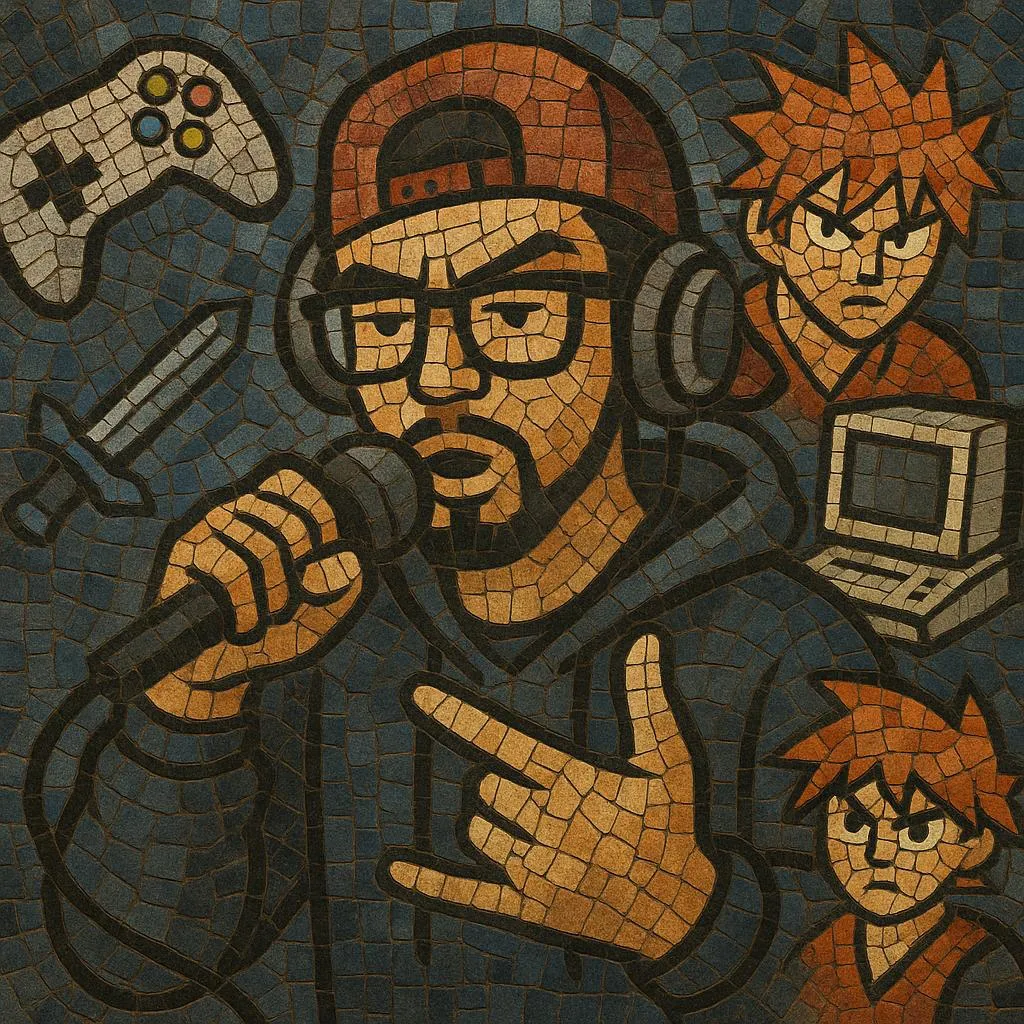
Rap geek is a fandom-driven subgenre of hip hop that centers its lyrics on “geek” culture: video games, anime and manga, comics, sci‑fi/fantasy, and technology.
Artists often write from a character’s point of view or condense entire story arcs into tightly structured verses, mixing punchlines and lore callouts. Production ranges from boom‑bap and pop‑trap to beats built from chiptune timbres, 16‑bit/8‑bit synths, and samples or homages to video‑game and anime soundtracks. The scene thrives on the internet—especially YouTube—where AMV‑style visuals, cyphers, and collaborative “verse per character” formats are common.
While rooted in U.S. nerdcore of the early 2000s, rap geek globalized in the 2010s, with especially vibrant Portuguese‑ and Spanish‑speaking communities that foreground anime and game narratives.



History
Hip hop’s penchant for wordplay and pop‑culture references made it a natural home for geek themes. In the early 2000s, U.S. “nerdcore” crystallized around independent MCs who rapped about computers, gaming, comics, and sci‑fi. This established the template: dense, referential lyrics over DIY beats, distributed online.
The rise of YouTube accelerated the format. Artists began releasing character raps, cyphers, and AMV‑backed singles, optimizing songs for shareability and fandom discovery. Producers incorporated chiptune textures, JRPG‑style melodies, and trap drums, blurring lines between soundtrack homage and modern hip hop. Communities formed around weekly drops, themed collaborations, and cross‑channel features, helping the style spread to Europe and Latin America.
Rap geek is now an internet‑native ecosystem. It embraces a spectrum of production (boom‑bap to hyper‑polished trap), emphasizes narrative and character voice, and sustains itself through tight feedback loops with fan communities, livestreams, and social platforms. Seasonal anime/game cycles and franchise drops often drive topical surges in content.