Your digging level

For this genre
0/8
🏆
Sign in, then listen to this genre to level up

Description

Ragtime song is a vocal, popular-song adaptation of ragtime that incorporates the style’s characteristic syncopated (“ragged”) rhythms into verse–chorus song forms.

Compared with purely instrumental ragtime (especially piano rags), ragtime songs typically emphasize singable melodies, clear lyrical refrains, and dance-friendly tempos, while still using off-beat accents, stride-like accompaniment patterns, and sectional contrasts.

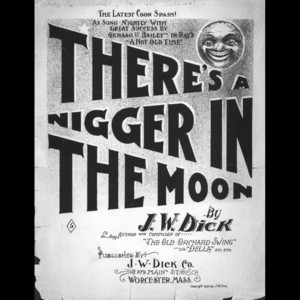
It emerged in the U.S. commercial music world of Tin Pan Alley and vaudeville-era publishing, overlapping with coon songs and early musical theatre, and it helped bridge late-19th-century popular music and early jazz-era songwriting.


Sources: Spotify, Wikipedia, Discogs, Rate Your Music, MusicBrainz, and other online sources

History

Origins (late 1800s)

Ragtime song grew out of U.S. popular-song publishing in the 1890s, when composers and publishers began applying ragtime’s syncopation to vocal numbers intended for stage, vaudeville, and home performance.

Commercial peak (1900s–1910s)

As ragtime spread nationally through sheet music and traveling shows, ragtime songs became common in Tin Pan Alley and theatrical revues. Many titles were built on catchy choruses with rhythmic “kick” in the accompaniment, often marketed for social dancing.

Transition into early jazz-era songwriting (1910s–1920s)

Ragtime song idioms fed directly into early jazz and the emerging popular-song standard. Syncopated vocal phrasing, cakewalk-like rhythms, and rag-style accompaniment patterns were absorbed into Broadway and dance-band repertory.

Revival and later legacy (mid-1900s onward)

Later revivals of ragtime (notably in recordings and film/TV uses of “old-time” Americana) renewed interest in ragtime songs as part of the broader ragtime and early popular-music tradition.

How to make a track in this genre

Form and lyrics
•   Write in a clear popular-song structure such as verse–chorus (often with a memorable, repeated refrain). •   Keep lyric meter regular so the vocalist can sit comfortably against syncopated accompaniment. •   Use period-appropriate themes if desired (social dancing, humor, novelty, romance), but avoid historically racist tropes that were common in some early catalogues.
Rhythm and groove (the “ragged” feel)
•   Build the core feel from syncopation: accent off-beats, anticipate downbeats, and use ties across the barline. •   A practical template is a steady 2/4 or cut-time pulse with right-hand (or melody) syncopations over a stable left-hand pattern. •   For accompaniment, use a “boom-chick” or early stride-like pattern: bass note (or octave) on beats 1 and 3 with chords on 2 and 4, while adding occasional off-beat chord hits.
Harmony
•   Use functional, late-19th/early-20th-century tonal harmony: I, IV, V7 are the backbone. •   Add color with secondary dominants and turnarounds (e.g., I–VI7–II7–V7–I) to set up choruses. •   Modulations are common and effective, especially to the subdominant or relative key for a contrasting section.
Melody and accompaniment writing
•   Write a singable melody with clear phrase shapes, but place syncopated notes on weak beats to achieve the ragtime “lift.” •   If arranging for piano, keep the left hand mechanically steady and let the right hand supply the ragged rhythm. •   If arranging for small ensemble, assign the steady pulse to bass/tuba and rhythm guitar/banjo/piano, and let the vocal line and a lead instrument (cornet/clarinet) trade syncopated figures.
Performance practice
•   Maintain a firm tempo; the syncopation should feel playful but controlled. •   Articulate off-beat accents cleanly and avoid excessive swing; many ragtime songs sit closer to straight (even) eighths than later jazz. •   Emphasize the chorus hook and keep accompaniment light enough for lyrics to remain intelligible.

Top tracks

Locked
Share your favorite track to unlock other users’ top tracks
Influenced by
Has influenced
Challenges
Digger Battle
Let's see who can find the best track in this genre
© 2026 Melodigging
Melodding was created as a tribute to Every Noise at Once, which inspired us to help curious minds keep digging into music's ever-evolving genres.
Buy me a coffee for Melodigging