Your digging level
Description
Qaraami is a traditional urban song style from Somalia that crystallized in the mid‑20th century. It blends Somali poetic sensibilities and pentatonic melodic language with subtle Arab and Western touches.
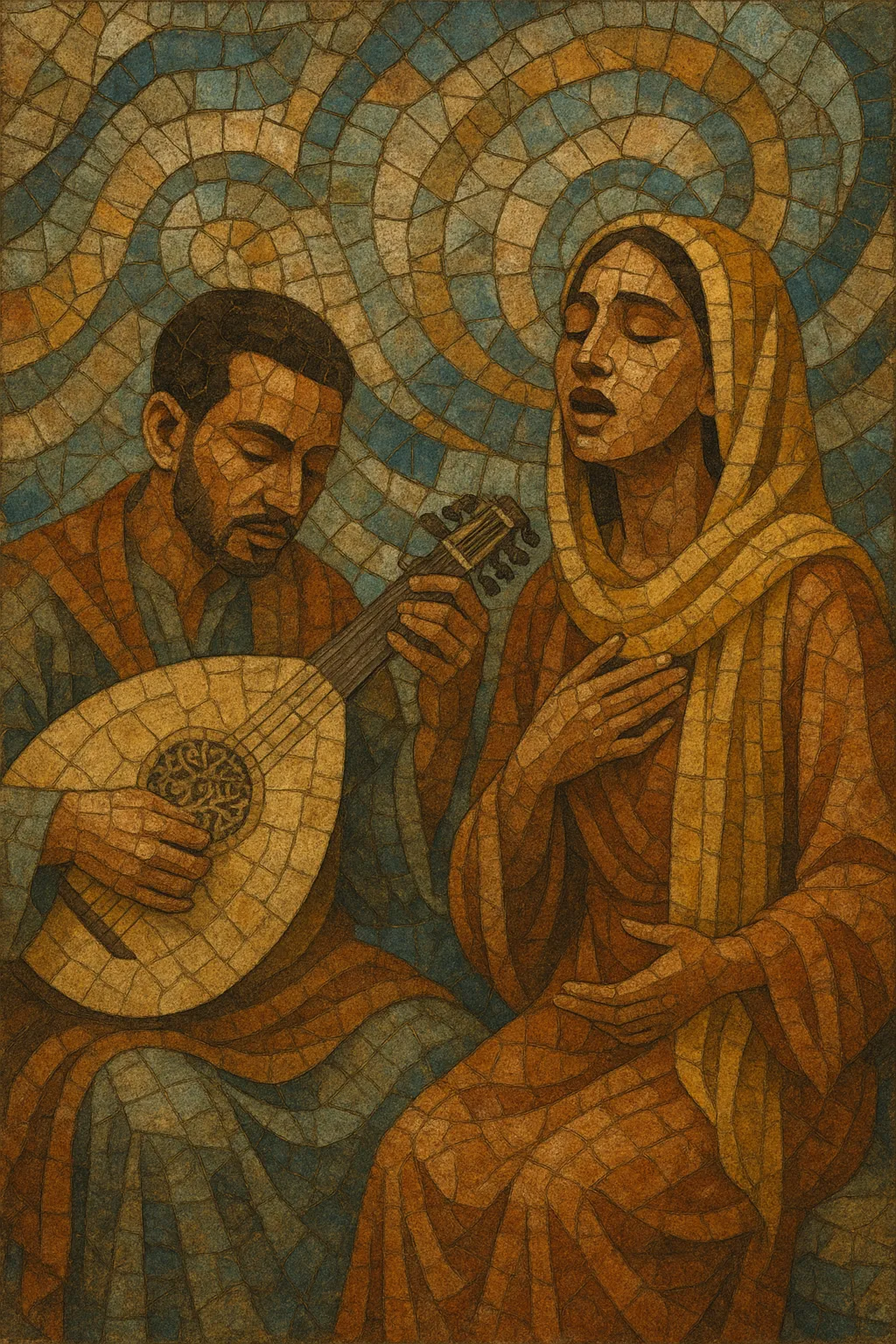
Characterized by highly metaphorical, emotionally charged lyrics—often about love, longing, praise, and social reflection—Qaraami is typically led by a solo vocalist accompanied by the oud (kaban) as the central instrument, with violin and light percussion supporting a gentle, swaying groove. Its melodies favor Somali pentatonic contours while adopting ornamentation and phrasing that reflect contact with Arabic art song and the cosmopolitan life of coastal cities.
The genre rose to prominence during Somalia’s cultural renaissance, especially in Mogadishu and Hargeisa, becoming a cornerstone of modern Somali popular music and a living archive of poetry set to song.
History
Qaraami took shape amid the cultural ferment of Somali port cities, where Indian Ocean trade, Arab cultural ties, and local Somali traditions intertwined. During the 1930s cultural renaissance and into the 1940s, performers began setting refined Somali poetry to melodic frameworks that emphasized a pentatonic scale and the oud (kaban) as the principal instrument. This created a distinct urban style that was recognizably Somali yet receptive to neighboring Arab musical aesthetics and select Western formal ideas (such as waltz‑like lilt).
By the 1950s, Qaraami was widely heard in theaters, cabarets, and on radio in Mogadishu and Hargeisa. National ensembles and theater troupes helped standardize and popularize the style. The period saw the emergence of iconic oud accompanists and star vocalists whose performances balanced poetic clarity with subtle melisma and ornamentation. Recordings and state broadcasting expanded its reach, and Qaraami’s songbook became a shared repertoire across Somali regions.
As Somalia’s popular music diversified, Qaraami’s melodic and lyrical DNA flowed into newer idioms, informing later urban styles and stage songs. Even as amplified bands and modern studio production grew, the Qaraami approach—poetry-forward lyrics, pentatonic melodies, and the kaban’s timbre—remained a touchstone.
Following conflict and migration, Somali diaspora communities in places like London, Djibouti, Nairobi, and Minneapolis became key custodians of Qaraami. Archival reissues, community concerts, and online platforms have spurred renewed interest. Contemporary artists continue to reinterpret Qaraami with updated arrangements, ensuring the genre’s repertoire and performance practices remain vibrant while honoring its mid‑20th‑century urban roots.