Your digging level

For this genre
0/8
🏆
Sign in, then listen to this genre to level up

Description

Psytech (often written as psy-tech or psychedelic techno) fuses the hypnotic drive of techno with the trippy sound design and spatial aesthetics of psytrance.

Typically sitting between 124–132 BPM, it favors solid four-on-the-floor kicks, rolling sub-basses, and long, evolving arrangements. The palette leans toward psychedelic textures—acidic lines, formant sweeps, resonant band-pass stabs, comb-filtered atmospheres, and modulated delays—while maintaining techno’s emphasis on groove, subtle variation, and club-focused functionality.

The result is music that feels both heads-down and mind-bending: a dark, tensile floor-pulse animated by kaleidoscopic FX, micro-rhythmic ear-candy, and gradually mutating motifs.


Sources: Spotify, Wikipedia, Discogs, Rate Your Music, MusicBrainz, and other online sources

History

Origins (late 2000s–early 2010s)

Psytech emerged as DJs and producers from techno and psytrance scenes began cross-pollinating: techno artists embraced more adventurous, psychedelic sound design, while progressive-psy figures slowed tempos and adopted straighter, less syncopated low-ends. European techno hubs (Germany, the UK) and the global psytrance circuit (notably Israel and Scandinavia) provided fertile ground via festivals and labels open to hybrid aesthetics.

Consolidation and club ecology

By the mid-2010s, specialized label offshoots and stage curators promoted "psychedelic techno" or "psy-tech" programming. The sound coalesced around 4/4 grooves, mid-tempo push, and psychoacoustic detailing—borrowing psytrance’s spacious mixing and FX craftsmanship while preserving techno’s long-form tension/release logic and DJ-friendly structures. Artists from progressive psy, zenon/psygressive, and dark/minimal techno converged on overlapping BPMs and timbral choices.

Aesthetics and technique

Productions privileged disciplined arrangement and incremental modulation: filtered 303/acid motifs, FM blips, granular shimmers, and spectral morphs deployed over 8–32-bar arcs. Compared to peak-time trance, breakdowns remained restrained; compared to minimal techno, the soundscape was more animated and otherworldly. This balance allowed psytech to slot into mixed-genre club nights and sunrise festival slots alike.

Ongoing developments

Through the late 2010s and 2020s, psytech informed darker branches of techno and the more driving fringe of melodic and progressive techno. It also provided a bridge for psytrance audiences toward slower, groovier dance-floor music while keeping a distinctly psychedelic identity.
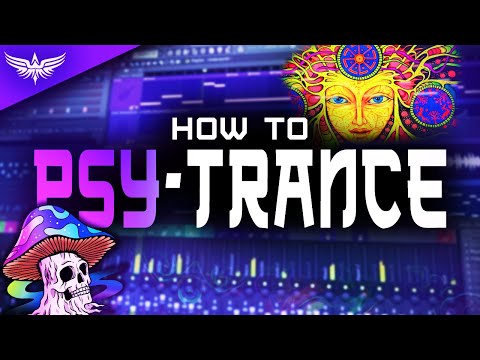
How to make a track in this genre

Tempo, meter, and groove
•   Aim for 124–132 BPM in 4/4. Keep the kick consistent and full, with a tight, short tail. •   Use a solid sub that either reinforces the kick (techno-style) or a sparse, rolling pattern with occasional offbeats. Prioritize groove over note density.
Sound design and timbre
•   Lean on psychedelic textures: resonant band-pass stabs, comb/phase-flanged sweeps, vowel/formant filtering, modulated delays, and stereo micro-movements. •   Incorporate acid (303-style) lines with slow filter/resonance automation; sprinkle FM plucks, metallic blips, and granular shimmers as ear-candy. •   Keep low-end mono and controlled; let the “psy” live in the mids/highs with width and motion.
Harmony and motifs
•   Favor modal/minor centers (Phrygian, Dorian, Aeolian). Use drones, pedal tones, and sparse two- or three-note motifs. •   Create long-evolving themes through filter, envelope, and FX automation rather than frequent chord changes.
Arrangement and structure
•   Build tension via incremental changes every 8–16 bars (filter opens, added percussion, delay feedback tweaks). Avoid overlong breakdowns; maintain propulsion. •   Use DJ-friendly intros/outros: stripped drums, utility FX, and clear phrase markers. •   Reserve one or two “psy moments” per track where FX density or acid resonance blooms—then pull back to the groove.
Rhythm and percussion
•   Start with a sturdy kick and off-hat/closed-hat pattern. Add sparse, syncopated tops and tasteful shakers to create glide without clutter. •   Use percussive FX hits (zaps, glitches) to punctuate transitions rather than busy loops.
Mixing and space
•   Sculpt a tall, deep soundstage: mono low-end, wide mids/highs, and time-based FX that breathe with sidechain or ducking. •   High-pass non-bass elements; leave headroom for club translation. Use transient shaping on drums; tame resonances on psychedelic leads.
Performance/DJ context
•   Design tracks to layer well: complementary keys, compatible drum palettes, and intros with utility textures for smooth blends. •   Keep energy arcs predictable yet hypnotic so longer sets can weave techno discipline with psychedelic flair.

Top tracks

Locked
Share your favorite track to unlock other users’ top tracks
Influenced by
Has influenced
Challenges
Digger Battle
Let's see who can find the best track in this genre

Download our mobile app

Get the Melodigging app and start digging for new genres on the go
© 2026 Melodigging
Melodding was created as a tribute to Every Noise at Once, which inspired us to help curious minds keep digging into music's ever-evolving genres.
Buy me a coffee for Melodigging