Your digging level
Description
Polynesian traditional is the collective term for ancestral song, chant, drumming, and dance-linked music practices that developed among the peoples of the Polynesian Triangle (Samoa/Tonga–central Polynesia, east to Tahiti and Hawaiʻi, south to Aotearoa New Zealand, and outliers like Tokelau, Tuvalu, Niue, Rapa Nui).
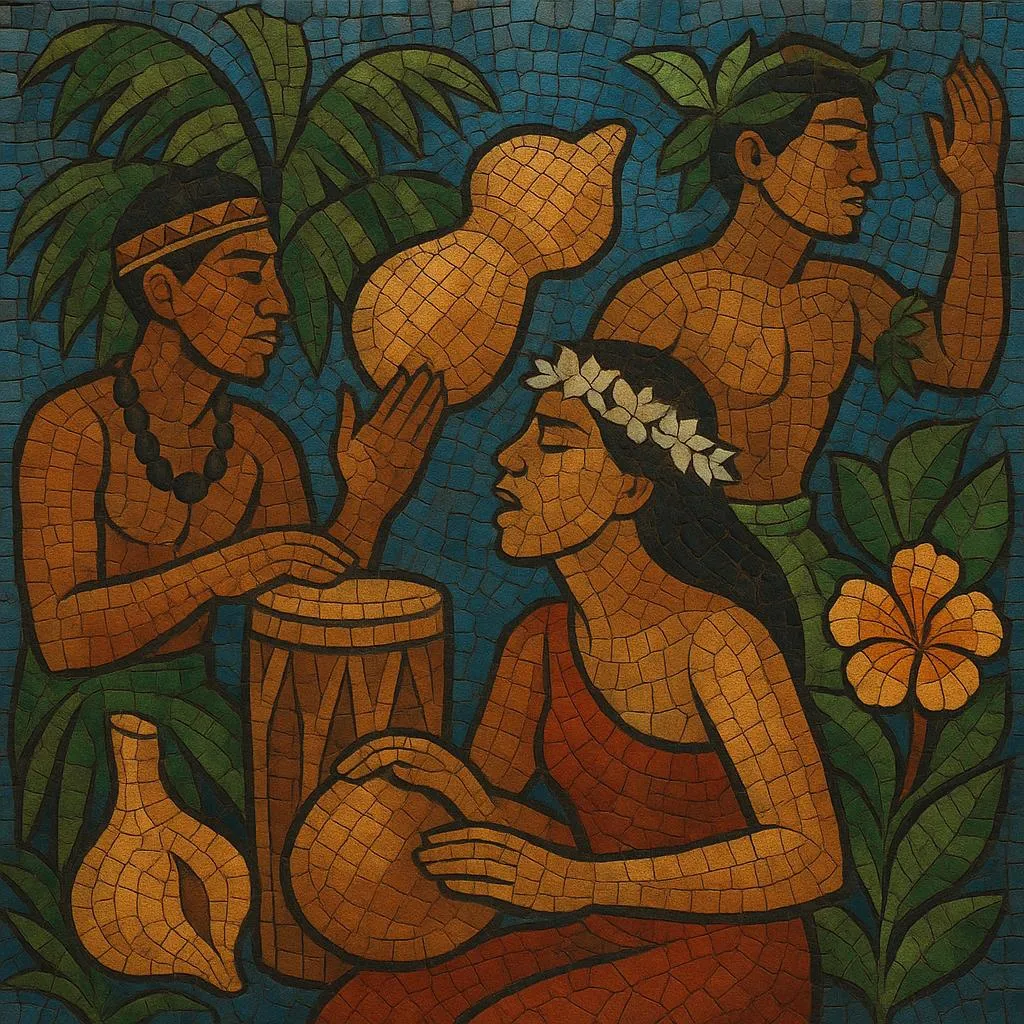
It is fundamentally vocal—genealogies, praise poetry, and communal narratives are performed as solo chant or antiphonal group song—supported by distinctive percussion such as slit-log drums (toʻere/pātē), frame and skin drums (pahu, faʻatete), gourd drums (ipu), handclaps, stamping tubes, and conch shells (pū). Aerophones like nose flutes (ʻōʻē, vivo) and bamboo/kōauau flutes appear in some regions. Music is inseparable from dance forms (e.g., hula kahiko, ʻoteʻa, siva, lakalaka, haka), with tightly interlocked rhythms driving choreographies and visual storytelling.
Across islands, stylistic markers differ: imene/himene choral traditions in the Society and Cook Islands, mele/oli chant in Hawaiʻi, pese/siva in Samoa, lakalaka and māʻuluʻulu in Tonga, haka and waiata in Aotearoa. Scales tend toward pentatonic or narrow modal ambitus, textures range from unison chant to parallel and block harmonies, and forms often feature responsorial refrains and metric cycles synchronized to dance.
History
Polynesian traditional music grew from the Lapita-descended Polynesian cultures that settled central Polynesia and radiated across the Pacific roughly in the first millennium CE. Before literacy, chant (oli, pese, waiata, etc.) preserved genealogies (whakapapa), cosmology, law, and place memory. Drums and dance were not entertainment alone, but vehicles for ceremony, oratory, and diplomacy.
European contact and Christian missionization brought hymn tunes and choral part-singing, which blended with local prosody to create new choral idioms (e.g., himene types in French Polynesia; hīmí and tonic-solfa part singing elsewhere). Brass bands and guitars appeared in the late 19th century; the ʻukulele and steel guitar later reshaped Hawaiian music, while leaving older chant/drum repertoires intact in ceremonial contexts.
Colonial pressures once suppressed ritual performances; from mid-20th century onward, cultural revivals re-centered traditional practice. Major festivals—Heiva i Tahiti (French Polynesia), Merrie Monarch Festival (Hawaiʻi), and Te Matatini (Aotearoa)—codified training, composition, and adjudication frameworks while spurring new works in traditional idioms.
Traditional idioms continue to inform modern styles (urban and diasporic): Pacific reggae and Jawaiian, Urban Pasifika, contemporary kapa haka, and hybrid choral works. Yet core features remain: communal authorship, dance-synchronized rhythm, indigenous languages, and performance as a living archive of memory and place.