


Description
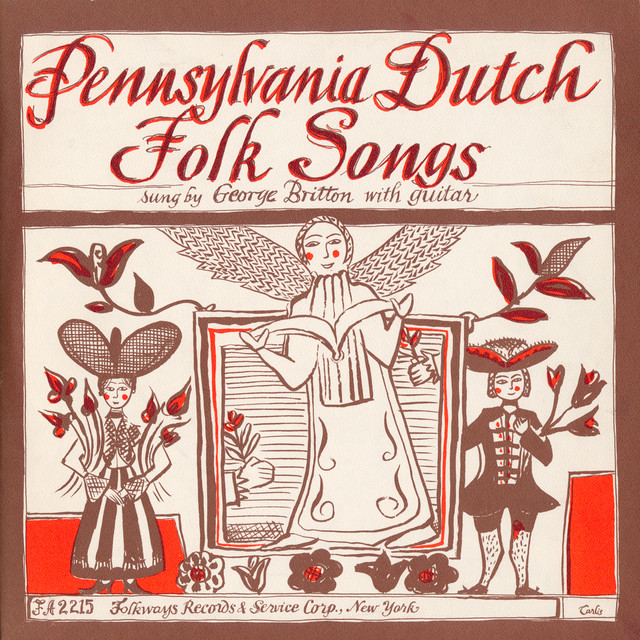
Pennsylvania Dutch folk music is a predominantly vocal tradition rooted in German folk music. Its songs are often sung in Pennsylvania Dutch, a distinctive dialect of Palatine German, and many have counterparts in Europe.
Religious song is prominent among surviving material. Plain Dutch communities such as the Amish have a strong hymn-singing tradition and often discourage instruments; folk dancing has also been discouraged under the influence of strict religious communities.
Sources: Rate Your Music
History
Migration and continuity
The Pennsylvania Dutch, also known as Pennsylvania Germans, migrated from German-speaking parts of Europe to Pennsylvania and neighboring states between the 17th and 19th centuries. Their songs retained connections with European counterparts while passing orally through a community that maintained its own dialect.
Religious song and preservation
Hymn singing became a particularly strong tradition among Plain Dutch communities. One important hymnbook is the Anabaptist Ausbund, first printed in 1564. Beginning in the 1950s, folklorists made an effort to preserve Pennsylvania Dutch folk traditions that had long circulated orally.
Begin with the voice
Build a song around a clear vocal melody and text. Pennsylvania Dutch songs are often sung in the Pennsylvania Dutch dialect; you could explore its sound and phrasing through traditional songs before writing your own words. A religious text and a hymn-like approach are also possibilities, reflecting an important part of the tradition.
Choose the setting
An unaccompanied vocal setting is a useful starting point, particularly when drawing on Plain Dutch hymn singing, where instruments are often discouraged. If working from the broader German folk tradition instead, you could try a simple accompaniment that supports rather than obscures the melody.
Develop the song
Use repetition to make the melody easy to remember and sing. You could also compare different ways of singing a verse and allow the phrasing to follow the words, as a practical way to approach a tradition passed on orally.

Best playlists

Influenced by


