Your digging level

For this genre
0/8
🏆
Sign in, then listen to this genre to level up

Description

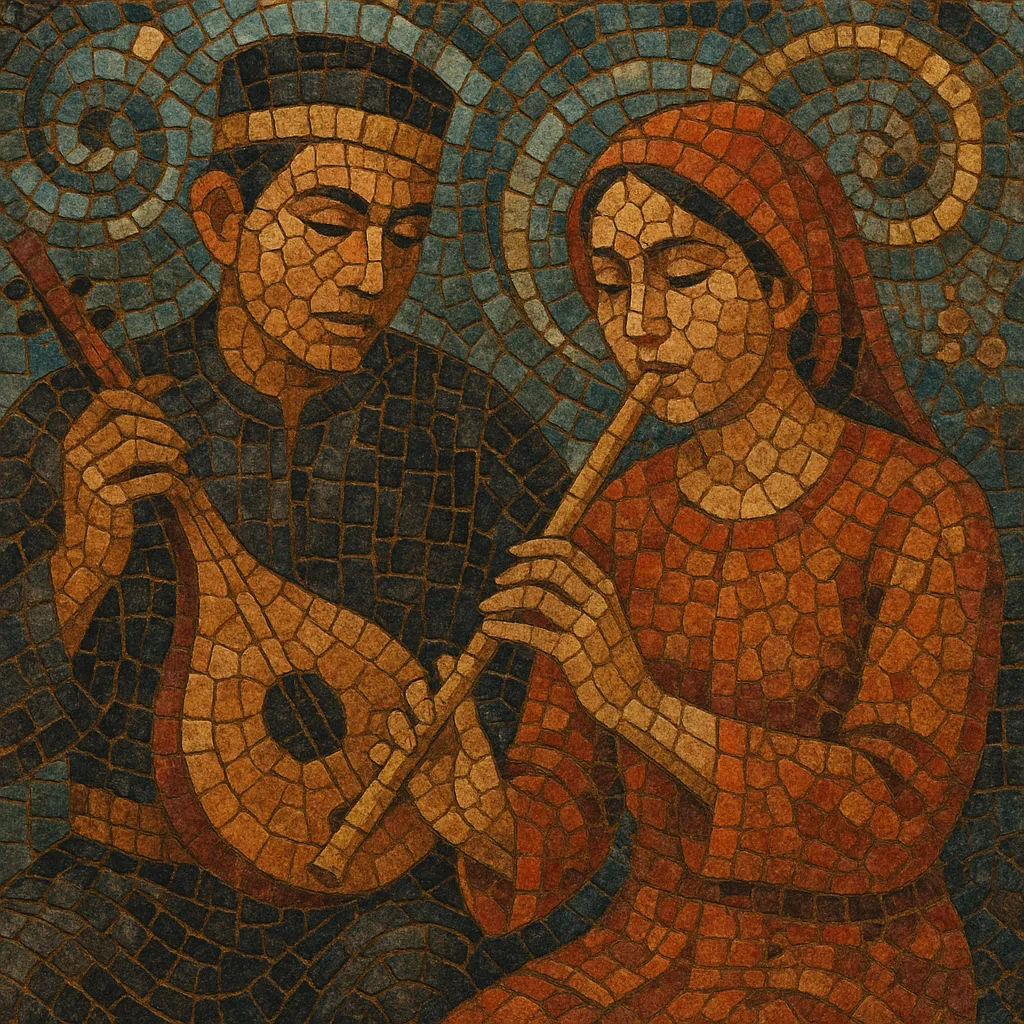
Pakacaping music is a traditional Buginese–Makassarese lute song tradition from South Sulawesi, Indonesia, centered on the kacaping (also spelled kacapi/kacaping), a small plucked lute with two to four strings.

It is typically performed by a singer accompanied by a single pakacaping (lute) player, or by a small ensemble adding suling (bamboo flute) and light percussion. The style features strophic melodies, free but steady pacing, and ornate melodic embellishments.

Texts are delivered in Bugis or Makassarese and draw on poetic forms, proverbs, romance, seafaring life, and moral counsel. Pakacaping commonly accompanies narrative recitation (such as sinrilik) and ceremonial gatherings, weddings, and night-time social occasions.


Sources: Spotify, Wikipedia, Discogs, Rate Your Music, MusicBrainz, and other online sources

History

Origins and Context

Pakacaping music arose among the Bugis and Makassarese communities of South Sulawesi, where itinerant singer–lutenists served as custodians of local poetry and oral history. The kacaping lute—distinct from the Sundanese box zither of West Java—likely absorbed design ideas via maritime exchange across the archipelago and the wider Indian Ocean, where Arab and Malay lute traditions circulated.

Social Role

Historically, the pakacaping player provided intimate entertainment at household festivities, courtship events, and community gatherings. In addition to lyrical songs about love and daily life, pakacaping often accompanies the sinrilik (or sureq) narrative tradition, in which epic tales and moral parables are chanted with flexible pacing over a repeating lute framework.

20th Century to Present

Through the 20th century, urbanization and broadcast media reduced the everyday presence of itinerant musicians, yet pakacaping persisted in ritual and celebratory settings. Cultural centers and sanggar (arts groups) in Makassar and surrounding regencies began documenting and teaching the style. In recent decades, local universities, community festivals, and heritage initiatives have supported revival efforts, while contemporary performers experiment with ensemble expansions (adding suling, frame drums, or soft string textures) and stage formats that maintain the characteristic vocal–lute core.

How to make a track in this genre

Instrumentation and Setup
•   Core: voice and one kacaping (2–4 strings), tuned to a comfortable vocal range with one lower drone/support string and one higher melody string. •   Optional: suling (bamboo flute) doubling or echoing key phrases; light frame drum or hand percussion for gentle pulse.
Rhythm and Form
•   Use a strophic song form: short melodic lines repeated for each poetic stanza. •   Keep meter flexible (rubato within phrases) but aim for a gentle, steady underlying pulse when verses settle. •   Establish an ostinato or repeating arpeggiated figure on the kacaping; vary cadences to mark stanza endings.
Melody and Mode
•   Compose in pentatonic or heptatonic modal contours typical of South Sulawesi vocal music; avoid functional harmony and emphasize a sustained drone. •   Ornament the vocal line with slides, turns, and grace notes; mirror key ornaments on the lute. •   Use call-and-response moments: the voice states a phrase, the lute answers with a short fill.
Text and Delivery
•   Write lyrics in Bugis or Makassarese (or emulate their cadence) on themes of love, seafaring, longing, counsel, and proverbial wisdom. •   Favor poetic parallelism and aphorisms; let each stanza complete a thought while the refrain (if used) anchors the mood.
Performance Practice
•   Begin with a short instrumental prelude to set key and tempo; enter the vocal line softly and increase intensity gradually. •   Maintain intimacy: moderate dynamics, clear diction, and audible lute articulations; prioritize storytelling over virtuosity. •   Close with a reflective instrumental coda that resolves to the drone or tonic string.

Top tracks

Locked
Share your favorite track to unlock other users’ top tracks
Influenced by
Has influenced
No genres found
Challenges
Digger Battle
Let's see who can find the best track in this genre
© 2026 Melodigging
Melodding was created as a tribute to Every Noise at Once, which inspired us to help curious minds keep digging into music's ever-evolving genres.
Buy me a coffee for Melodigging