Your digging level

For this genre
0/8
🏆
Sign in, then listen to this genre to level up

Description

Paidika tragoudia (παιδικά τραγούδια) refers to Greek children's songs — music written or adapted specifically for children in Greece.

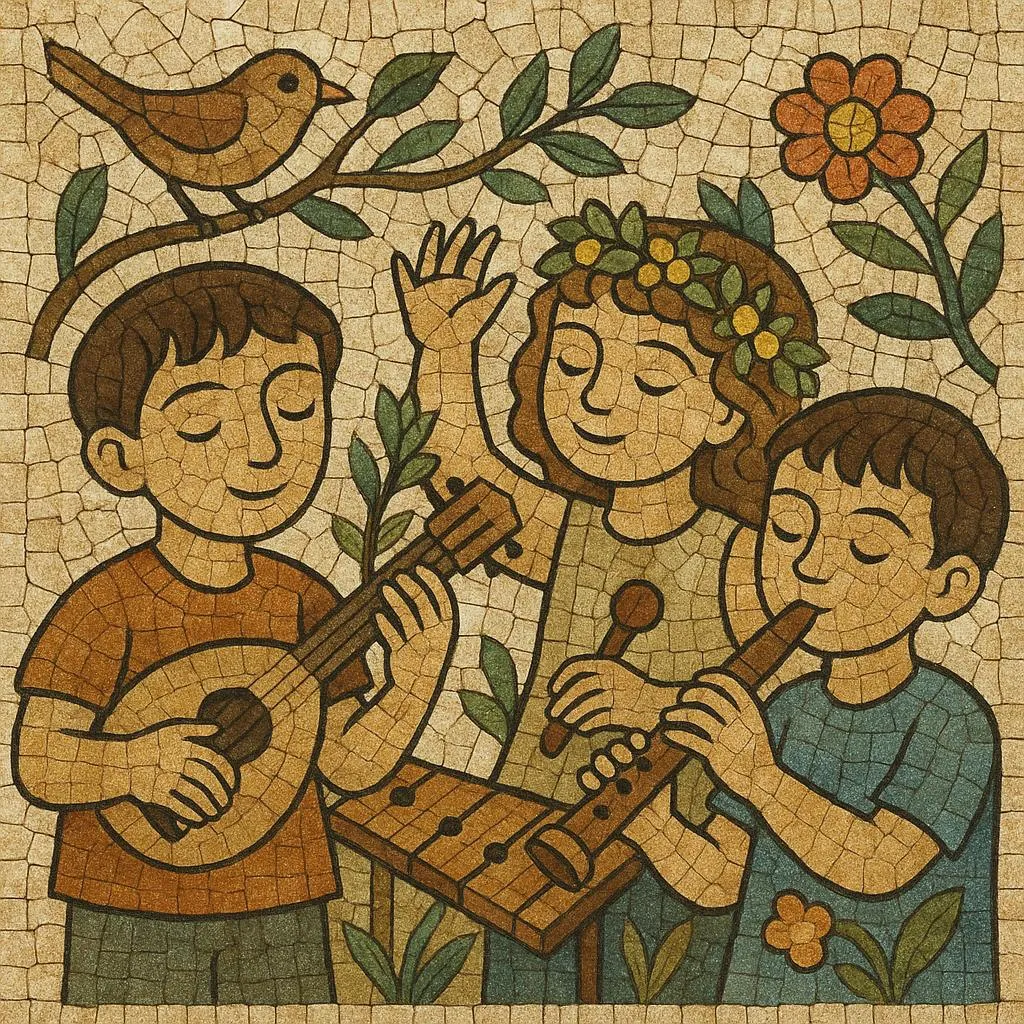
It blends Greece’s folk and popular idioms with simple, memorable melodies and playful, educational lyrics. Songs often feature call-and-response refrains, counting and rhyming games, animal stories, and values-centered narratives, while lullabies preserve very old oral traditions. Arrangements range from acoustic (guitar, piano, hand percussion) to fully produced recordings with children's choirs, and sometimes include Greek instruments (bouzouki, baglamas) alongside Orff classroom instruments (xylophone, glockenspiel, recorder).

Stylistically, the genre sits between folk heritage and modern children’s media music, aiming to be both engaging for kids and musically rich enough that adults can enjoy it too.


Sources: Spotify, Wikipedia, Discogs, Rate Your Music, MusicBrainz, and other online sources

History

Roots and early formation (pre-1970s)

Greek children's singing traditions long predate recordings. Lullabies (nánisma) and nursery rhymes were transmitted orally within families and communities, drawing on regional Greek folk music (dances, modes, and storytelling). Early 20th‑century songbooks and school repertoires began to codify these materials, but most children’s music still lived informally at home and in the classroom.

Media era and canon building (1970s–1990s)

The genre consolidated with the expansion of Greek radio/TV, dedicated recordings, and school performances. New works drew on laïko and entechno songcraft while preserving child-friendly forms (repetition, short verses, clear hooks). Children’s choirs and theater/radio projects popularized high-quality repertoire that balanced education and artistry, bringing composers and well-known singers into the space. By the late 1980s and 1990s, labels routinely released children’s albums, and the genre became a stable part of Greek cultural life.

Diversification and contemporary production (2000s–present)

With the rise of CDs, digital platforms, and streaming video, paidika tragoudia expanded into animated series, classroom materials, and themed albums (alphabet, nature, holidays). Production values modernized, but core traits remained: accessible melodies, Greek language wordplay, and a mix of folk references with contemporary pop instrumentation. Today, the genre bridges traditional lullabies and modern educational content, supported by composers, children’s choirs, theater practitioners, and child-focused ensembles.

How to make a track in this genre

Melody and harmony
•   Use short, diatonic melodies within a comfortable vocal range (C4–E5 for children). •   Favor stepwise motion and clear, singable contours; repeat motifs to aid memorization. •   Keep harmony simple (I–IV–V, occasional ii or vi). Modality or folk-like drones can work for lullabies.
Rhythm and form
•   Common meters: 2/4 and 4/4 for games and marches; introduce gentle 3/4 for waltz-like tunes and lullabies. •   Sprinkle in Greek folk feels (e.g., a mild 7/8 or 9/8 pattern) to expose children to national rhythms, but keep the groove steady and not too fast. •   Use verse–refrain or call-and-response forms to encourage participation; keep sections short (8–16 bars).
Lyrics and themes
•   Write in clear, everyday Greek with strong rhymes and alliteration; focus on animals, nature, counting, seasons, friendship, and feelings. •   Include interactive cues (clap, echo, shout a word), counting up/down, or simple dialogues. •   For lullabies, use soothing imagery, rocking verbs, and soft consonants; keep lines flowing and gentle.
Instrumentation and arrangement
•   Core: acoustic guitar or piano, light hand percussion (shaker, tambourine, handclaps), bass. •   Add Orff instruments (glockenspiel, xylophone, recorder) for bright colors suited to school performance. •   Color with Greek timbres (bouzouki, baglamas, lute) in moderation. •   Children’s choir in unison or simple two-part harmonies; keep textures uncluttered so lyrics are intelligible.
Production and pedagogy
•   Maintain clear diction and moderate tempos (80–120 BPM); avoid overly dense mixes. •   Provide instrumental breaks for movement or gestures; include key changes sparingly for lift. •   Align songs to educational aims (counting, days of week, virtues) while preserving musicality and fun.

Top tracks

Locked
Share your favorite track to unlock other users’ top tracks
Influenced by
Has influenced
No genres found
Challenges
Digger Battle
Let's see who can find the best track in this genre

Download our mobile app

Get the Melodigging app and start digging for new genres on the go
© 2026 Melodigging
Melodding was created as a tribute to Every Noise at Once, which inspired us to help curious minds keep digging into music's ever-evolving genres.
Buy me a coffee for Melodigging