

Your digging level
Description
Ojkanje is an archaic, two‑part, polyphonic folk singing style from Croatia, especially the Dalmatian hinterland and the mountainous Dinaric regions such as Velebit, Lika, Kordun, and Karlovac.
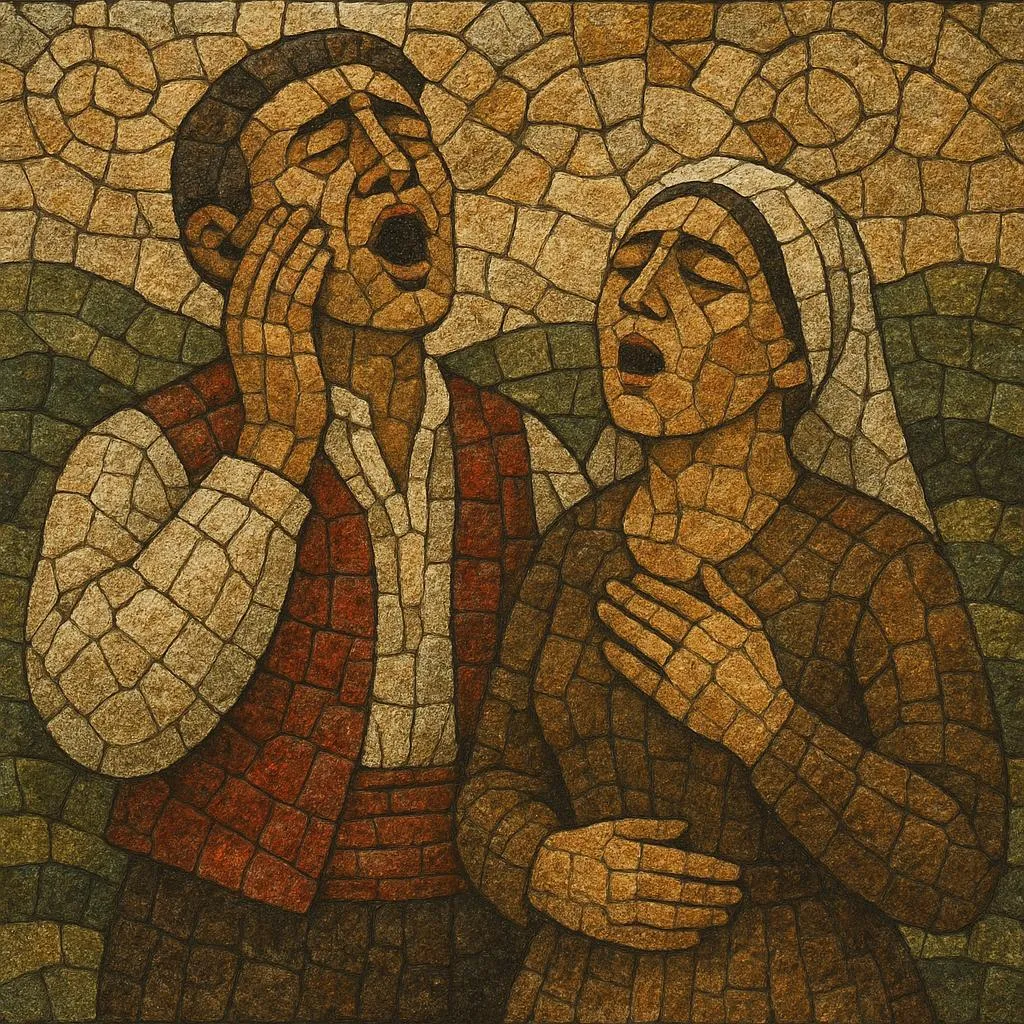
Its hallmark is a long melismatic lead line with a sharp, prolonged shaking of the voice on the syllables “oj” or “hoj.” A second voice typically joins to support or drone at a close interval, creating a raw, tightly spaced harmony rich in microtonal inflections. Pieces are unaccompanied, loud, and projected from the chest with a bright, penetrating timbre.
Texts are short, often improvised couplets that comment on daily life, love, landscape, and community. Performance is social and communal, associated with gatherings, weddings, and local festivities, and practiced by both men and women.
History
Ojkanje belongs to the family of archaic Dinaric multipart singing. Its defining feature—the shaking vocal melisma on “oj/hoj”—was noted by early scholars and later codified in reference works (e.g., The Harvard Dictionary of Music). While likely much older in oral practice, the style entered written documentation in the 19th century through regional song collectors and ethnographers.
The tradition is strongest in the Dalmatian hinterland and neighboring upland areas (Velebit, Lika, Kordun, Karlovac). Local variants differ in entry cues, intervallic spacing, and verse formulae, but share the unaccompanied, close‑interval two‑part texture and the conspicuous vibratory melisma.
Modernization, depopulation, and changing social habits led to a decline in everyday practice during the 20th century. Cultural‑artistic societies (KUDs), village ensembles, and the national folk ensemble LADO helped keep it present on stage and in media.
In 2010, “Ojkanje singing” was inscribed on UNESCO’s List of Intangible Cultural Heritage in Need of Urgent Safeguarding. Community workshops, intergenerational transmission, local festivals, and documentation projects continue to sustain the style in its home regions and diaspora.


