Your digging level
Description
Novo dub is a French-centered alternative electronic offshoot of dub that blends classic Jamaican dub techniques with European post-rock, trip‑hop, drum and bass, and ambient sensibilities.
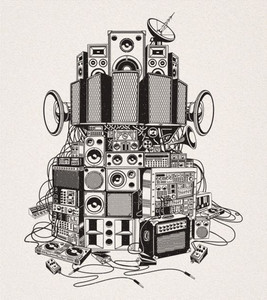
It emphasizes deep, melodic bass lines, spacious delay and reverb, live drums interlocking with programmed breakbeats, and a cinematic sense of dynamics. Bands and producer-led projects often perform with real-time effects, treating the mixing desk and outboard gear as instruments to sculpt evolving, bass‑heavy soundscapes.
History
Rooted in the French underground, novo dub arose when dub-minded musicians and engineers began merging classic Jamaican studio techniques with the aesthetics of European alternative electronics. Early adopters in cities like Lyon, Angers, and Tours fused live instrumentation with samplers, synths, and extensive outboard effects, forming a scene that valued both improvisation and painstaking studio craft.
Through the 2010s, the style solidified around bass-forward production, half‑time grooves, and expansive use of delays, tape/spring reverbs, and filters. Artists toured with hybrid rigs—drums, bass, guitars, keyboards, and a "dub desk"—to perform live dubbing, muting, and send/return manipulation on stage. Releases ranged from club‑ready steppers to contemplative, post‑rock‑tinged albums suited for attentive listening.
Today, novo dub continues as a flexible French-dominant movement within alternative electronic music. It collaborates freely with trip‑hop, ambient, and bass-music communities, and its live‑dub methodology informs adjacent European electro‑dub and indietronica scenes.
Rhythm: Use half‑time or steppers pulses at ~70–75 BPM (140–150 BPM interpreted in half‑time) and breakbeat inflections from drum and bass. Combine live drums with programmed hits; leave space for dub swells and drop‑outs.
•Harmony & Melody: Favor minor modes and modal vamping (i–VII, i–VI progressions). Keep harmony sparse so bass and effects carry the emotion. Melodic motifs often come from guitar delay lines, melodica, or synth leads.
•Bass: Make the sub the protagonist. Write simple, hooky bass lines that sustain and slide; carve space with sidechain/ducking and careful EQ so kicks and subs complement rather than clash.
•Sound Design & Effects: Treat the mixer as an instrument. Route key elements to tape or spring reverbs, feedback delays, filters, and dub sirens. Perform mutes, send throws, and feedback rides in real time to create evolving textures.
•Instrumentation: Hybrid setups—drums, electric bass, guitar, keys/synths, samplers, and a dedicated "dub desk" with outboard (tape delay emulations, spring reverb, filters). Layer field recordings for cinematic depth.
•Arrangement: Build tension with drops, breakdowns, and return of bass weight. Alternate between dense, rhythmic passages and stripped, echo‑washed interludes to showcase space and dynamics.