Your digging level

For this genre
0/8
🏆
Sign in, then listen to this genre to level up

Description

Nova Música Maranhense (“new music from Maranhão”) refers to the 21st‑century wave of artists from the Brazilian state of Maranhão who renew local traditions by fusing them with contemporary MPB, indie pop/rock and modern production.

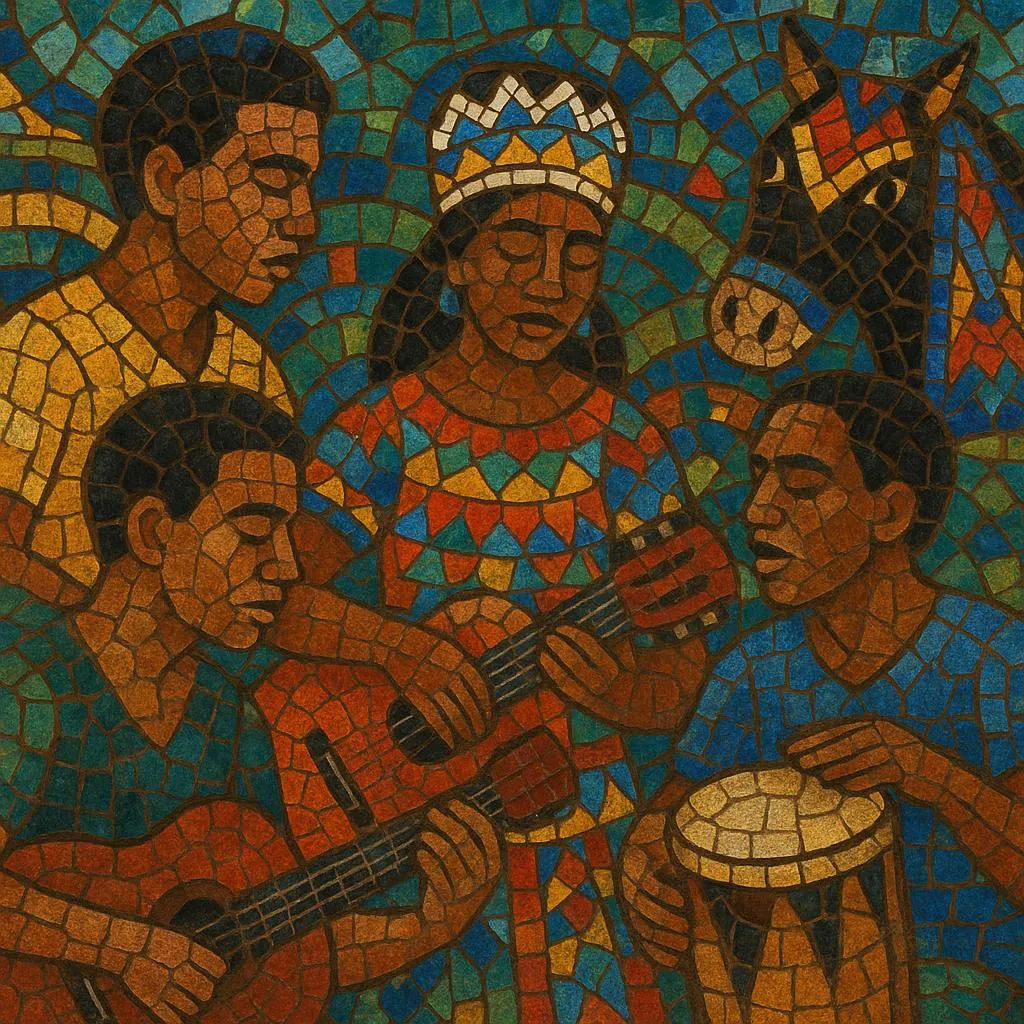
Rooted in São Luís’ unique sound ecology—famed as Brazil’s “Jamaica” for its deep reggae culture—and in Afro‑Indigenous festive forms such as bumba‑meu‑boi, cacuriá and tambor-driven toadas, the scene blends lilting off‑beat grooves, melodic, harmony‑rich songwriting, and percussion-forward arrangements. The result is a colorful, song‑centric style that feels at once regional and cosmopolitan: reggae swing meets MPB harmony; folkloric chants meet indie textures; street radiolas meet studio finesse.


Sources: Spotify, Wikipedia, Discogs, RYM, MB, user feedback and other online sources

History

Background (1970s–1990s)

Maranhão has a long musical lineage that predates the “nova” label. The classic MPB landmark Bandeira de Aço (1978), sung by the percussionist Papete and featuring composers like César Teixeira, Josias Sobrinho and others, helped codify a modern maranhense songbook that connected toadas (from bumba‑meu‑boi), samba, and lundu-derived rhythms to the then-contemporary MPB language. In parallel, São Luís cultivated a singular love affair with Jamaican music: powerful radiolas (sound systems) popularized reggae throughout the 1980s–90s, shaping local taste and performance practice.

Emergence (2000s)

Amid Brazil’s indie and MPB renewal in the 2000s, a new generation of maranhense artists emerged, absorbing historic references (Papete, Chico Maranhão, Alcione) and the ubiquitous local reggae pulse, while dialoguing with national indie pop/rock and studio-forward MPB. DIY circuits, small labels, and culture festivals in São Luís provided platforms for this wave, encouraging experimentation with traditional percussion, acoustic guitars, and modern electronics.

Consolidation and Reach (2010s–present)

By the 2010s, Nova Música Maranhense had coalesced as a recognizable current: song-focused, rhythmically buoyant, and proudly regional. Artists collaborated across reggae bands, MPB trios, and indie outfits; producers folded tambor and toada feels into contemporary arrangements; lyricists celebrated maranhense identity—festas juninas, boi sotaques, the sea breeze of São Luís—while remaining open to national and global pop structures. This movement now sits alongside other regional “nova música” currents (e.g., Pernambuco), contributing distinct colors to Brazil’s broader MPB/indie renaissance.

How to make a track in this genre

Rhythm and Groove
•   Start from an off-beat feel: use a reggae-derived skank (guitar/keys on beats 2 and 4) and a one-drop or steppers-style kick, but allow Brazilian swing—subtle pushes and pulls from bumba‑meu‑boi toadas and cacuriá. •   Typical tempos range 80–105 BPM for reggae-inflected tunes and 90–120 BPM when leaning toward forró/samba pulses. Layer hand percussion (pandeiro, caixas, ganzá) with deeper drums (zabumba, tambor) to evoke Maranhão’s festive matrix.
Harmony and Melody
•   Draw on MPB vocabulary: extended chords (maj7, 9ths, 11ths), modal mixture, and cadences that resolve lyrically rather than strictly functionally. •   Melodies are singable and contour-rich, sometimes echoing call-and-response from toadas. Use pentatonic or diatonic lines that sit well over syncopated grooves.
Instrumentation
•   Core: acoustic/electric guitars, electric bass with a warm, round tone, keys or organ for the off-beat, and a percussion set mixing drum kit with hand drums. •   Color: regional timbres (zabumba, caixas, matracas, maracás), occasional brass (sax/trombone) recalling sound‑system reggae, and light electronics (pads, subtle synth arps) for ambience.
Lyrics and Themes
•   Center identity and place: São Luís’ seaside imagery, festas juninas, bumba‑meu‑boi narratives, love and everyday urban life. •   Balance poetics with colloquial warmth; refrains should be memorable and compatible with communal singing.
Arrangement and Production
•   Keep vocals front and clear; support them with rhythmic interlocks (guitar skank, percussion ostinati, bass melodic hooks). •   Blend organic recording (room mics on percussion, acoustic instruments) with restrained modern processing (tape or spring-like delays, plate reverbs). Avoid over-quantizing; feel and sway are part of the aesthetic.

Top tracks

Locked
Share your favorite track to unlock other users’ top tracks

Upcoming concerts

in this genre
Influenced by

Download our mobile app

Get the Melodigging app and start digging for new genres on the go
© 2026 Melodigging
Melodding was created as a tribute to Every Noise at Once, which inspired us to help curious minds keep digging into music's ever-evolving genres.
Buy me a coffee for Melodigging