Your digging level

For this genre
0/8
🏆
Sign in, then listen to this genre to level up

Description

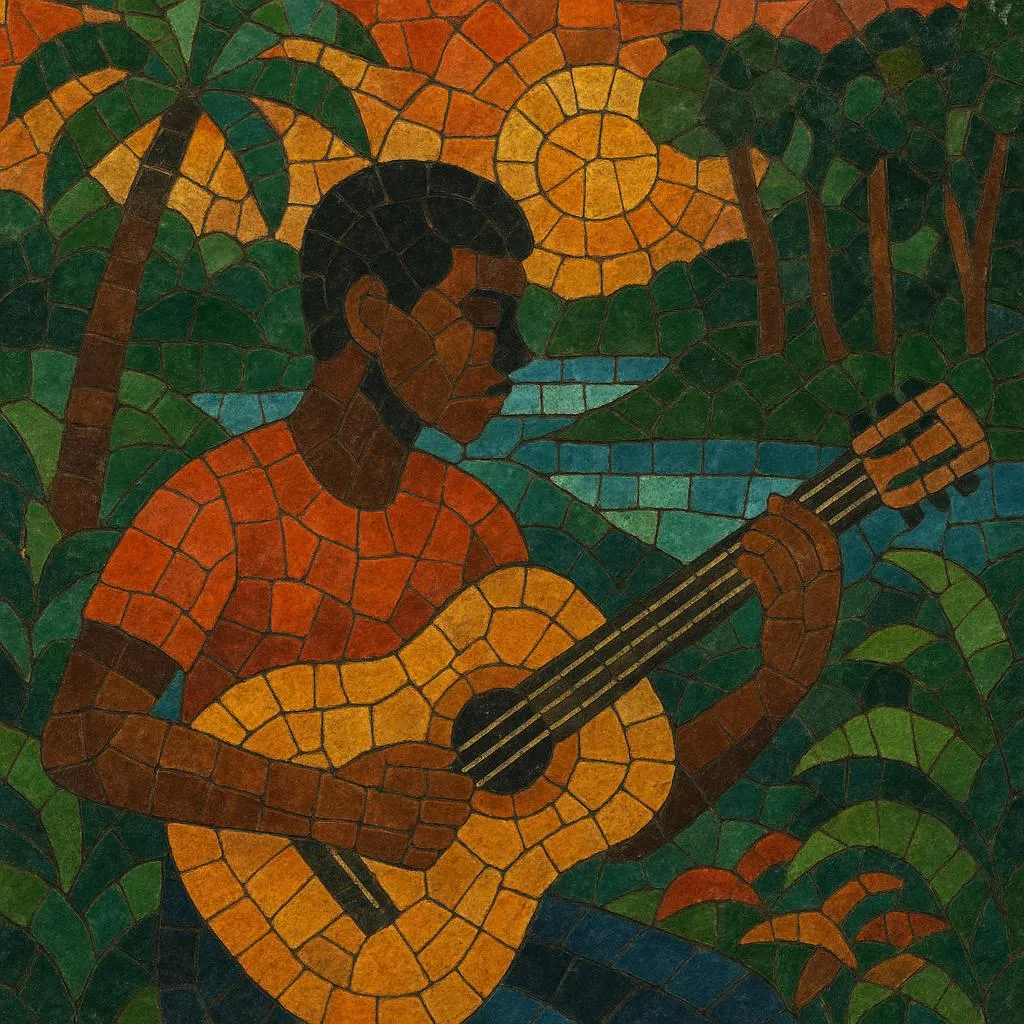
Nova música amazonense (Portuguese for “new Amazonense music”) is the contemporary, independent scene that has emerged from Brazil’s Amazonas state—centered on Manaus and radiating to Parintins and other river cities.

It blends regional rhythmic DNA (especially toada from the boi-bumbá festivals, forró swing, and the lambada/carimbó-inflected guitar feel that permeates the North) with MPB songwriting, indie-rock textures, and low-budget-but-imaginative electronic production.

Lyrically and visually, it foregrounds Amazonian identity: rivers, forest life, heat, port sprawl, and the tension between ancestral traditions and a plugged‑in, DIY urban youth culture. The sound can travel from danceable, percussion-heavy grooves to psychedelic dream-pop hues—always keeping a sense of place.


Sources: Spotify, Wikipedia, Discogs, RYM, MB, user feedback and other online sources

History

Roots (1970s–2000s)

The scene’s roots lie in Amazonian popular traditions and their mass-cultural offshoots. Parintins’ boi‑bumbá carnival fostered the mid‑tempo, call‑and‑response toada that defines local melodic phrasing and percussion patterns. In Manaus and along the rivers, beiradão dance bands and performers mixed regional riffs with forró and lambada’s fluid guitar. The 1990s explosion of Northern pop (e.g., boi‑bumbá and adjacent hits) proved that Amazonian aesthetics could travel far beyond the forest.

First stirrings of a “new” scene (late 2000s–early 2010s)

Cheap recording gear, community venues, cultural centers, and university circuits helped young artists connect indie rock, MPB, and local grooves. Early DIY releases and small festivals began to profile a distinct “new Amazonense” language: boi‑bumbá pulse, jangling/lilted guitars, and lyrics about river life, heat, and manauara urbanity.

Consolidation and visibility (mid–late 2010s)

Digital distribution, local collectives, and municipal/state cultural programs expanded the audience. Crossovers with electronic producers (in dialogue with the neighboring tecnobrega and national indie scenes) gave the music broader textures—pads, lo‑fi beats, bass synths—without abandoning Amazonian cadence. Live circuits grew around cultural houses, independent festivals, and the Parintins season, where toada’s poetic and percussive grammar kept informing new rock and pop.

2020s: Hybrids and narratives of place

Artists increasingly hybridize toada, forró, and lambada swing with dream‑pop, psych, and alt‑rap. River-field recordings, birds, and rain ambiences may appear as textural cues. Lyrics often address belonging, migration to Manaus, and ecological awareness. The result is a scene that sounds unmistakably Brazilian and specifically Amazonense, but fluent in global indie-pop and electronic idioms.

How to make a track in this genre

Core rhythm and groove
•   Start from a toada (boi‑bumbá) pulse: mid‑tempo (≈ 90–110 BPM), steady surdo/caixa patterns, maracá (shaker) accents, and call‑and‑response phrasing. •   For upbeat tracks, borrow lambada/forró swing (≈ 110–130 BPM): syncopated kick, off‑beat hi‑hats, and a lightly pushed backbeat.
Harmony and melody
•   Use MPB-informed harmonic color: major/minor mixture, added 6ths/9ths, IVmaj7↔I, and ii–V motions for brighter refrains. •   Melodies should be singable and slightly melismatic, echoing toada lines; alternate leader phrases with responsive group/choir lines.
Instrumentation and sound design
•   Guitars: clean or lightly overdriven single‑coil tones with chorus/tremolo; interlock arpeggios with a second rhythm guitar doing off‑beat chops. •   Percussion: surdo/caixa, maracá, agogô; blend with drum kit or sampled kits for modern punch. •   Keys and synths: pads that evoke humidity/expanse (slow attacks, low‑passed filter sweeps), simple bell or FM motifs to suggest riverine shimmer. •   Bass: round and slightly behind the beat; use octave jumps that mirror lambada/forró bass motion. •   Consider subtle field recordings (rain, birds, dock ambience) as ear‑candy transitions.
Lyrics and themes
•   Center Amazonense imagery (rivers, boats, rain, forest, heat, port nights), everyday life in Manaus, and pride in local traditions. •   Balance intimacy (relationships, coming‑of‑age) with broader reflections (environment, city vs. forest, ancestry).
Arrangement tips
•   Open with a texture cue (shakers, distant pad) then drop into the groove. •   Mid‑song breakdown: strip to percussion + voice for a boi‑style call‑and‑response; re‑enter with full band and a brighter reharmonized chorus. •   Keep intros concise and choruses hook‑led; use gang vocals to echo festival energy.

Best playlists

The Sound of Nova Música Amazonense
Every Noise at Once
Nova Musica Amazonense
Chosic
Best of Nova Musica Amazonense
volt.fm
BANDA AMAZONAS DE MANACAPURU (2025)
ARILSON TECLAS 🎹
BREGÃO WANDERLEY ANDRADE = GEOVANI MARQUES
DJ Geovani Marques

Top tracks

Locked
Share your favorite track to unlock other users’ top tracks

Upcoming concerts

in this genre
Influenced by
Has influenced
No genres found

Download our mobile app

Get the Melodigging app and start digging for new genres on the go
© 2026 Melodigging
Melodding was created as a tribute to Every Noise at Once, which inspired us to help curious minds keep digging into music's ever-evolving genres.
Buy me a coffee for Melodigging