Your digging level
Description
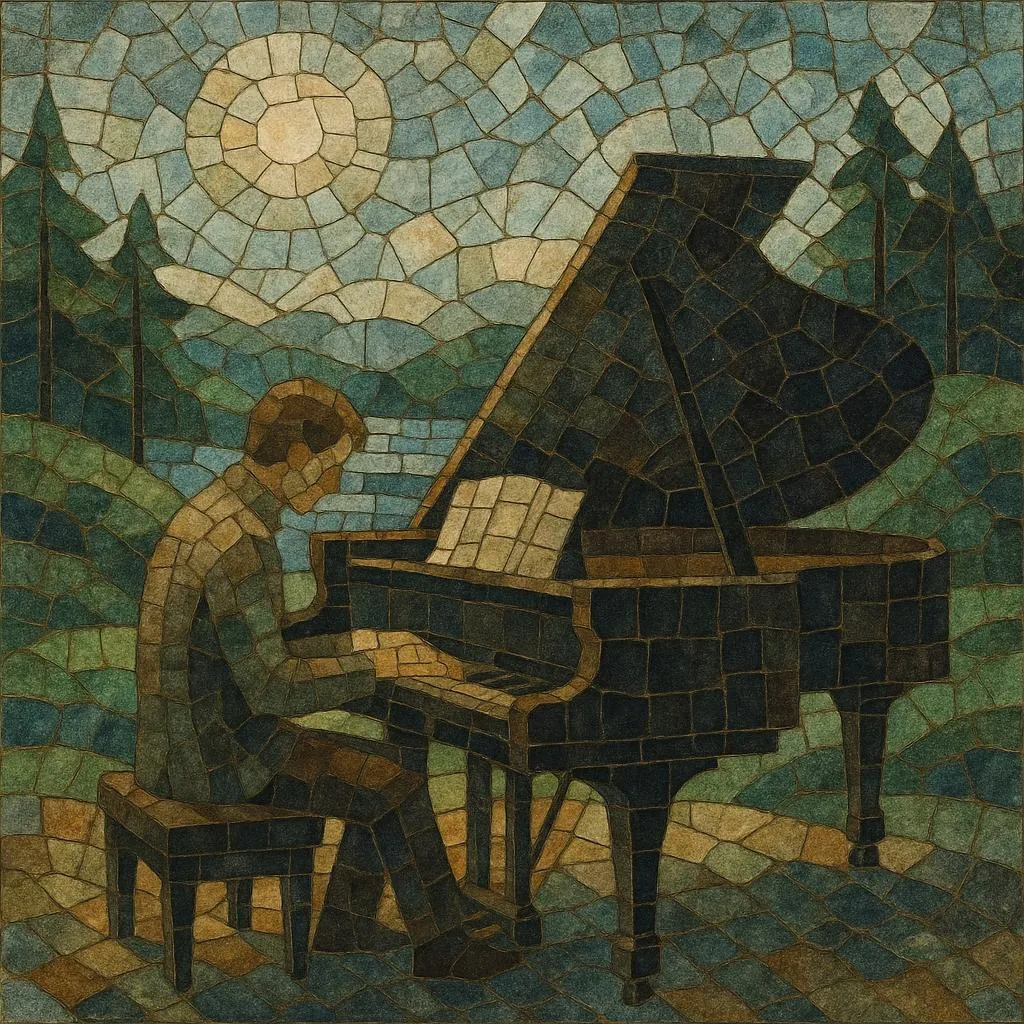
Nordic classical piano is the body of solo- and piano-centered concert music created by composers from the Nordic region (Norway, Sweden, Finland, Denmark, and Iceland), characterized by luminous textures, folk-tinged modality, and a strong sense of nature and landscape.
Rooted in late-Romantic lyric miniatures and national styles that flourished in the late 19th century, it blends character-piece intimacy with distinctive dance rhythms (polska, halling) and modal colors (Dorian, Mixolydian). Typical writing favors cantabile melody, bell-like voicings, pedal-blurred sonorities, and transparent counterpoint.
Across the 20th century the idiom absorbed elements of neoclassicism and modernism while retaining a Nordic clarity of line and atmospheric restraint. The result ranges from songful, nature-evoking miniatures to architecturally taut sonatas and concertos with a cool, granite-like grandeur.
History
The idiom crystallized in the later Romantic era as Nordic composers sought distinct national voices at the keyboard. In Norway, Edvard Grieg’s lyrical character pieces helped define a concise, folk-inflected piano language, while Agathe Backer Grøndahl enriched the salon and concert repertoire with refined miniatures. In Sweden, Wilhelm Stenhammar and Wilhelm Peterson‑Berger cultivated songful, harmonically clear writing; in Denmark, Carl Nielsen’s piano music brought muscular counterpoint and chaconne craft; in Finland, Jean Sibelius contributed atmospheric shorter works alongside his orchestral legacy. Folk dance rhythms (polska, halling), Hardanger-fiddle drones, and modal turns entered art-music syntax, marrying national color to Romantic expressivity.
Around 1900–1930, Nordic piano writing broadened stylistically. While late-Romantic idioms persisted, composers experimented with neoclassical transparency and modern harmonic language, yet often preserved the region’s trademark clarity and nature imagery. Pianist-composers and pedagogues reinforced a tradition of finely etched miniatures and recital pieces that balanced intimacy and rigor.
After 1945, a spectrum emerged—from cool, neoclassic clarity to rugged, modern textures and, later, spectral colorations. Finnish voices (e.g., Rautavaara) projected orchestral imagination onto the keyboard through tolling bell harmonies, chant-like themes, and spacious resonance. Across the region, composers continued to fuse folk modality, austere beauty, and structural discipline, influencing filmic and ambient-classical aesthetics.
Common fingerprints include: modal mixture and pentatonic inflections; lyrical, speech-like phrasing; dance-derived meters and off-beat accents; drone tones and open fifths; pedal-crafted resonance suggesting bells, winds, or water; and evocative titles that frame nature scenes or poetic moods. Forms range from brief character pieces and suites to large-scale sonatas and concertos, all typically favoring clarity, contour, and atmosphere over excessive ornament.