Your digging level
Description
Néo-trad is a contemporary Québécois style that refreshes traditional folk dance tunes, songs, and vocal techniques with modern songwriting and band arrangements.
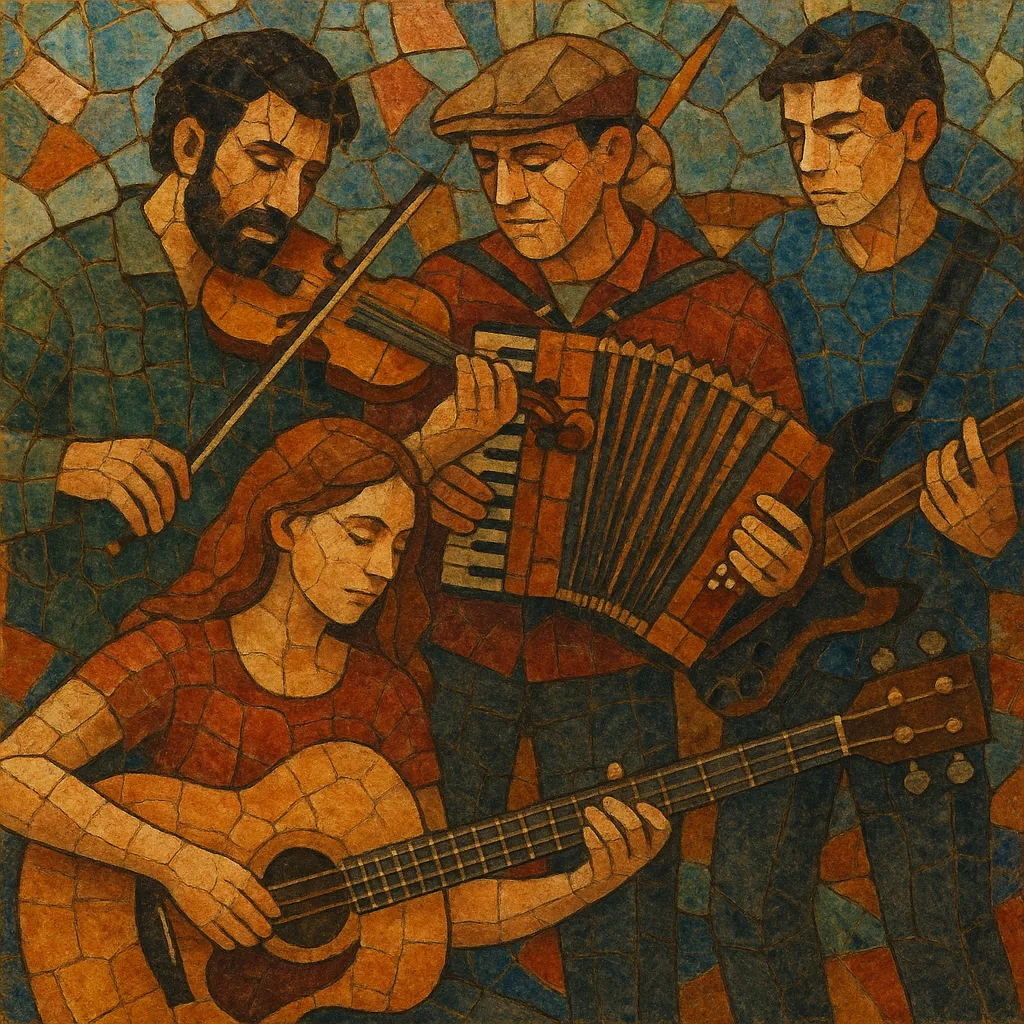
Built on reels, jigs, call-and-response refrains, and turlutte (mouth music), it keeps core instruments such as fiddle, accordion, jaw harp, spoons, and podorythmie (foot-tapping) while adding drum kit, electric bass, and guitars. Lyrics—most often in Quebec French—celebrate heritage, everyday life, and social issues with a direct, populist tone.
The result is energetic, danceable folk with the punch and hooks of pop-rock, bridging living tradition and 21st‑century popular music.
History
Quebec’s folk revival of the 1960s–70s reclaimed village dance music (reels and jigs), call-and-response songs, and the signature techniques of turlutte and podorythmie. Ensembles such as La Bottine Souriante (formed in 1976) introduced brass, bass, and drum kit to trad, opening space for hybrid folk-pop approaches. Parallel currents in chanson québécoise and Celtic traditions (Irish and Scottish) further shaped the region’s sound.
Around the turn of the 21st century, a younger wave reframed trad for contemporary audiences. Groups tightened song forms, foregrounded catchy choruses, and adopted the drive of rock and pop production while preserving dance-tune engines and French-language identity. The term “néo‑trad” (new + traditionnelle) gained currency to distinguish this modernized yet tradition-rooted sound.
Through the 2010s, néo‑trad solidified on festival stages in Quebec and abroad. Bands toured Europe and North America, collaborating with Celtic and folk circuits. The style became a gateway to regional heritage for a new generation, influencing Quebec indie and roots scenes, and sustaining community dance culture while thriving in streaming-era playlists.
Néo‑trad balances fidelity to source idioms (crooked tunes, modal inflections, foot percussion) with pop-minded craft (verse–chorus forms, hooks, dynamic builds). Thematically, it mixes joyous communal celebration with pointed social commentary, often delivered in colloquial Quebec French (joual).