Your digging level

For this genre
0/8
🏆
Sign in, then listen to this genre to level up

Description

Navajo (Diné) music is the traditional and contemporary music of the Navajo Nation, centered on the voice and deeply connected to ceremony, community, and the Diné philosophy of hózhó (balance, beauty, harmony).

Core repertoires include powerful ceremonial song cycles (such as Blessingway, Nightway/Yeibichai, Enemyway), seasonal and life‑cycle songs, social dance songs, and, in modern times, popular and hybrid forms ranging from peyote songs to rock, punk, hip hop, and flute-based instrumental music.

Musically, Navajo song is primarily monophonic and vocally driven, often using limited ranges, descending contours, and anhemitonic pentatonic or closely related modal patterns. Texts are in Diné Bizaad (Navajo) and/or vocables; performance may be a cappella or supported by frame/basket drums, water drums (in Native American Church contexts), and rattles. Flute melodies—adopted and localized—add a lyrical, reflective strand. Above all, songs function as living knowledge, aligning people, land, and the sacred.


Sources: Spotify, Wikipedia, Discogs, RYM, MB, user feedback and other online sources

History

Origins and Cultural Foundations

Navajo music predates European contact and is inseparable from Diné cosmology and lifeways. As Athabaskan migrants settled in the Southwest in the 1400s, song traditions crystallized around complex ceremonial systems and everyday communal practices. Music served as prayer, remedy, education, and social glue.

Ceremonial Systems and Classic Repertoires

Major healing and protection ceremonials—Blessingway, Enemyway, and Nightway (Yeibichai)—employ extensive song cycles, precise texts, and prescribed performance roles (including hataałii, or ceremonial singers). Songs are often short but performed in sequences, with specific melodic contours and vocables. Life‑cycle music (e.g., puberty rites) and seasonal songs connect people to place, kinship, and ecological rhythms.

Instruments and Performance Practice

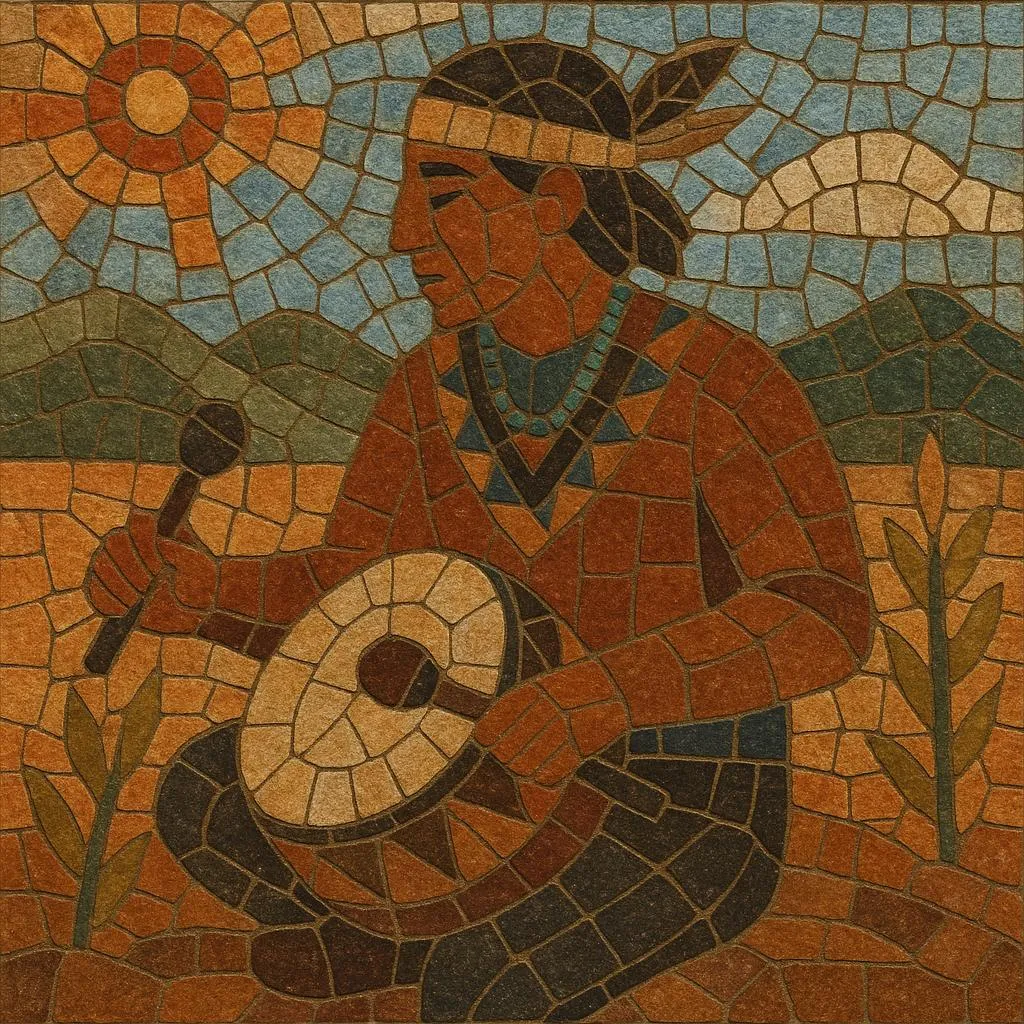
Voice is primary. Percussion includes handheld frame drums, basket drums (notably in women’s rites), rattles, and, in Native American Church contexts, the water drum and gourd rattle for peyote songs. The Native American flute, embraced and localized over time, adds contemplative instrumental strands.

20th‑Century Documentation and Change

Ethnomusicologists and archivists recorded Navajo singers in the 20th century, preserving ceremonial and social repertories. Intertribal circuits (e.g., powwows) encouraged stylistic exchange. The Native American Church catalyzed the spread and refinement of peyote songs, some led by Navajo singers who brought distinctive melodic profiles and poetics.

Contemporary Expressions

From the late 20th century onward, Diné artists expanded into country, rock, punk, metal, hip hop, and ambient/new age flute idioms—all while many communities sustain ceremonial practice. Today’s Navajo music ranges from traditional hataałii song to genre‑bending bands and emcees who address language revitalization, sovereignty, and environmental justice.

How to make a track in this genre

Core Sound and Materials
•   Vocal centrality: Write singable, compact melodies with descending contours and limited tessitura. Favor monophony (unison) and let the voice carry the meaning. •   Scales and modes: Use anhemitonic pentatonic or closely related modal collections; avoid heavy chromaticism. Keep melodic cells concise and repeatable. •   Texts and vocables: Alternate Diné lyrics (respectfully and accurately, in consultation with fluent speakers) with vocables. Anchor texts in place, seasons, kinship, and the philosophy of hózhó.
Rhythm and Form
•   Short songs in sequence: Compose brief stanzas to be sung in sets; think cumulative effect rather than long single forms. •   Pulse: Employ steady, grounded beats when using percussion; allow some rubato in unaccompanied lines and flute pieces. •   Call-and-response: For social songs, consider leader–group alternation; for ceremonial-inspired pieces, maintain solo lead focus.
Instrumentation
•   Voice alone or with percussion: Frame drum or basket drum for social/rite contexts; rattles for texture. For peyote-inspired work (outside sacred contexts), water drum and gourd rattle with paired-song structures. •   Flute: Compose modal, breath‑shaped melodies with pauses that mirror speech and landscape; keep accompaniment sparse.
Harmony and Texture
•   Keep textures open and transparent; avoid dense chordal harmony. Drones or open fifths can support the voice without overpowering it.
Contemporary Hybrids (with care)
•   If blending with rock/hip hop/electronics, center the Navajo vocal line and percussion feel. Use 808s to mirror drum pulse; sample environmental ambiences (wind, footsteps, water) rather than sacred chants. •   Ethical practice: Do not quote, record, or sample restricted ceremonial songs or contexts. Collaborate with culture bearers, credit consultants, and respect community protocols.
Arrangement Tips
•   Space and resonance: Leave room for breath, silence, and resonance; let phrases end naturally. •   Narrative arc: Build sequences that move from invocation to grounding, then release—mirroring ceremonial logic without appropriating protected forms.

Top tracks

Locked
Share your favorite track to unlock other users’ top tracks

Upcoming concerts

in this genre
Influenced by

Download our mobile app

Get the Melodigging app and start digging for new genres on the go
© 2026 Melodigging
Melodding was created as a tribute to Every Noise at Once, which inspired us to help curious minds keep digging into music's ever-evolving genres.
Buy me a coffee for Melodigging