Your digging level
Description
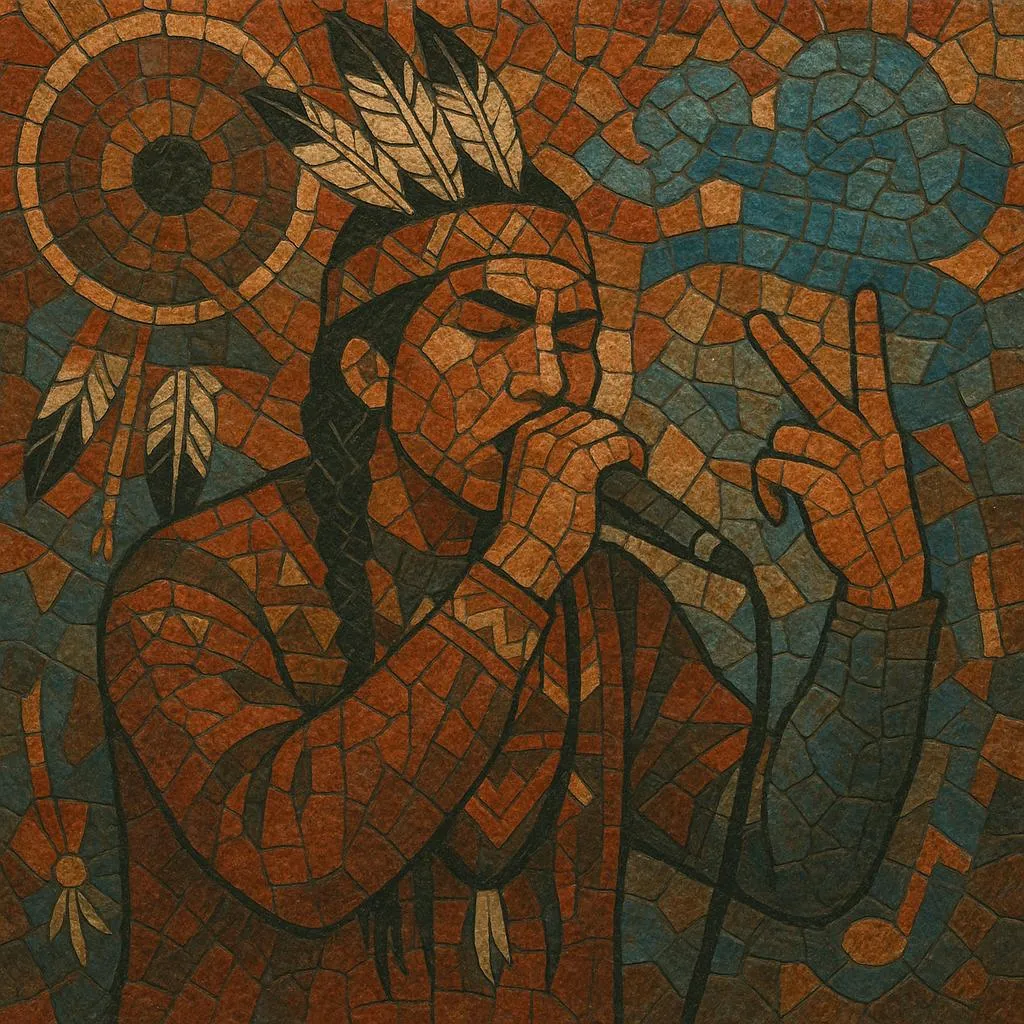
Native American hip hop refers to hip hop created by Indigenous peoples of the United States and Canada (including First Nations, Inuit, and Métis artists). It is not a single stylistic subgenre so much as a cultural and thematic current within hip hop, spanning boom‑bap, trap, alternative, and underground styles.
Artists often braid traditional sounds—powwow drums, vocables, hand drums, cedar flutes, and round‑dance rhythms—into contemporary beats, while lyrics foreground sovereignty, language revitalization, land and water protection, life on and off the rez, historical trauma and survivance, and community pride. Because Native people have participated in all four elements of hip hop since its early years, the music’s sound palette and flows are as diverse as hip hop itself, even as the themes remain distinctly Indigenous.
Historically, Native contributions were sometimes obscured under broad ethnic labels (e.g., being grouped as “Latino/Hispanic” in certain contexts), but the 1990s onward saw a visible wave of Native MCs and later a digitally native generation that uses hip hop as both art and activism.
History
Native people were present in hip hop culture from the beginning—as b‑boys/b‑girls, DJs, MCs, and writers. In major U.S. cities and reservation border towns, Indigenous youth adopted and adapted the elements of hip hop alongside other communities of color. Because of racial misclassification and broad ethnic labels, some early contributions by Native creatives were not always recognized as such.
By the early to mid‑1990s, dedicated Native MCs and crews began releasing independent tapes and CDs and building touring circuits through tribal colleges, community centers, and powwows. This period established a template: boom‑bap and West/East‑coast production aesthetics blended with Indigenous drums, vocables, and storytelling centered on sovereignty, identity, and community issues.
The spread of affordable home studios, mixtape culture, and social platforms enabled a second wave across the U.S. and Canada. Artists brought in trap percussion, cinematic pads, and live traditional instruments. Hip hop became a vehicle for social movements—from local language revitalization projects to continent‑wide actions—linking music with cultural and political organizing. Cross‑pollination with electronic scenes also helped seed powwow‑and‑hip‑hop hybrids.
A new generation grew up online, releasing high‑quality singles and videos that circulate far beyond reservation lines. Tours, Indigenous‑run labels, radio shows, festivals, and grant programs have strengthened an ecosystem that supports mentorship, youth workshops, and intertribal collaboration. The range of sounds now spans lo‑fi confessionals to hard‑edged street narratives, but shared themes—survivance, humor, kinship, and ceremony‑adjacent respect—remain core.
Production frequently incorporates powwow drum patterns, shaker rhythms, cedar flute motifs, and call‑and‑response hooks, while flows switch between English and Indigenous languages. Lyrically, artists balance contemporary realities (health, housing, MMIWG2S awareness, border politics) with cultural pride, land relationships, and humor, ensuring hip hop continues to serve as both expression and advocacy.