Your digging level

For this genre
0/8
🏆
Sign in, then listen to this genre to level up

Description

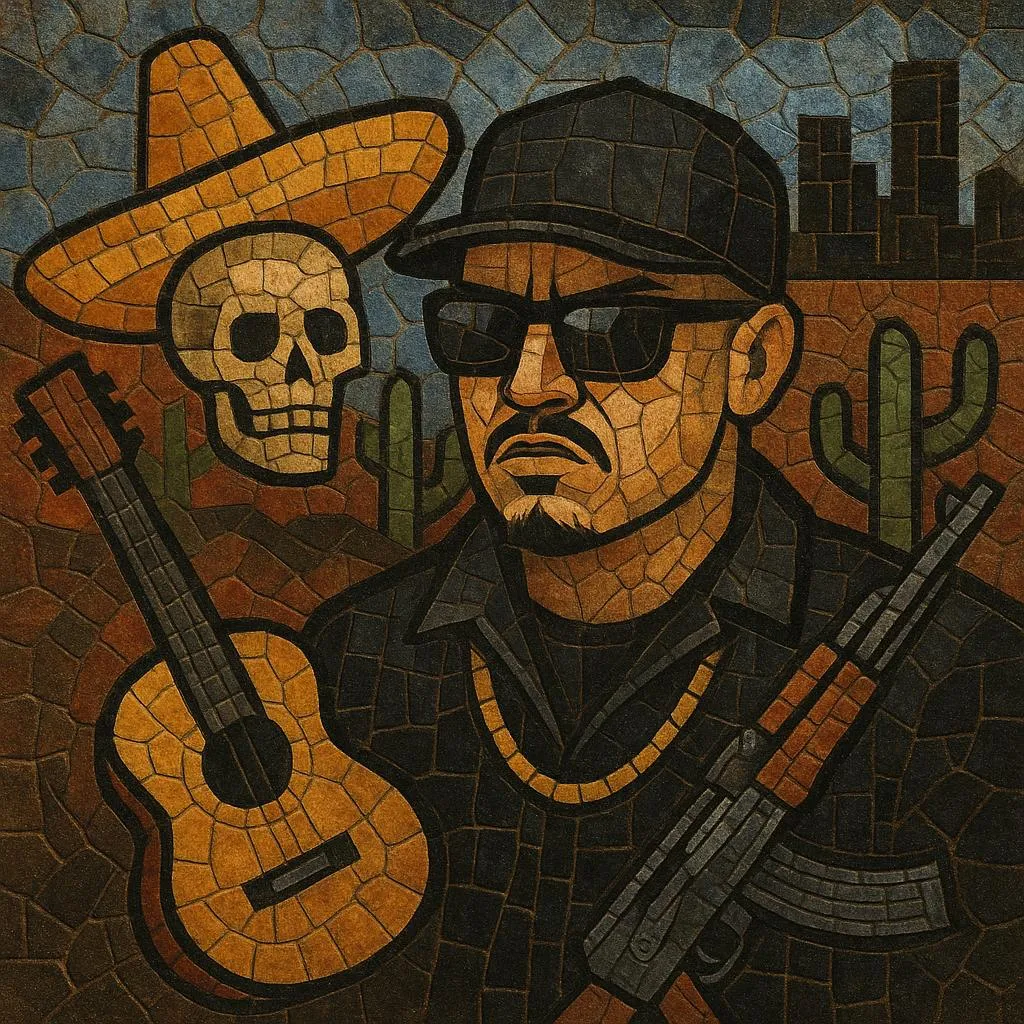
Narco rap is a Latin American hip‑hop subgenre whose lyrics center on the drug trade, cartel life, and the social realities that form around it. It blends the hard‑edged storytelling of gangsta/mafioso rap with regional narrative traditions (especially the corrido), often delivered in Mexican Spanish with dense slang, code words, and place references.

Musically, narco rap draws on classic hip‑hop production (boom‑bap and West/South‑style trap beats), but may fold in timbres and motifs from regional Mexican music—requinto guitars, tuba/bajo sexto riffs, or accordion hooks—either sampled or replayed. The result is a gritty, cinematic soundscape designed to heighten the tension of first‑person tales, cautionary fables, and braggadocio tied to the illegal economy and its culture.


Sources: Spotify, Wikipedia, Discogs, RYM, MB, user feedback and other online sources

History

Origins (late 1990s–2000s)

Narco rap emerged in Mexico and the US–Mexico borderlands as hip‑hop localized in Spanish began taking on regional subject matter. Artists steeped in gangsta and mafioso rap aesthetics adapted that narrative mode to reflect the economies and conflicts of northern Mexico, where narcocorridos had already long documented the drug trade. Early tracks fused street reportage with corrido‑like storytelling, sometimes sampling regional instruments to anchor the tales in place.

Consolidation and Aesthetic Codes (2010s)

Through the 2010s, the style crystallized: beats leaned either toward moody boom‑bap or trap; flows became more staccato and percussive; hooks often quoted corrido tropes (nicknames, codes, routes). YouTube and social media amplified the music’s reach, and some tracks circulated alongside sensationalistic or propagandistic visuals—raising ethical debates about glorification versus documentation. Parallel scenes in the Southwest US and border cities cross‑pollinated the sound, while Mexican hip‑hop more broadly professionalized its production.

Cross‑Genre Hybrids and Viral Eras (late 2010s–2020s)

As corrido tumbado and corridos bélicos modernized the corrido with trap and urbano textures, narco rap exchanged influences with these movements—sometimes sharing producers, guests, and aesthetics. The genre’s sonic palette widened (808s with requinto/tuba, half‑time drops, drill‑style hi‑hats) while narrative conventions (alias‑driven first‑person stories, cautionary arcs) remained intact. Streaming platforms and TikTok further accelerated micro‑scenes and regional cliques, making narco rap both a niche and a widely recognizable narrative mode.

Controversy, Censorship, and Discourse

Because of its subject matter, narco rap routinely faces bans at local events, platform moderation, and public debate. Supporters position it as social realism or testimonial folklore in a hip‑hop frame; critics argue it can glamorize violence. This tension—long familiar in the history of corridos and gangsta rap—continues to shape how the genre is made, circulated, and received.

How to make a track in this genre

Core tempo, rhythm, and groove
•   Work in the 78–96 BPM range for boom‑bap or half‑time trap; 120–140 BPM can also work if arranged in half‑time feel. •   Trap drums (808 kick, crisp snare/clap, skittering hi‑hat triplets/rolls) or hard boom‑bap kits (punchy kick, dusty snare, swung hats) establish weight and menace.
Harmony, melody, and motifs
•   Use minor keys and modal colors (Aeolian, Phrygian) to convey tension. Simple two–four chord loops keep focus on the narrative. •   Integrate regional motifs: sample or replay requinto guitar arpeggios, bajo sexto/tuba ostinatos, or accordion hooks. Layer subtle tremolo guitar or whistle/strings for a cinematic feel.
Sound palette and arrangement
•   Combine 808 sub with a mid‑bass (electric or tuba‑like synth) to reference banda/norteño weight. •   Add foley (radio chatter, sirens, truck ambience) sparingly to suggest setting without overshadowing the vocal. •   Use low‑pass filtering, tape saturation, or vinyl hiss to create a documentary grit.
Flow, voice, and lyrics
•   Favor percussive, syllable‑dense flows with clear diction; switch cadences (straight sixteenths vs. triplet pockets) to mirror plot turns. •   Write first‑person narratives, aliases, routes, and code names typical of corrido storytelling—balance bravado with consequence to avoid caricature. •   Leverage regional Spanish slang and caló; anchor verses in concrete details (geography, logistics) to heighten realism.
Structure and hooks
•   Common form: Intro (scene‑setting SFX) → Verse 1 (exposition) → Hook (alias or motto) → Verse 2 (conflict) → Bridge (moral twist) → Hook. •   Hooks can chant a nickname/number or flip a corrido refrain over modern drums.
Production and mixing tips
•   Prioritize vocal intelligibility (presence around 3–5 kHz, controlled lows). Keep sub clean (HPF non‑bass elements ~30–40 Hz). •   Parallel compress drums for punch; use plate/short room reverbs to maintain intimacy; automate delays on bar‑ends for emphasis.
Ethics and context
•   Be mindful of glamorization. Many of the strongest narco rap pieces function as reportage or cautionary tales—consider framing narratives with reflection or consequence.

Top tracks

Locked
Share your favorite track to unlock other users’ top tracks

Upcoming concerts

in this genre
Influenced by
Has influenced

Download our mobile app

Get the Melodigging app and start digging for new genres on the go
© 2026 Melodigging
Melodding was created as a tribute to Every Noise at Once, which inspired us to help curious minds keep digging into music's ever-evolving genres.
Buy me a coffee for Melodigging