Your digging level
Description
Nagpuri pop is contemporary popular music performed primarily in the Nagpuri (Sadri) language of the Chota Nagpur Plateau—centered in today’s Jharkhand and adjoining parts of Bihar, Odisha, and Chhattisgarh in India.
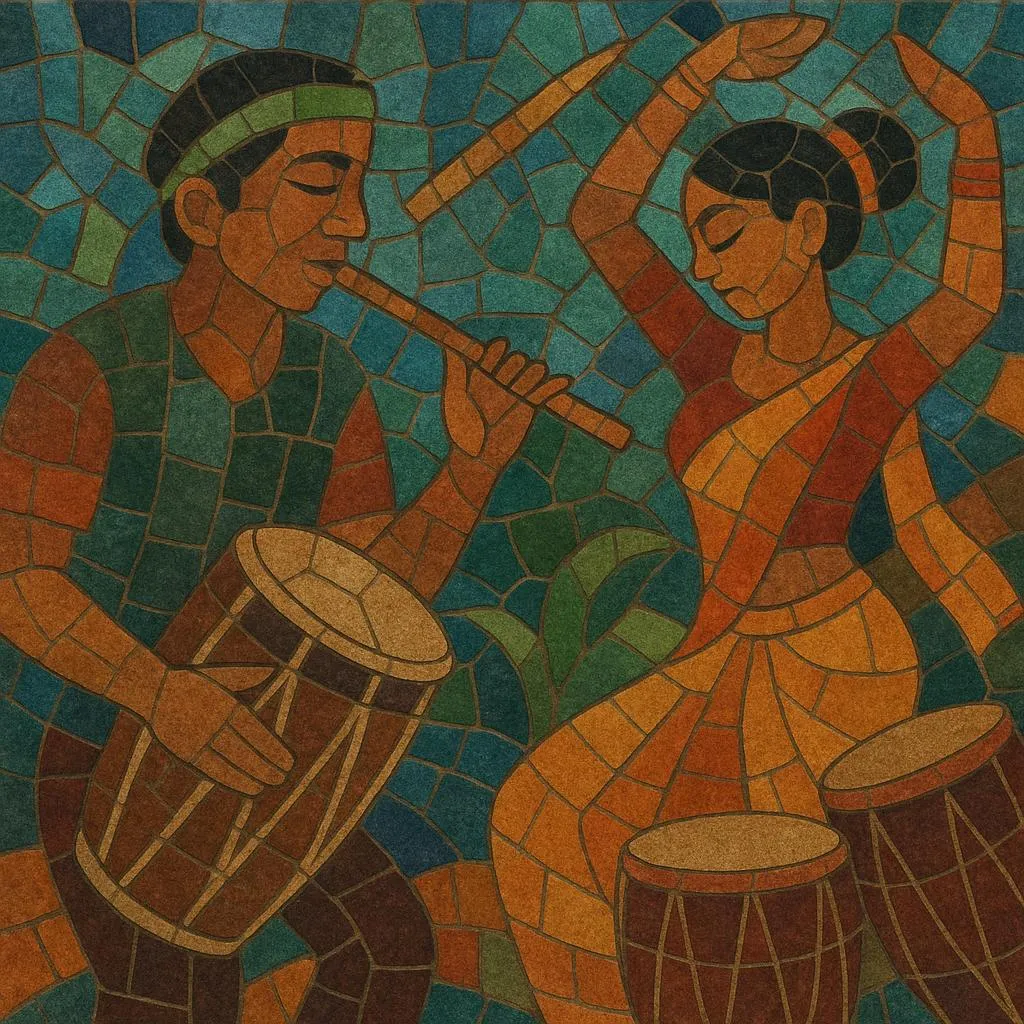
It blends regional folk rhythms (such as jhumar- and domkach-inspired grooves) and timbres (mandar and nagara drums, bamboo flute) with modern Indian pop aesthetics: bright synths, dance-pop beats, romantic hooks, and polished studio production. Typical releases range from love ballads and wedding party songs to festive, dance-forward tracks aimed at local functions and viral video circulation.
As a regional-language pop form, Nagpuri pop grew alongside the democratization of low-cost recording, VCD/DVD culture, and—especially—the YouTube era, which helped it professionalize while staying close to grassroots performance and community dance traditions.
History
Nagpuri (Sadri) folk singing and dance traditions—most recognizably the jhumar and domkach—form the cultural substrate of Nagpuri pop. Through the cassette era and local radio programs, performers began adapting folk melodies to light, filmi-influenced arrangements. The 1990s saw affordable keyboards, rhythm boxes, and basic multitrack studios enter regional markets, allowing local producers to frame Nagpuri lyrics and melodies within Indian pop song structures.
In the 2000s, the spread of VCD/DVD releases, cable-TV song blocks, and touring stage shows across Jharkhand and neighboring states seeded a semiprofessional scene. Producers hybridized folk percussion (mandar, nagara) with programmed drum kits and synth bass, while singers leaned into melodic phrasing and romantic lyrical tropes familiar from Bollywood and national-level Indian pop.
From the 2010s onward, YouTube radically expanded reach and feedback loops. Regional studios adopted crisper mixing, denser synth layers, and tuned vocal stacks, and they experimented with video-driven formats (dance-led clips, story-driven romance singles). Social media helped establish repeatable micro‑genres: wedding bangers, festival anthems, devotional-adjacent pop, and college romance songs.
Today Nagpuri pop is a vibrant, digital-first ecosystem. Local producers collaborate with folk instrumentalists to keep idiomatic rhythms and call‑and‑response refrains alive, even as arrangements lean on mainstream Indian pop, EDM, and dancehall-adjacent grooves. The scene’s core remains regional pride, community danceability, and the accessibility of Sadri/Nagpuri lyrics, which together sustain a steady stream of singles and performance circuits.