Your digging level
Description
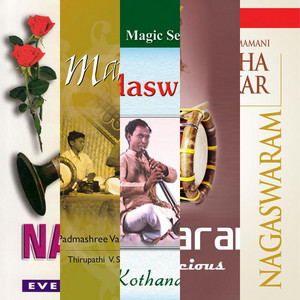
Nādaswaram (also spelled nagaswaram) is a South Indian double-reed wind tradition built around one of the loudest non-brass acoustic instruments in the world. Closely tied to temple ritual, processions, and weddings, it renders the Carnatic (South Indian classical) repertoire in an outdoor, ceremonial setting.
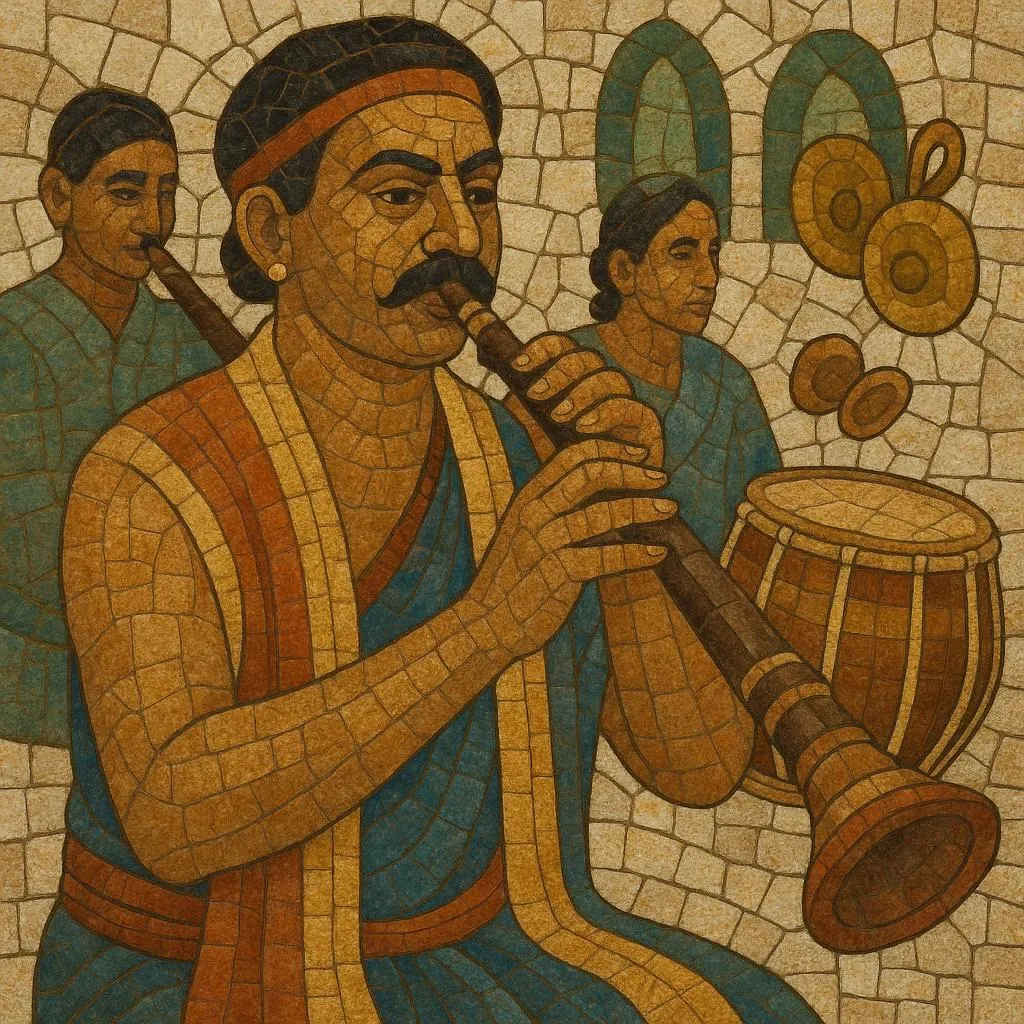
A typical ensemble features a lead nādaswaram, a supporting (side) nādaswaram or ottu (drone) nādaswaram, the barrel drum tavil, hand-cymbals, and a continuous drone (now often from a shruti box). The music is raga- and tala-based, favoring majestic ragas and vigorous tavil rhythms suited to processional movement. Signature pieces include the temple-processional Mallari, alongside varnams, kritis, ragam–tanam–pallavi variants, and lively tillanas.
History
The nādaswaram tradition crystallized within South Indian (particularly Tamil) temple culture, where loud, penetrating sound was needed for outdoor ritual, processional worship, and festival pageantry. Its modern form coalesced in the temple and courtly milieus of the 17th century, as South Indian classical (Carnatic) practice standardized ensemble roles and repertory.
From daily puja to annual brahmotsavam festivals, nādaswaram–tavil ensembles became the sonic emblem of auspiciousness. Musicians developed idioms for movement—most famously the processional Mallari—crafted to synchronize with temple chariots and circumambulations. Weddings adopted the ensemble as an audible blessing, with repertoire chosen to invoke prosperity and continuity.
While the same raga–tala grammar underpins both concert and ritual performance, nādaswaram emphasizes expansive alapana (unmetered raga exploration), robust kriti renditions, and intricate swarakalpana that can project in open air. The tavil’s powerful strokes and korvais propel walking tempos, while the ottu/continuous drone centers pitch outdoors. Circular breathing extends phrasing, giving the style its characteristic, near-unbroken melodic line.
In the 20th century, leading vidwans popularized concert presentations and recordings, bringing nādaswaram beyond temple precincts. The idiom influenced film and ceremonial music across South India, yet remains most closely associated with living temple ritual and community celebrations. Today, artists balance tradition with amplification, portable drones, and curated setlists for weddings and stage.